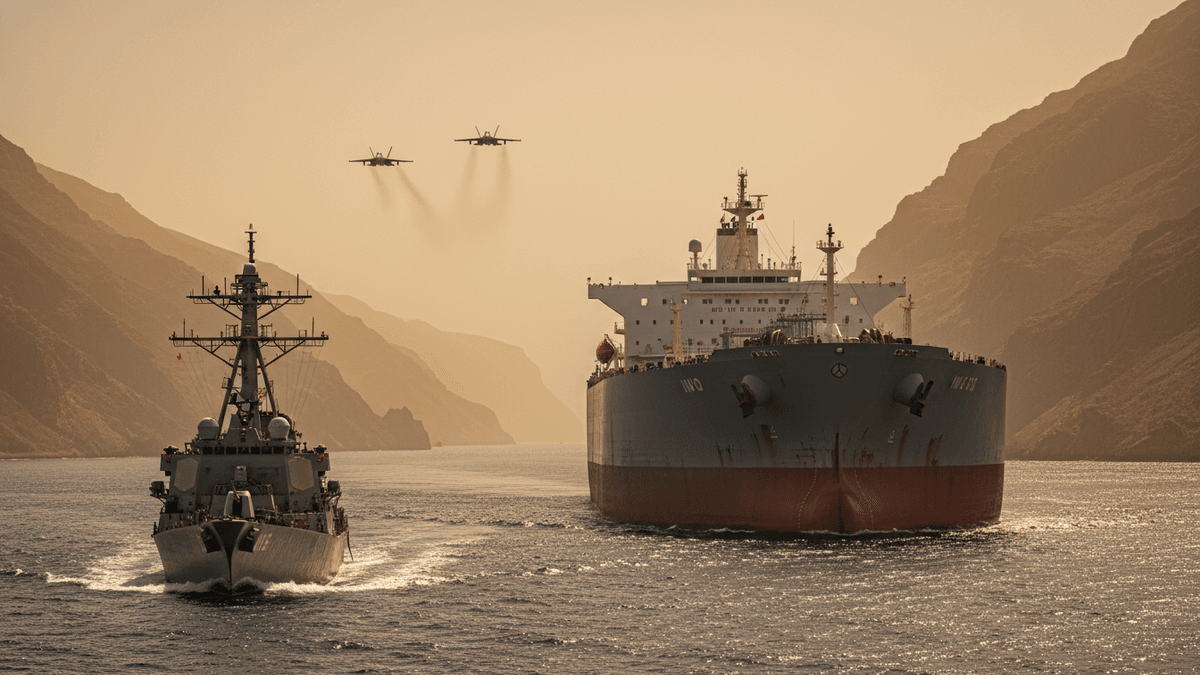
US Navy destroyer escorts oil tanker through strait as fighter jets fly overhead.
President Donald Trump is reportedly facing a deepening dilemma as the Strait of Hormuz remains a point of tension, coupled with increasing pressure from Republican hawks advocating for a more aggressive stance against Iran. This situation has led to a volatile mix of diplomatic overtures and threats of renewed military engagement, complicating efforts to de-escalate the ongoing conflict and ensure the free passage of vital shipping lanes.
The core of the issue appears to stem from Iran’s demands for financial relief, a move that complicates broader international negotiations. Simultaneously, influential voices within the Republican party are pushing for decisive action, creating a challenging environment for the administration to chart a stable foreign policy course. The fluctuating promises of a potential deal, juxtaposed with stark warnings of military intervention, highlight the precarious nature of the geopolitical landscape.
The closure or threat of closure of the Strait of Hormuz, a critical chokepoint for global oil trade, adds a significant economic dimension to the conflict. Any disruption in this vital waterway carries substantial implications for global energy markets and international commerce. The administration’s efforts to resolve the multifaceted crisis are thus under intense scrutiny, with both domestic political considerations and international stability at stake.
About the Author