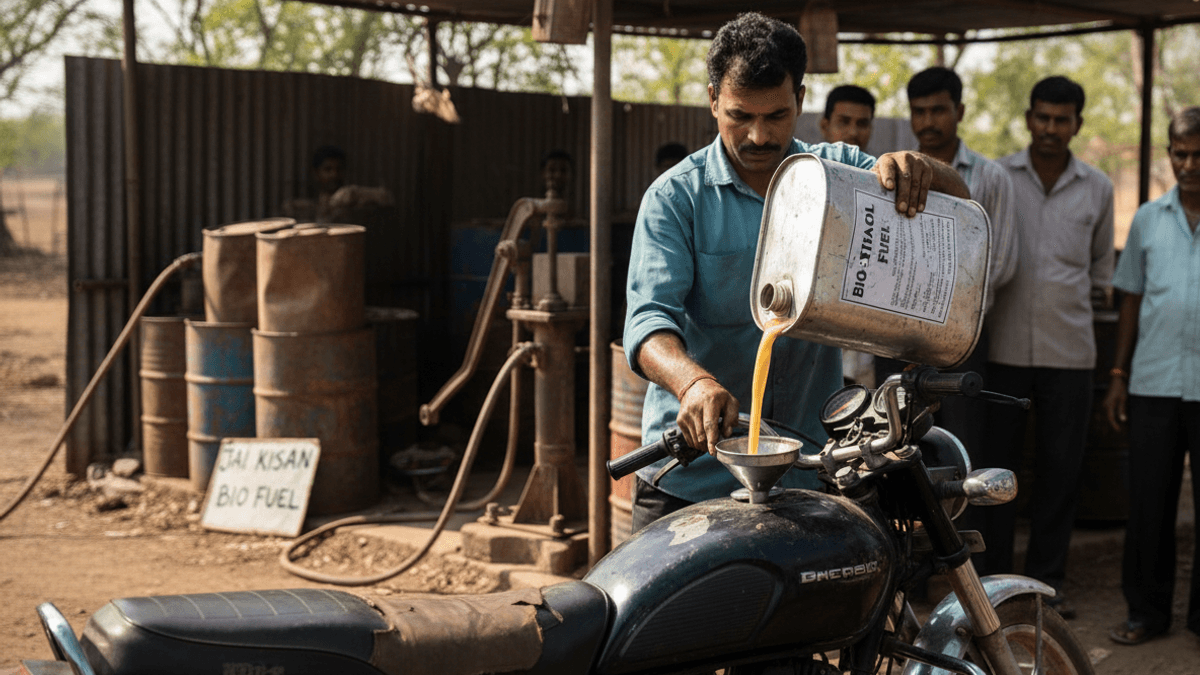
Man pouring biofuel into a motorcycle in a rural Indian setting.
India and other Southeast Asian nations are accelerating their adoption of biofuels, including ethanol, in response to global fuel market disruptions. This strategic pivot aims to bolster energy security by reducing dependence on imported oil and mitigating the impact of fluctuating international prices.
The surge in interest follows energy price shocks exacerbated by geopolitical tensions, prompting a re-evaluation of energy import strategies across the region. By increasing the use of biofuels, these countries seek to stabilize energy costs and enhance their domestic energy production capabilities.
However, the transition is not without its challenges. Developing robust supply chains for biofuels and ensuring compatibility with existing vehicle fleets are critical hurdles. Furthermore, experts point to potential environmental concerns associated with the large-scale production of crop-based biofuels, raising questions about sustainability and land use.
Despite these obstacles, the push towards biofuels represents a significant development in the region’s quest for energy security and a more diversified energy mix.
About the Author