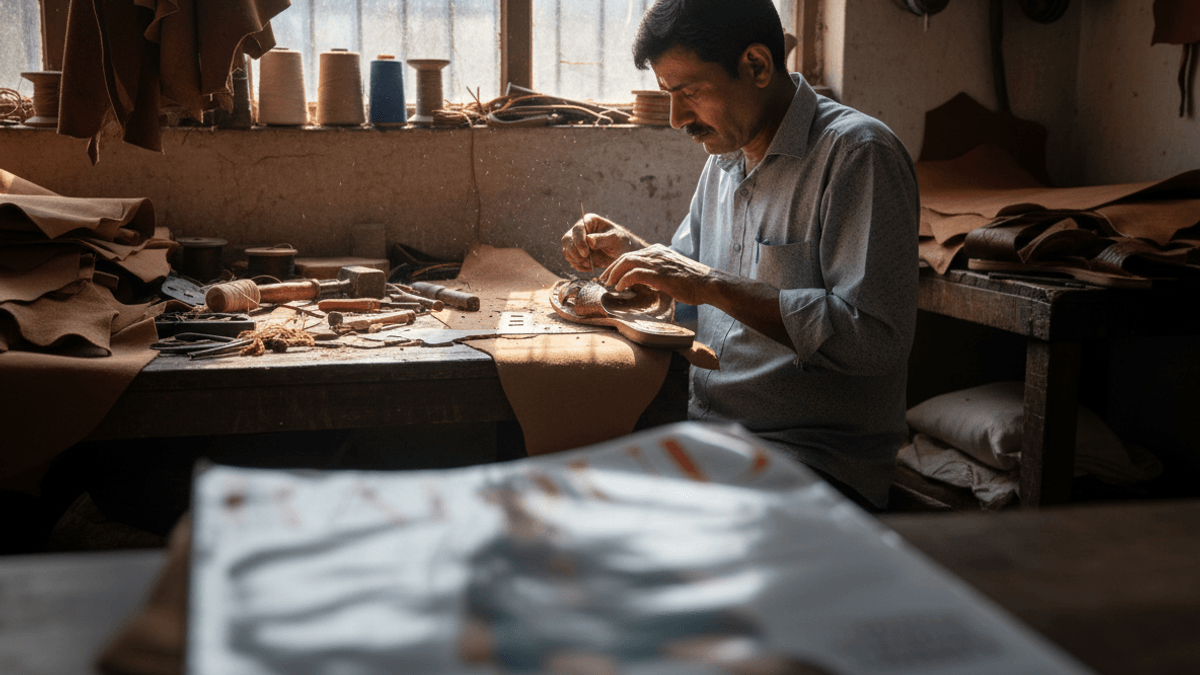
An Indian artisan meticulously crafting traditional Kolhapuri chappals in his workshop.
Luxury fashion house Prada is facing renewed criticism in India following the release of its latest collection, which has reignited a controversy over alleged design appropriation. This incident marks a repeat of a similar dispute from the previous year, where Prada’s use of designs reminiscent of traditional Indian footwear, specifically Kolhapuri chappals, led to significant backlash.
The current controversy centers on Prada’s new offerings, which critics in India claim again borrow heavily from culturally significant Indian designs without proper acknowledgment or compensation. The brand’s subsequent attempts to manage the public relations fallout have reportedly come under intense scrutiny, exacerbating the situation.
This recurring issue highlights a delicate balance for global luxury brands operating in diverse cultural landscapes. While such brands often draw inspiration from global aesthetics, the appropriation of culturally specific designs without appropriate context or credit can lead to significant reputational damage and consumer distrust, particularly in markets like India where traditional crafts hold deep cultural value.
The situation underscores a broader discussion within the fashion industry regarding intellectual property, cultural heritage, and ethical sourcing. As Prada navigates this dilemma, the focus remains on how the brand will address the concerns raised by Indian consumers and cultural stakeholders, and whether this will influence its future design and sourcing strategies.
About the Author