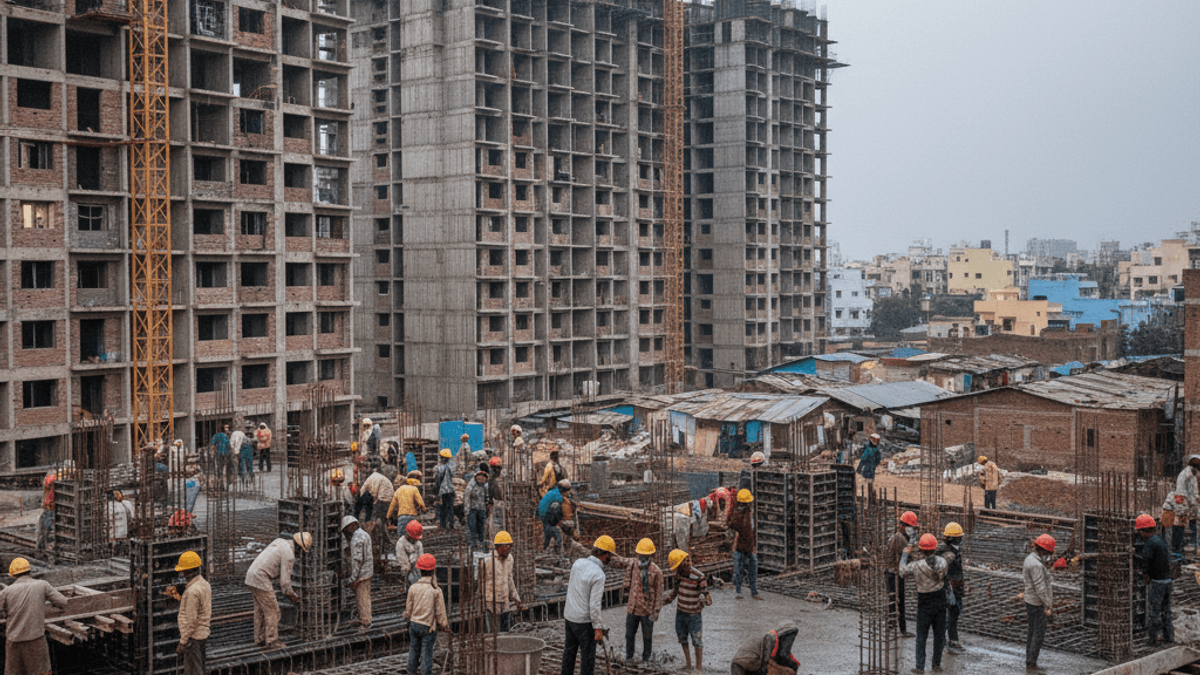
Construction workers lay concrete on a new building in India, reflecting ongoing development.
China’s real estate sector is experiencing a severe and prolonged downturn, with property prices now hovering near levels not seen since 2005. This dramatic contraction has ignited discussions about whether India’s burgeoning housing market could face a similar fate.
While some analysts point to potential parallels, such as a weakening rupee and concerns over job security in India, the underlying dynamics of the two markets appear significantly different. China’s property crisis is largely attributed to an oversupply of housing, built up over years of rapid development and speculative investment. This has led to a glut of unsold properties and a sharp decline in developer confidence.
In contrast, India’s housing market is characterized by strong end-user demand, fueled by rapid urbanization and a growing middle class. Unlike China’s situation, which is heavily influenced by developer-led construction and investment, India’s market is more closely tied to genuine housing needs. This fundamental difference in demand drivers is expected to provide a degree of resilience against a widespread slump.
However, the situation in China serves as a cautionary tale. The interconnectedness of real estate with the broader economy means that significant downturns can have far-reaching consequences. Investors and policymakers in India will undoubtedly be monitoring global real estate trends closely, even as domestic factors appear to support a more stable outlook for the Indian housing sector.
About the Author