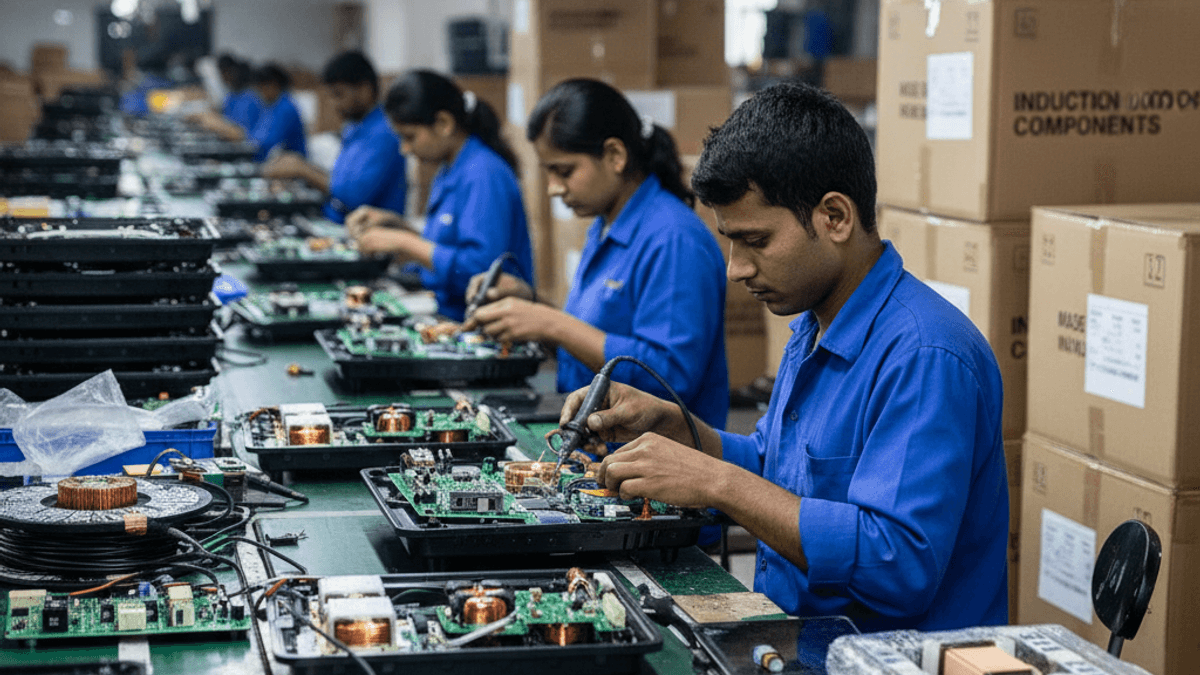
Indian workers assemble induction cooktops on a factory line, amidst components and finished boxes.
The Indian government is reportedly considering significant tax incentives, including potential reductions in customs duties on components and Goods and Services Tax (GST) on finished appliances, to bolster the domestic manufacturing of induction cooktops. This strategic move aims to address current demand-supply imbalances in the market and contribute to price stabilization for consumers.
The proposed fiscal measures are designed to encourage local production, making electric cooking solutions more affordable and accessible across India. By lowering import duties on essential parts, the government seeks to reduce manufacturing costs for local players, thereby fostering growth in the electronics manufacturing sector.
In parallel, a potential reduction in GST on induction cooktops and related appliances would directly translate into lower retail prices, boosting consumer adoption of electric cooking methods. This aligns with broader national objectives to promote cleaner and more efficient energy alternatives.
Furthermore, the government is reportedly easing quality control orders on a case-by-case basis. This flexibility is intended to ensure a steady and uninterrupted supply of raw materials for manufacturers, preventing production bottlenecks and supporting the overall expansion of the industry.
These policy considerations signal a proactive approach by the Indian government to support a key sector within its manufacturing ecosystem, aiming to enhance self-sufficiency and competitiveness in the consumer electronics market.
About the Author