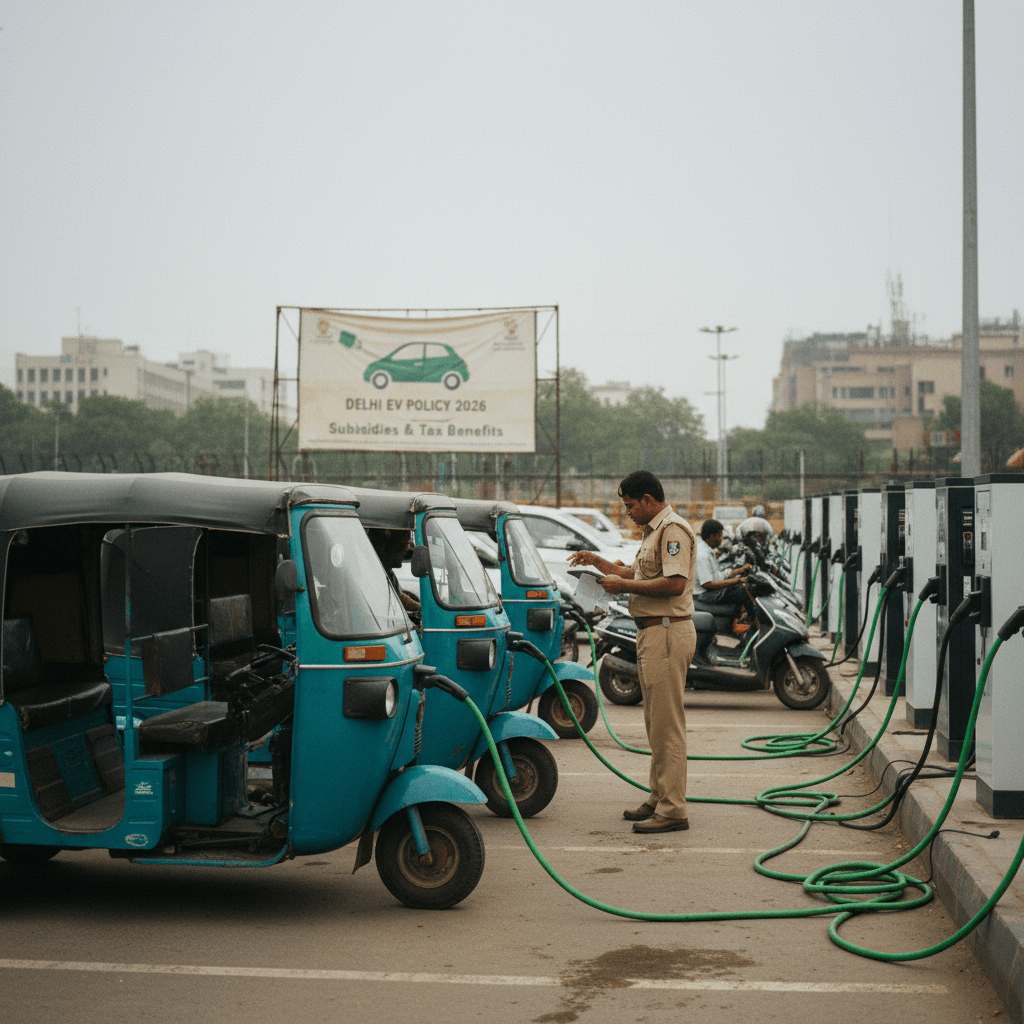
A traffic police officer inspects paperwork at an EV charging station in Delhi.
Delhi is set to accelerate the adoption of electric vehicles (EVs) through its Delhi EV Policy 2026, which includes a range of incentives designed to encourage the transition to cleaner transportation options.
The policy offers purchase subsidies and scrapping benefits for two-wheelers, three-wheelers, and cars, making EVs more affordable for a wider range of consumers. These incentives are aimed at reducing the upfront cost of electric vehicles, which has often been a barrier to adoption.
In addition to subsidies and scrapping benefits, the Delhi EV Policy 2026 also implements road tax exemptions for electric vehicles. This measure further reduces the overall cost of ownership, making EVs an even more attractive option for potential buyers.
The Delhi government is also mandating electrification across various sectors. This includes requirements for government fleets and public transportation to transition to electric vehicles, as well as incentives for private companies to electrify their vehicle fleets.
Through these combined efforts, Delhi aims to create a cleaner transport future by significantly increasing the number of electric vehicles on its roads by 2026. The policy is expected to contribute to a reduction in air pollution and greenhouse gas emissions, improving the overall quality of life for residents.
About the Author