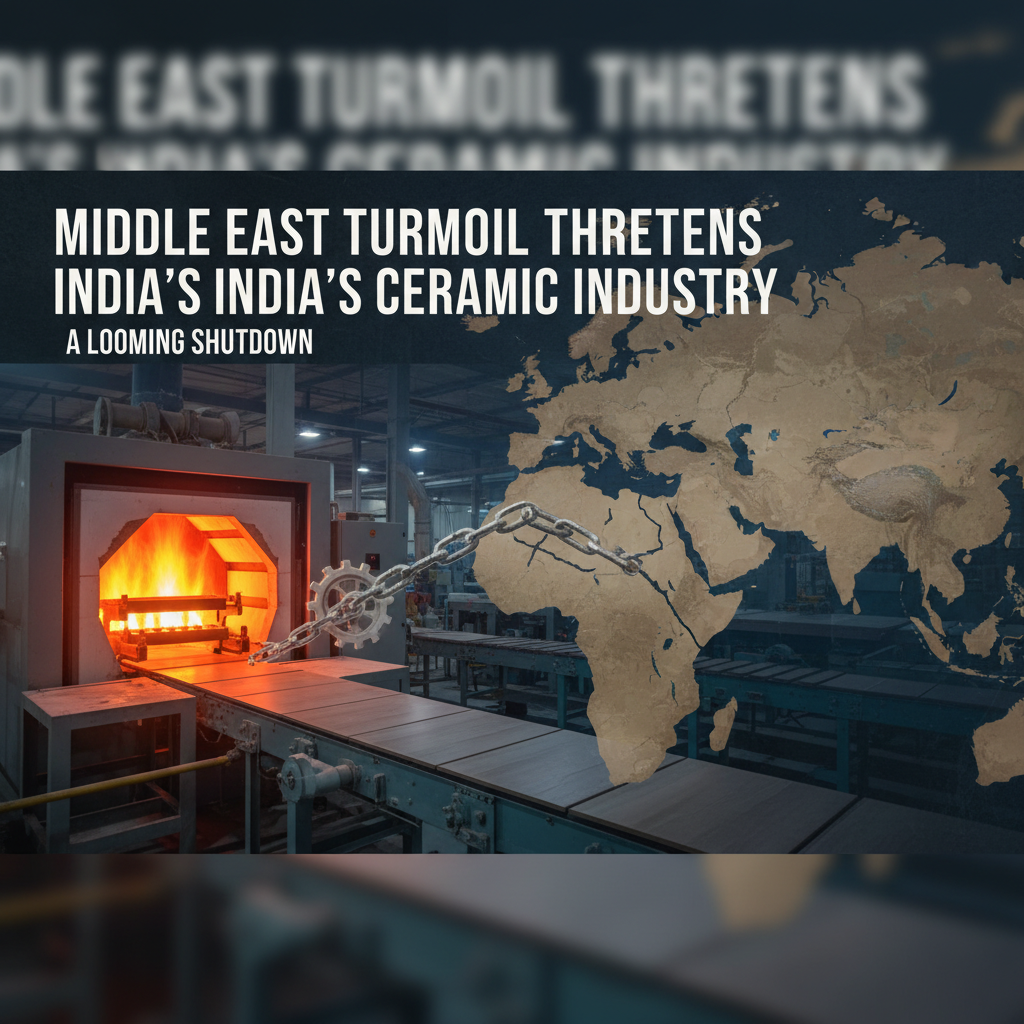
Middle East Turmoil Threatens India’s Ceramic Industry: A Looming Shutdown
The reverberations of the ongoing conflict in the Middle East are being felt far beyond the immediate battlegrounds, with India’s vital ceramics and tiles industry now teetering on the brink of collapse. The industry, a cornerstone of the Indian economy, particularly in the Morbi region of Gujarat, is facing an unprecedented crisis that threatens to halt production, disrupt exports, and jeopardize the livelihoods of hundreds of thousands of workers.
Fuel Shortages: The Immediate Threat
At the heart of the crisis lies a critical shortage of fuel, essential for the operation of the ceramic factories that dot the landscape of Morbi. The disruption in fuel supplies, directly linked to the instability in the Middle East, has forced many factories to dramatically curtail or completely halt their production lines. This immediate impact has sent shockwaves through the industry, creating a sense of urgency and concern among industry leaders.
The situation is so dire that, according to reports, industry leaders are warning of a widespread shutdown after March 15 if the fuel supply situation does not improve. This impending deadline casts a long shadow over the future of the sector, raising serious questions about its sustainability and the economic impact of a potential shutdown.
Exports Stalled: A Crippling Blow
The ceramics industry in India is heavily reliant on exports, with a significant portion of its products destined for the Middle East. The ongoing conflict has not only disrupted fuel supplies but has also brought exports to a complete standstill. This double blow—production halts coupled with the inability to sell existing inventory—is creating a perfect storm of challenges for manufacturers.
The loss of export revenue is a major concern, as it directly impacts the financial health of the companies and their ability to sustain operations. The disruption in trade relationships also has broader implications for India’s trade balance and its economic ties with the Middle East.
Morbi and Gujarat: The Epicenter of the Crisis
The impact of this crisis is particularly acute in Morbi, Gujarat, which is the heart of India’s ceramics industry. The region is home to a vast network of factories, employing a massive workforce. The potential shutdown of these factories would have devastating consequences for the local economy, leading to widespread job losses and economic hardship.
The crisis is not just confined to Morbi; the entire state of Gujarat, a major industrial hub in India, is likely to feel the ripple effects. The ceramics industry is a significant contributor to the state’s economy, and its struggles will undoubtedly impact other sectors and businesses.
Industry Leaders Sound the Alarm
As the situation deteriorates, industry leaders are urgently seeking solutions and calling for government intervention. The urgency of the situation is reflected in the warnings of a widespread shutdown if the fuel supply issues are not resolved promptly. These leaders are working to find a way to navigate this crisis and mitigate the damage to their businesses and employees.
The ceramic industry shutdown, the halt of production, and the disruption of exports to the Middle East are just some of the immediate challenges the industry is facing. The Middle East conflict disrupting fuel supplies is the primary cause, and the industry is struggling to cope with the fallout.
The Broader Implications
The crisis in the ceramics industry highlights the interconnectedness of the global economy and the vulnerability of businesses to geopolitical events. The conflict in the Middle East, a region thousands of miles away, is directly impacting the livelihoods of people in India.
This situation also underscores the importance of diversifying supply chains and reducing dependence on any single region or source. As the industry grapples with the fallout, it is also an opportunity to learn and adapt, so it can build greater resilience against future disruptions.
Conclusion
India’s ceramics and tiles industry is at a critical juncture. The combination of fuel shortages and the halt of exports to the Middle East, driven by the ongoing conflict, has created an environment of uncertainty and concern. With a potential shutdown looming after March 15, the industry and its stakeholders face a challenging path ahead. The government, industry leaders, and other stakeholders must work together to find solutions and mitigate the impact of this crisis, ensuring the long-term sustainability of this vital sector and protecting the livelihoods of the hundreds of thousands of workers who depend on it.
Sources: Industry-Economic Times
About the Author