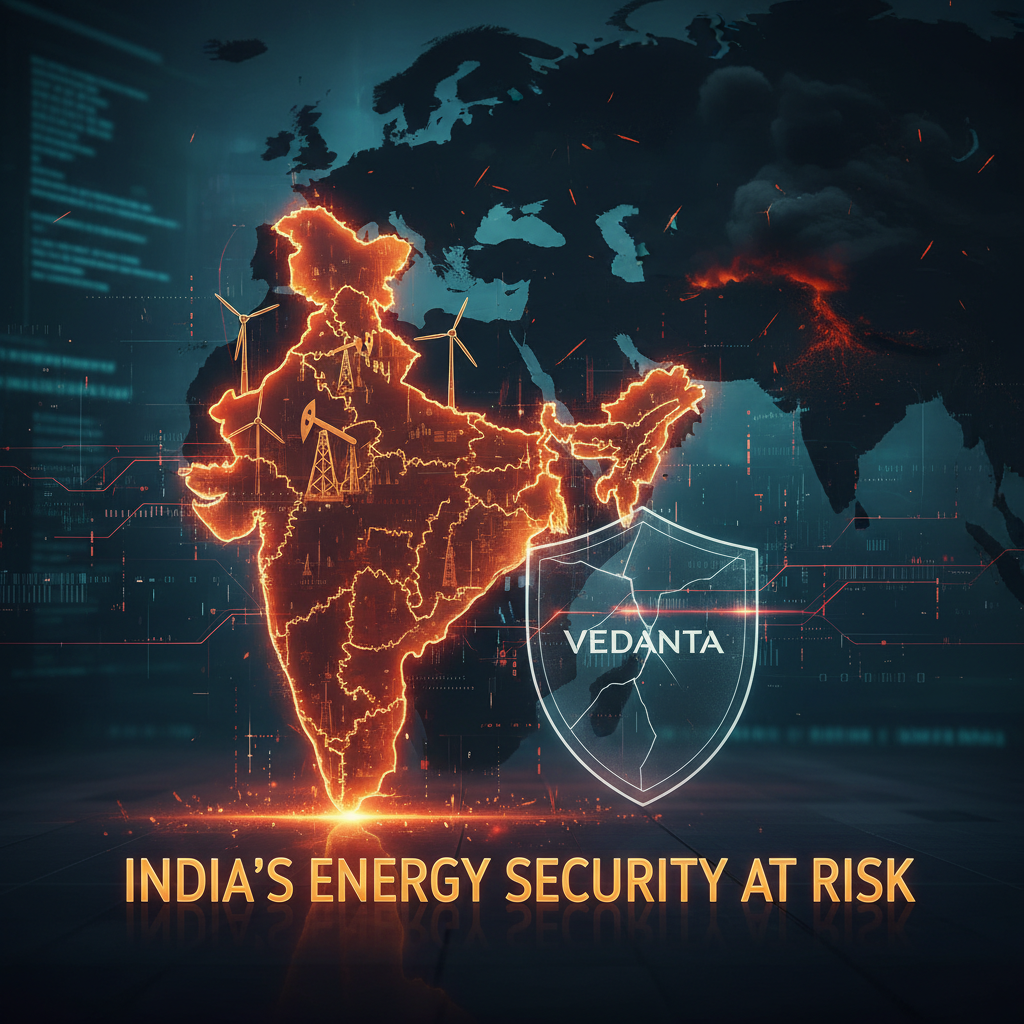
India’s Energy Security at Risk: Vedanta’s Warning Amidst Middle East Tensions
As geopolitical tensions escalate in the Middle East, a region pivotal to global oil supplies, India finds itself in a precarious position. The nation’s heavy reliance on energy imports has become a significant vulnerability, a concern that Anil Agarwal, Chairman of Vedanta, has brought to the forefront. Agarwal’s warning serves as a critical call to action, emphasizing the urgent need for India to fortify its energy security measures.
The Looming Threat of an Oil Shock
The core of Agarwal’s concern, as reported by the Economic Times, revolves around the potential for an oil shock triggered by the ongoing conflict in the Middle East. India’s dependence on imported oil makes it highly susceptible to price volatility and supply disruptions. The situation demands immediate attention from policymakers to mitigate the risks associated with this dependence. The primary why behind this urgency is India’s heavy reliance on energy imports, which makes it particularly vulnerable.
The Imperative of Domestic Resource Development
What Agarwal advocates is a multi-pronged approach focused on accelerating domestic resource development. This involves a critical examination and revision of existing regulatory frameworks and approval processes. The how to achieve this involves streamlining bureaucratic hurdles and creating a more conducive environment for domestic energy production. This approach is essential to reduce India’s reliance on foreign oil and enhance its self-sufficiency in the energy sector.
Streamlining Approval Processes
One of the key recommendations is to expedite the approval processes for energy projects. This would involve reducing the time taken for various clearances and approvals, thereby accelerating the pace of energy production. Streamlining these processes can significantly enhance the development of domestic resources.
Revising Regulatory Frameworks
A comprehensive review and revision of the existing regulatory frameworks are also essential. This includes updating policies to encourage investment in the energy sector, ensuring fair competition, and providing incentives for domestic exploration and production. The goal is to create a robust and resilient energy ecosystem within India.
The Broader Implications for India
The implications of this situation extend beyond mere economics. India’s energy security is intertwined with its geopolitical stability and economic growth. Any disruption in energy supplies can have cascading effects, impacting various sectors, from manufacturing to transportation. Therefore, Agarwal’s call for action is not just about managing immediate risks, but also about securing India’s long-term prosperity and strategic autonomy.
Conclusion
When tensions rise in the Middle East, India’s energy security faces significant challenges. Where India’s vulnerability lies is in its heavy reliance on imports, which Agarwal, the Chairman of Vedanta, highlights. His warnings are a stark reminder of the need for urgent action to address the risks of an oil shock. The path forward, as he suggests, involves a strategic focus on domestic resource development, achieved through streamlined approval processes and revised regulatory frameworks. This proactive approach is essential not only for mitigating short-term risks but also for ensuring India’s long-term energy security and economic resilience. The call to action is clear: India cannot afford to wait.
Source: Economic Times
About the Author