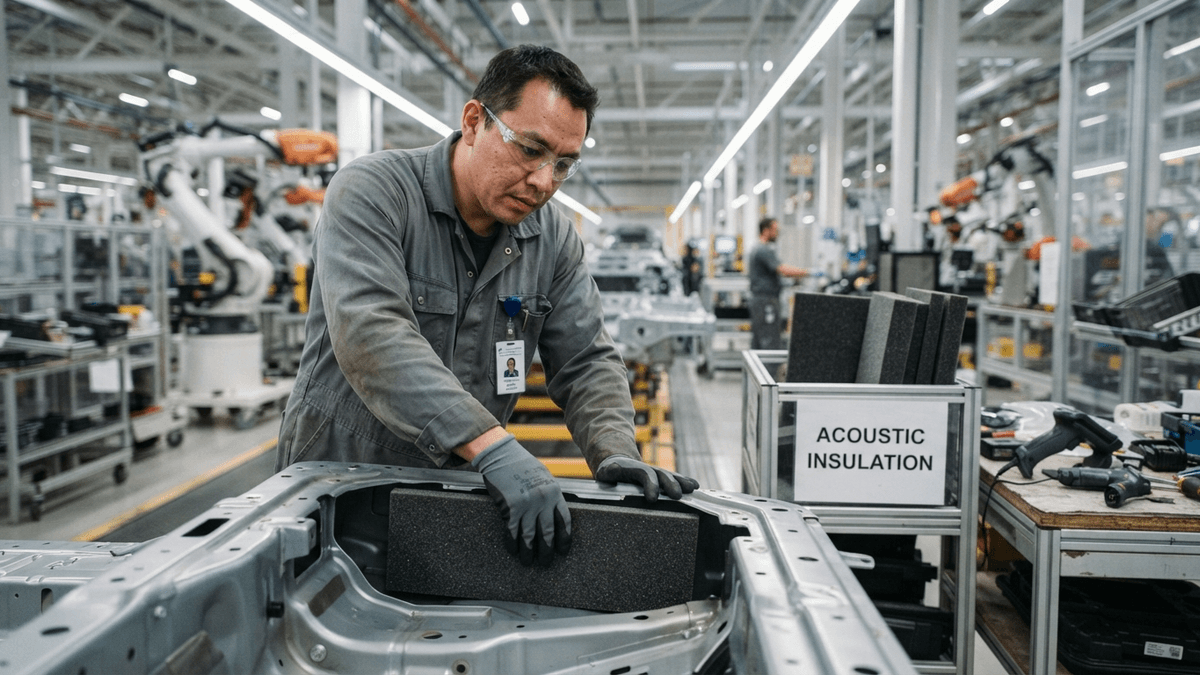
A worker installs an acoustic damping pad into an electric vehicle chassis.
The global acoustic damping pads market is entering a period of sustained growth, with market intelligence firm IndexBox projecting a compound annual growth rate (CAGR) of between 5.5% and 7.0% through 2035. For private equity investors and industrial manufacturers, this sector represents an increasingly critical component of the broader industrial automation supply chain.
The growth narrative is underpinned by two primary catalysts: the proliferation of automated machinery requiring high-precision vibration control and the tightening of international workplace safety regulations regarding noise pollution. As manufacturing facilities move toward higher degrees of automation to improve efficiency, the demand for damping materials that prevent mechanical fatigue and ensure operational longevity has become a focal point for capital expenditure.
The automotive sector, particularly the transition toward electric vehicles (EVs), further bolsters the market outlook. EVs lack the masking noise of internal combustion engines, forcing manufacturers to integrate more sophisticated acoustic insulation solutions to maintain cabin comfort. Additionally, the construction and HVAC sectors continue to drive volume as urban densification mandates stricter noise reduction standards.
While raw material price volatility remains a structural risk, the market is seeing a pivot toward sustainable and high-performance synthetic materials. For institutional investors looking at industrial infrastructure, the acoustic damping segment offers a defensive play within the manufacturing value chain, benefiting from the long-term thematic shift toward smarter, quieter, and more efficient industrial environments.
About the Author