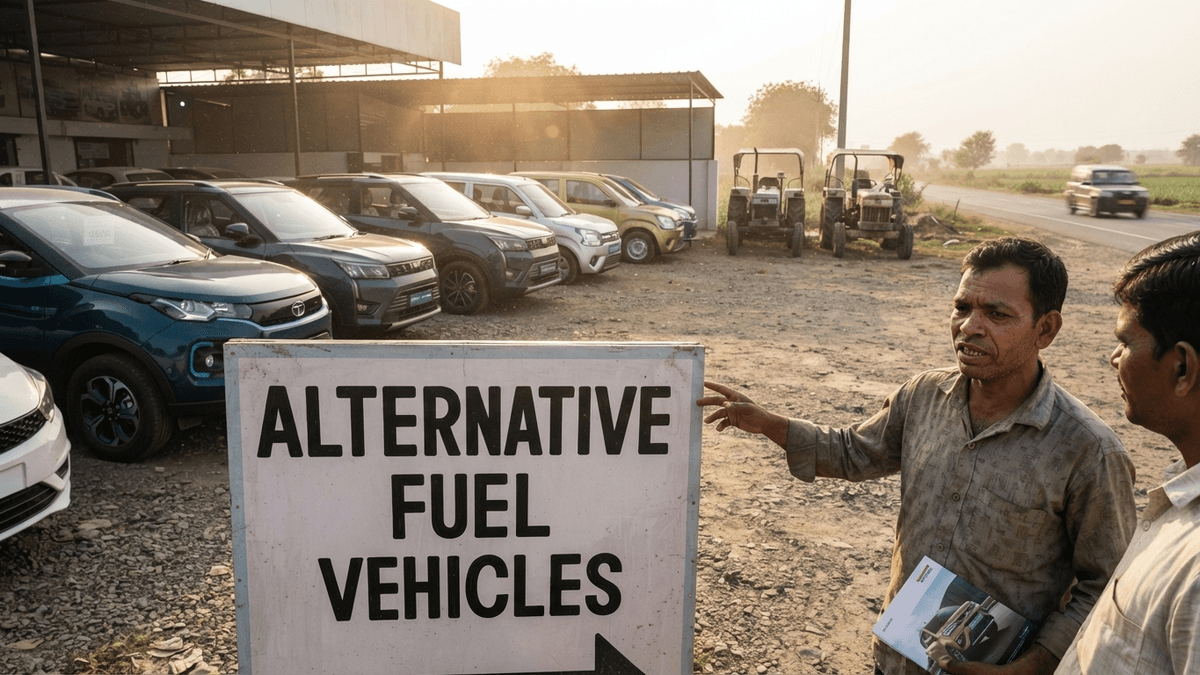
A rural Indian dealership displays alternative fuel vehicles in August 2026.
India’s automotive retail market reached a historic milestone in August 2026, recording unprecedented sales volumes that underscore a structural shift in consumer demand. Most notably, alternative fuel vehicles have officially eclipsed traditional petrol-powered passenger vehicles, marking a pivotal transition in the country’s mobility landscape.
The data reveals a robust performance in rural markets, which outperformed urban centers across multiple vehicle segments. While the monsoon season typically introduces volatility in agricultural-linked sectors, tractor sales remained steady, reflecting resilience in the rural economy. This trend suggests a deepening penetration of modern automotive solutions beyond Tier-1 cities.
For institutional investors and private equity firms tracking the Indian industrial sector, these figures provide a clear signal of shifting capital allocation priorities. The move toward alternative fuels—spanning electric, hybrid, and CNG technologies—is no longer a niche segment but the primary driver of market growth. Industry stakeholders and auto dealers are now bracing for an intensive demand evaluation period between September and November, a critical window that will determine the momentum of capital expenditure and supply chain investments for the remainder of the fiscal year.
As consumer preferences align with the government’s push for cleaner energy and energy security, the automotive sector is poised for a sustained transformation. Investors should monitor how original equipment manufacturers (OEMs) adjust their production capacities and R&D spending to meet this accelerating demand for non-petrol alternatives.
About the Author