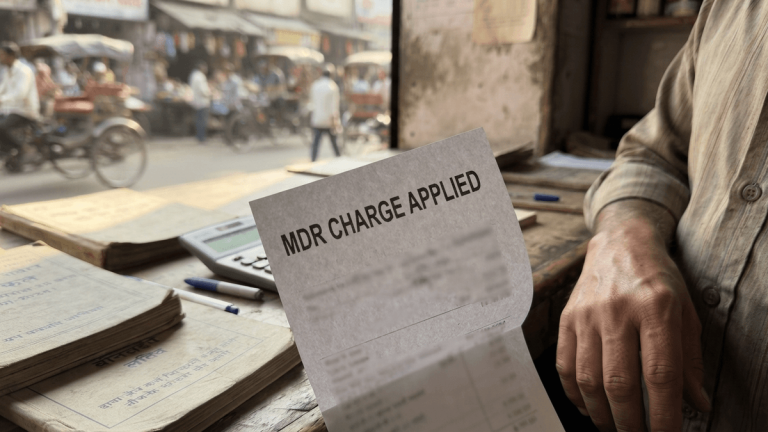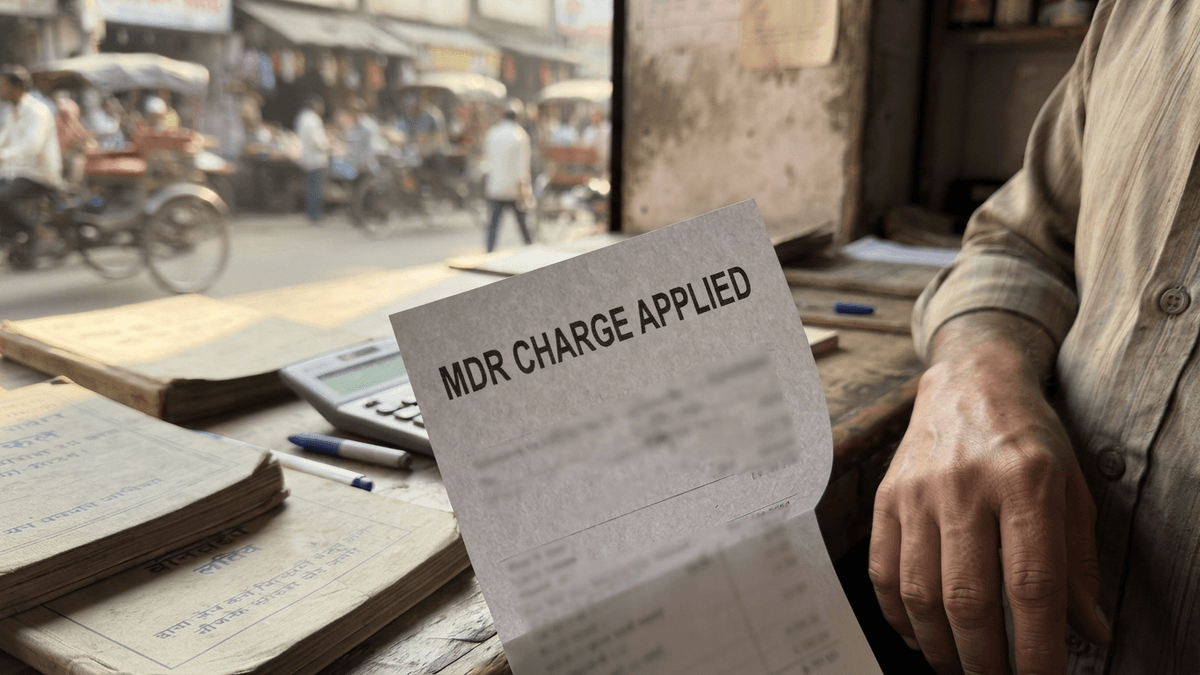
A receipt showing a merchant discount rate charge in an Indian shop.
The Indian government is signaling a definitive shift in the digital payments landscape, as it moves to phase out subsidies for Unified Payments Interface (UPI) and RuPay transactions. This policy shift marks a transition toward a self-sustaining ecosystem where Merchant Discount Rates (MDR) are expected to replace taxpayer-funded incentives.
According to reports, no new subsidies have been disbursed for transactions since April 2025. This development follows a period of declining incentive payouts in recent fiscal years, indicating a deliberate effort by policymakers to reduce the fiscal burden associated with the rapid expansion of digital financial infrastructure.
For the private sector and financial technology firms, this move carries significant strategic implications. Since the inception of UPI, the zero-MDR regime has been a double-edged sword: while it facilitated massive user adoption and financial inclusion, it created a challenging environment for payment service providers (PSPs) seeking to monetize their infrastructure. The reintroduction or normalization of merchant fees suggests that the digital payments market has reached a maturity level capable of supporting commercial revenue models.
Institutional investors and venture capital firms monitoring the Indian fintech space will likely view this transition as a positive signal for long-term sustainability. As the market moves away from state-backed support, the focus will shift toward operational efficiency and the ability of platforms to capture value directly from the merchant ecosystem. This evolution is expected to consolidate the market, favoring players with robust technological stacks and high-volume merchant networks.
The move also aligns with broader fiscal consolidation efforts, as the government seeks to optimize expenditures while maintaining the momentum of the digital economy. As the ecosystem matures, the interplay between regulatory policy and market-driven pricing will be the primary determinant for the next phase of growth in India’s digital payments sector.
About the Author