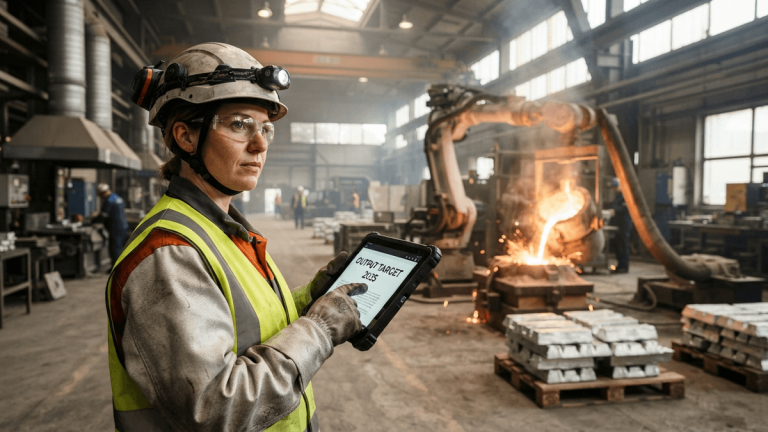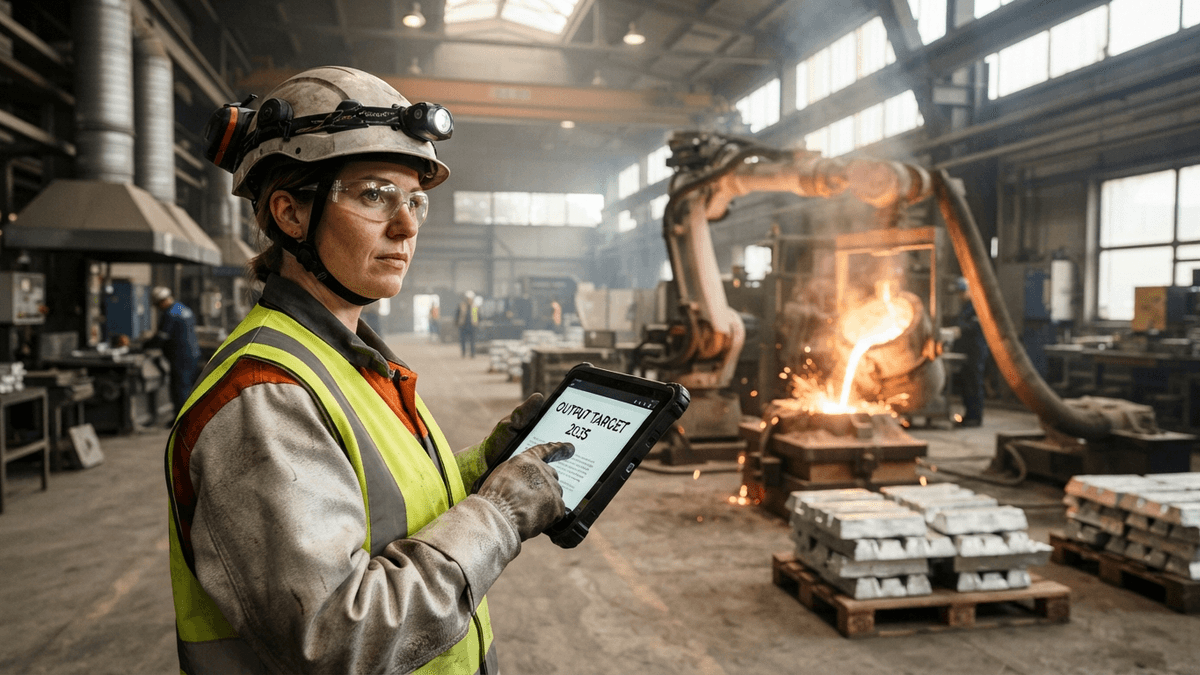
A technician monitors automated casting processes in a metal foundry.
The global metal foundry products market is poised for significant expansion, with industry projections indicating a valuation exceeding $427.77 billion by 2035, according to data from SNS Insider. This growth trajectory reflects the enduring criticality of metal casting as a foundational manufacturing process for the global economy.
Strategic demand is being primarily funneled through the automotive, construction, and industrial machinery sectors. In the automotive industry, the transition toward lightweight and durable components remains a primary catalyst as manufacturers seek to improve fuel efficiency and performance standards. Simultaneously, large-scale global infrastructure projects continue to drive consistent demand for high-grade construction-related metal castings.
From an operational perspective, the industry is undergoing a structural shift toward automation and digitalization. Foundries are increasingly integrating advanced manufacturing technologies to enhance precision, reduce material waste, and improve operational margins. These capital-intensive upgrades are becoming a prerequisite for firms looking to compete in a market increasingly defined by environmental, social, and governance (ESG) standards and stringent energy-efficiency regulations.
Regionally, the Asia-Pacific market maintains its dominant position, supported by rapid industrialization and deep-rooted manufacturing supply chains. In contrast, North American and European foundries are pivoting toward high-value, specialized casting solutions to differentiate themselves in a mature market environment. For institutional investors and private equity firms, the sector offers opportunities in consolidation and technology-led modernization, as fragmentation remains high and the need for energy-efficient production methods becomes a key driver for long-term value creation.
About the Author