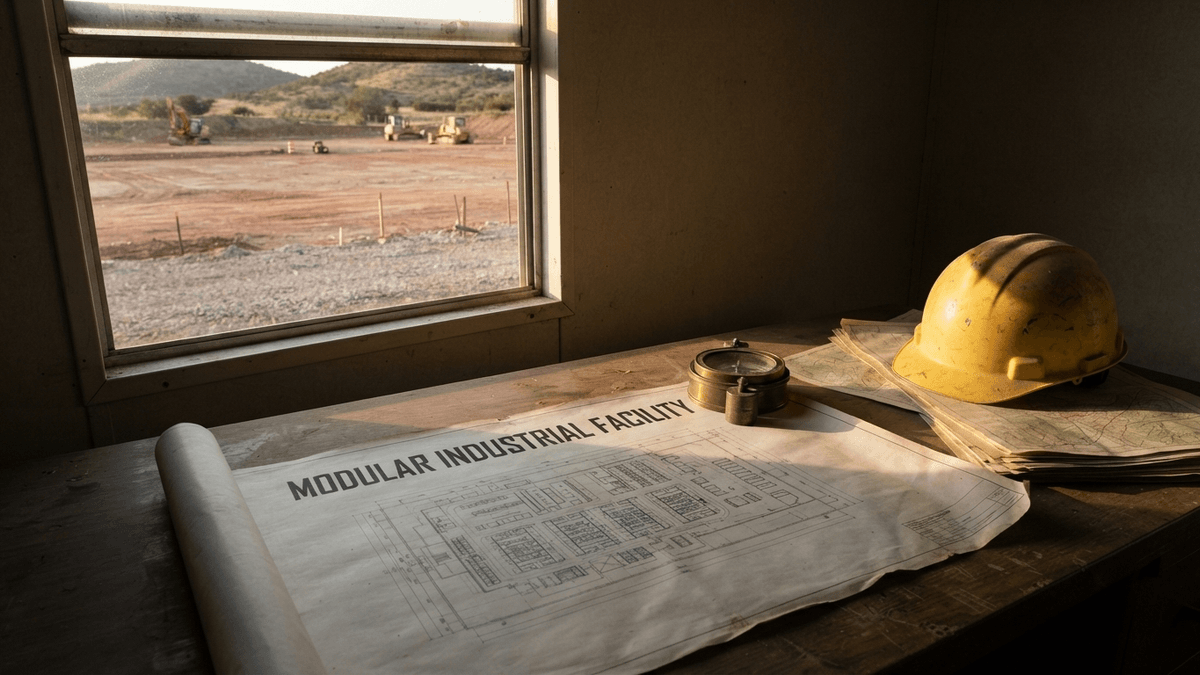
A blueprint for a modular industrial facility sits on a desk at an undeveloped construction site.
The United States is currently experiencing a historic surge in artificial intelligence investment, with capital expenditure from hyperscalers projected to reach $1 trillion by the end of 2026, up from just $15 billion in 2005. Despite this massive influx of capital, the broader industrial economy has yet to see a corresponding uptick in productive investment, according to recent analysis.
Data indicates that spending on tangible assets—including factories, infrastructure, and heavy equipment—remains stagnant as a share of U.S. GDP. For institutional investors and private equity firms, this suggests a significant disconnect between the high-growth tech sector and the physical industrial base required to sustain long-term economic expansion.
The disparity is largely attributed to structural inefficiencies within the U.S. industrial landscape. High operational costs, including labor and materials, coupled with extended construction timelines compared to Asian markets, continue to serve as significant barriers to entry for large-scale industrial projects. These factors have limited the impact of AI-driven capital flows on domestic manufacturing productivity.
To bridge this gap, market experts suggest that firms pivot toward modular, off-site construction methodologies and AI-integrated operational models to drive cost efficiencies. For investors, the challenge remains identifying opportunities that can navigate these “Achilles heels” of the U.S. economy, particularly in sectors critical to national security, where policy support may offer a buffer against systemic cost pressures.
About the Author