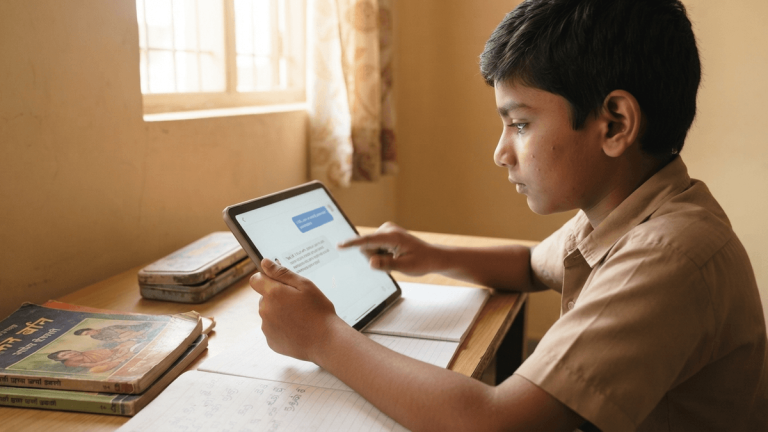
Indian AI researcher analyzing agricultural data in a modern lab.
The Union government has disbursed ₹276.1 crore to establish four national centres of excellence (CoE) in Artificial Intelligence (AI), according to information provided to Parliament by Minister of State for Education, Sukanta Majumdar. These centres are being set up at the Indian Institutes of Technology (IIT) Ropar, IIT Kanpur, IIT Madras, and the Indian Institute of Science (IISc) Bangalore.
Specifically, IIT Kanpur has received ₹74.39 crore, IIT Ropar ₹62.64 crore, and IISc Bangalore ₹69.07 crore. IIT Madras has been allocated ₹43 crore for its AI-CoE. Prior to this, ₹27 crore was disbursed to a consortium of institutions during a pilot phase from March 2023 to March 2025 for the selection of these centres.
The initiative aligns with the government’s vision to “Make AI in India and Make AI work for India,” as announced in the Union Budget 2023-24. The three initial AI-CoEs, led by IIT Ropar, IIT Kanpur, and IISc Bangalore, focus on agriculture, sustainable cities, and healthcare. These centres have been active in publishing research and developing AI models in collaboration with academic institutions, industry players, and government organizations.
The AI-CoE at IIT Madras is developing machine learning models for Indic languages, covering areas like automatic speech recognition (ASR), optical character recognition (OCR), machine translation (MT), and text-to-speech (TTS). Meanwhile, IIT Ropar’s AI-CoE is focused on developing models for crop, pest, and disease identification in agriculture. IIT Kanpur’s AI-CoE for sustainable cities is working on large language models for air pollution attribution and urban flood prediction.
The progress and utilization of funds at these centres are overseen through a multi-layered governance and financial monitoring mechanism. An apex panel comprising industry leaders and senior administrators conducts periodic reviews, supported by an independent Project Monitoring and Review Committee and external domain experts from the Central Project Management Unit. These reviews assess technological advancements against deliverables and financial expenditure.
This development follows a recent announcement that the Centre has approved 58 AI-CoEs and 543 data and AI labs across India, with the IndiaAI Mission identifying 762 potential AI use cases across 62 ministries. Additionally, 686 fellowships have been awarded nationally across 178 institutions, with 162 awarded to students from Tamil Nadu.
The establishment of these AI Centres of Excellence is part of a broader strategy under the ₹10,370 crore IndiaAI Mission, which aims to enhance computing infrastructure access, support AI startups, foster the development of indigenous large language models, and create AI datasets. This push is expected to contribute significantly to India’s burgeoning AI ecosystem, projected to become a $126 billion opportunity by 2030.
About the Author