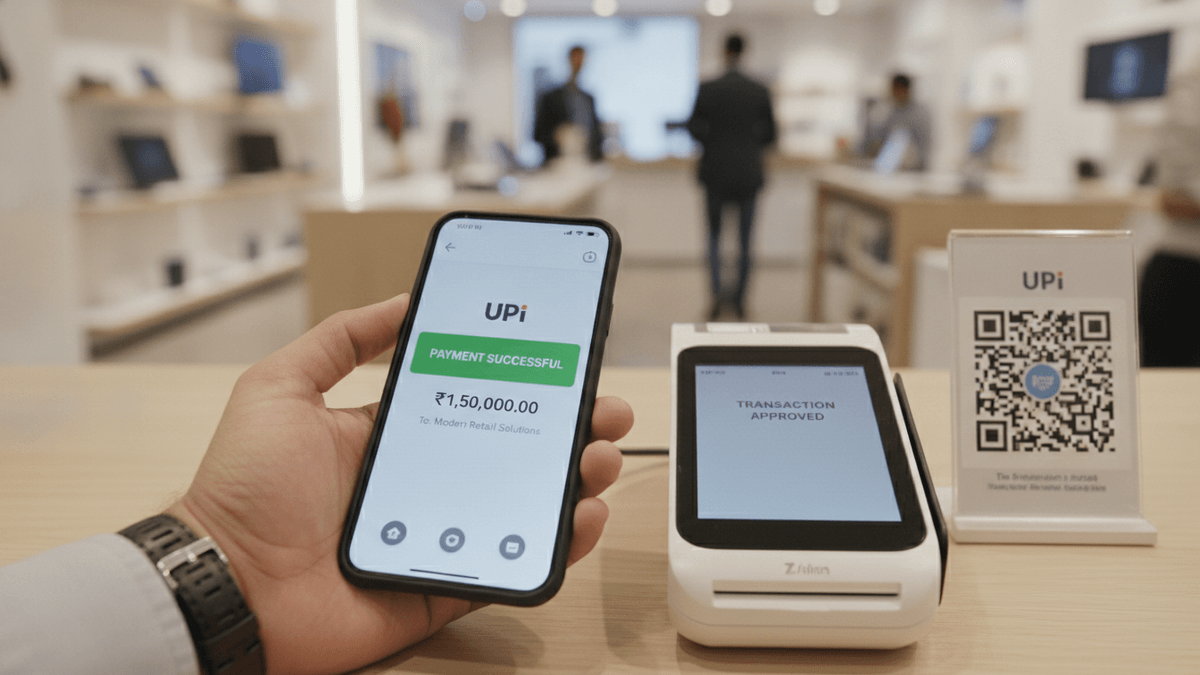
Customer completes a large UPI transaction on a smartphone in a modern retail store.
The Indian government is exploring the reintroduction of Merchant Discount Rates (MDR) for large-value Unified Payments Interface (UPI) transactions. Proposed amendments to the Payment and Settlement Systems Act could enable this shift, which aims to provide a crucial revenue stream for banks and fintech companies. This move is expected to help these entities recover their investments in technology and infrastructure that support the rapidly growing digital payments ecosystem.
Under the proposed framework, MDR could be applied to UPI transactions exceeding a certain threshold, reportedly around two thousand rupees, particularly for larger merchants. The government’s intention is to balance the need for revenue generation within the payment industry with the goal of maintaining the widespread adoption and accessibility of UPI for everyday transactions.
The potential reintroduction of MDR signals a significant policy consideration for India’s digital payment landscape. While UPI has seen exponential growth, often operating without direct charges to consumers or merchants on smaller transactions, the cost of maintaining and upgrading the underlying infrastructure falls on payment service providers. This policy adjustment could offer a sustainable financial model for these vital players in India’s digital economy.
About the Author