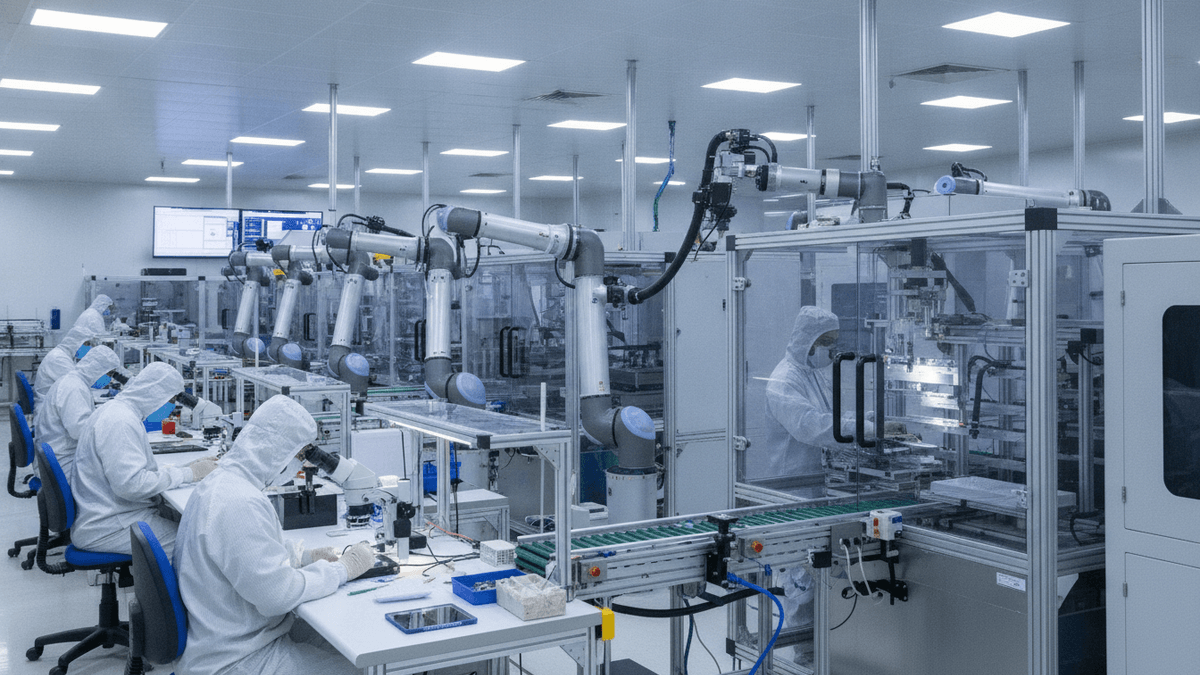
High-tech manufacturing facility in India with technicians and automated production lines.
India is implementing a comprehensive industrial strategy aimed at bolstering domestic manufacturing capabilities across a spectrum of strategic sectors, including semiconductors, electronics, commercial space, green mobility, rare earths, shipbuilding, and coal gasification. This coordinated push, as indicated by a Finance Ministry report, signals a significant governmental effort to reduce the nation’s reliance on imports and enhance its self-sufficiency in critical industries.
The initiative encompasses a wide array of high-value and technologically advanced fields. In the semiconductor and electronics sectors, the government is likely focusing on incentives and policy frameworks to attract investment and foster local production capabilities, crucial for digital infrastructure and advanced manufacturing. The push into commercial space and green mobility, particularly hydrogen trains, highlights India’s commitment to innovation and sustainable development, aligning with global trends towards decarbonization and advanced technology adoption.
Furthermore, the focus on rare earths, shipbuilding, and coal gasification points to a strategy designed to secure supply chains for essential raw materials and energy resources, as well as to modernize traditional industries. By developing these sectors domestically, India aims to create a more resilient economy, reduce foreign exchange outgo on imports, and potentially emerge as a significant player in global supply chains for these critical goods and technologies.
This broad-based industrial acceleration is expected to have significant implications for private equity and venture capital investors looking to tap into India’s rapidly growing manufacturing landscape. The government’s clear policy direction provides a conducive environment for capital deployment in sectors poised for substantial growth and technological advancement.
About the Author