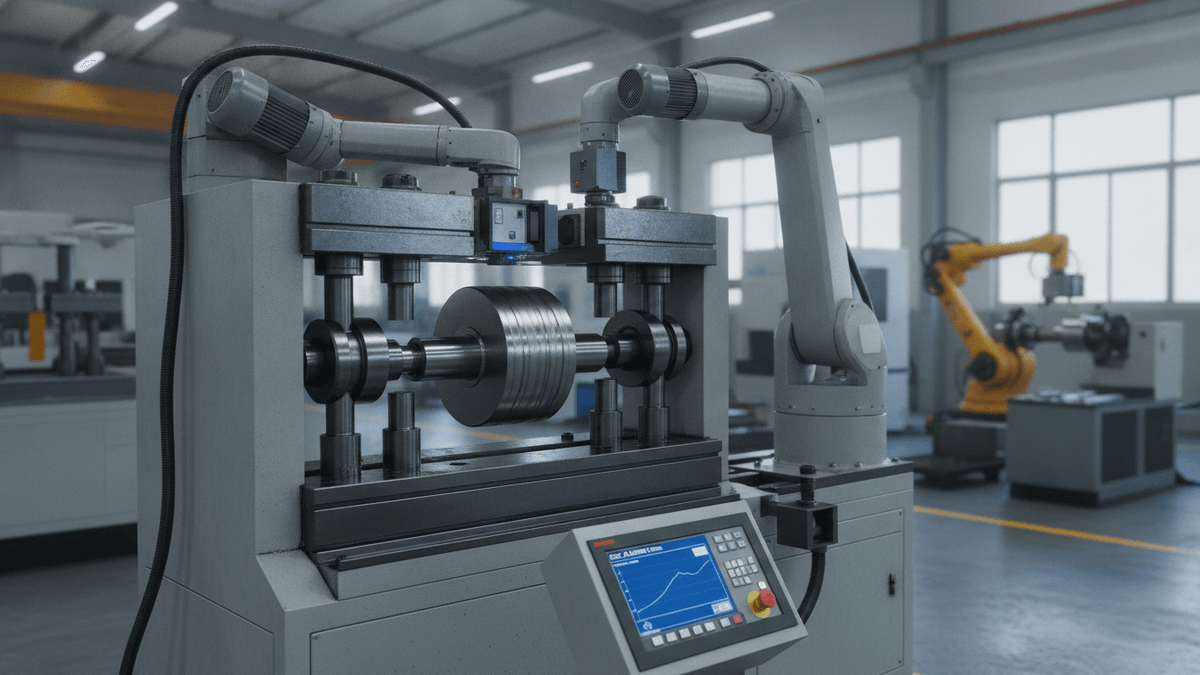
CNC shaft straightening machine in operation
The Indian market for shaft straightening machines is projected to experience significant growth between 2026 and 2035, with unit terms expected to expand at a compound annual growth rate (CAGR) of 6–8% and value terms at 7–9%. This expansion is fueled by the increasing adoption of industrial automation, advancements in precision manufacturing, and consistent replacement demand across key sectors such as automotive, heavy machinery, and electronics.
A notable trend shaping the market is the accelerating shift towards automated CNC and servo-electric systems. These advanced solutions are anticipated to account for over 35% of unit sales by 2030. Furthermore, the integration of in-process measurement and closed-loop feedback systems is becoming increasingly crucial for manufacturers seeking to enhance efficiency and accuracy.
Despite the positive growth outlook, the market faces several challenges. Long supplier qualification cycles, the volatility of input costs for imported components, and a persistent shortage of skilled labor present significant hurdles for market participants. These machines are essential for correcting geometric deviations in cylindrical workpieces like shafts and rotors, with the automotive industry, particularly the ongoing transition to electric vehicles (EVs), acting as a primary demand driver.
Pricing for these machines varies considerably, largely dependent on the level of automation and the incorporation of imported components, which represent a substantial cost factor. The competitive landscape is characterized by a tiered structure, with multinational corporations dominating the premium segment. Meanwhile, domestic Indian manufacturers and smaller-scale importers compete in other market segments.
India remains a net importer of shaft straightening machines, with primary sourcing from Germany, Italy, Japan, China, and Taiwan. Key opportunities for growth lie in the upgrading of existing machinery, catering to the burgeoning EV and renewable energy sectors, and the strategic adoption of Industry 4.0 capabilities to enhance competitiveness and operational efficiency.
About the Author