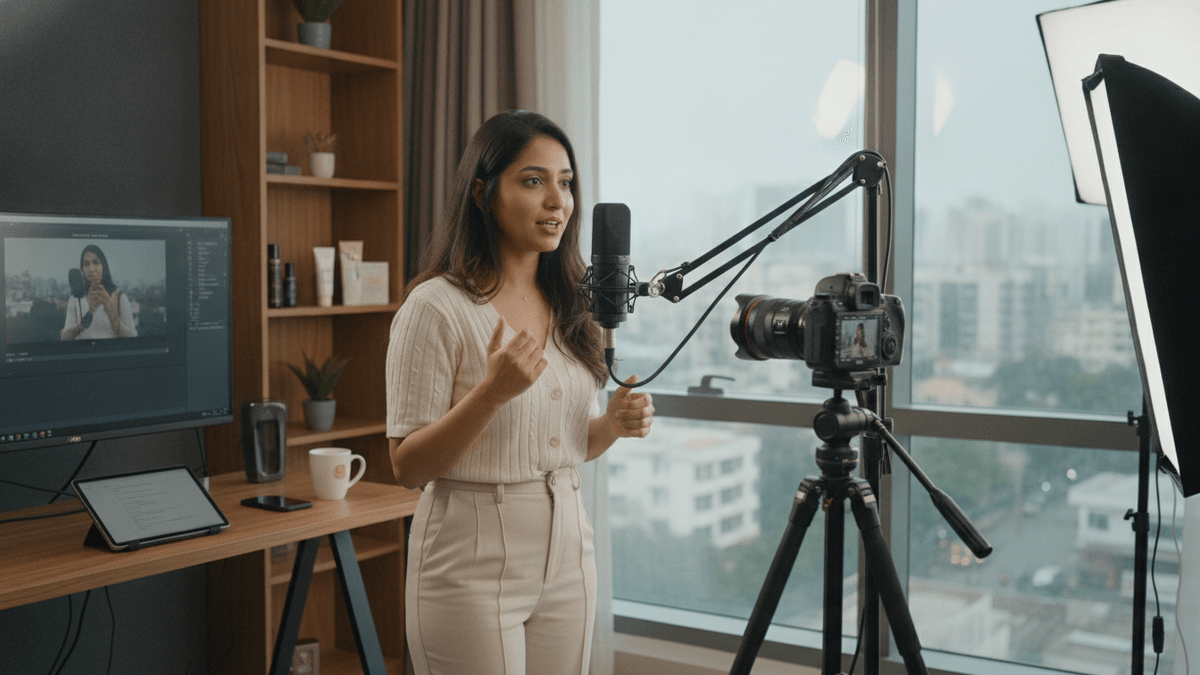
Digital content creator recording in a modern studio.
In a strategic shift driven by escalating customer acquisition costs and diminishing returns from traditional performance marketing, Direct-to-Consumer (D2C) brands in India are increasingly focusing on building their own media capabilities. This trend sees burgeoning consumer brands investing heavily in original content and community building to directly own consumer attention rather than solely relying on rented advertising space.
The Shift Towards Owned Media
The rationale behind this pivot is clear: as customer acquisition costs rise and ad fatigue sets in, brands are seeking more sustainable ways to connect with their audience. This has led to a surge in D2C companies either acquiring existing media platforms or developing in-house content studios. Notable examples include Mensa Brands’ acquisitions of MensXP and iDiva, Nykaa’s investment in Little Black Book, and Honasa’s purchase of Momspresso, all aimed at capturing consumer attention and fostering direct relationships.
Brands like Bombay Shaving Company, through its platform 100Days.co, are producing content to help other D2C brands scale. Similarly, athleisure startup Blissclub, healthy snacking company The Whole Truth, and audio wearables brand boAt are actively creating content through podcasts, short films, and interviews to engage their target demographics.
Economic Imperatives and Strategic Advantages
The economics of customer acquisition are changing. Historically, brands relied heavily on platforms like Meta and Google, often spending a significant portion of a product’s value on acquisition. This model, described as ‘paying the customer to make a purchase,’ is becoming less efficient due to market saturation and creative fatigue.
Aditya Singh, co-founder of All In Capital, notes that in crowded markets, especially in sectors like beauty and personal care where products can be easily replicated, a brand’s audience becomes its most defensible moat. Owning media channels allows brands to bypass the clutter, increase the efficiency of their advertising spend (ROAS), and build direct, long-term relationships with consumers. This strategy is seen as a way to reduce cash burn and improve overall profitability.
Content as a Moat: Opportunities and Challenges
High-quality content is proving to be effective across the marketing funnel, attracting more qualified leads, improving engagement, and building purchase confidence. While creator-led content, community building, and various digital formats like podcasts and web series are gaining traction, the sustainability of this ‘media moat’ is still being tested. Some brands, like BRND.ME and Honasa, have reportedly divested from media assets or scaled back community initiatives, indicating that a purely media-focused approach may not always be viable.
Industry experts emphasize that while owned media can strengthen conversions and brand equity, long-term retention hinges on the product itself. Shreyans Jain, founder of Nutrabay, suggests that beyond direct communication channels like email and SMS, brand-owned media under the same brand name might face trust issues for some consumers. The consensus is that content should be viewed as a compounding brand intellectual property (IP) rather than a standalone monetizable business, working in tandem with a strong product and effective marketing.
Founders are advised to build trust through authenticity, foster conversations rather than just content, and allow commercial outcomes to follow the value provided. In an era increasingly dominated by AI-generated content, human-led authenticity is emerging as a critical differentiator for D2C brands seeking to build lasting connections with their customers.
About the Author