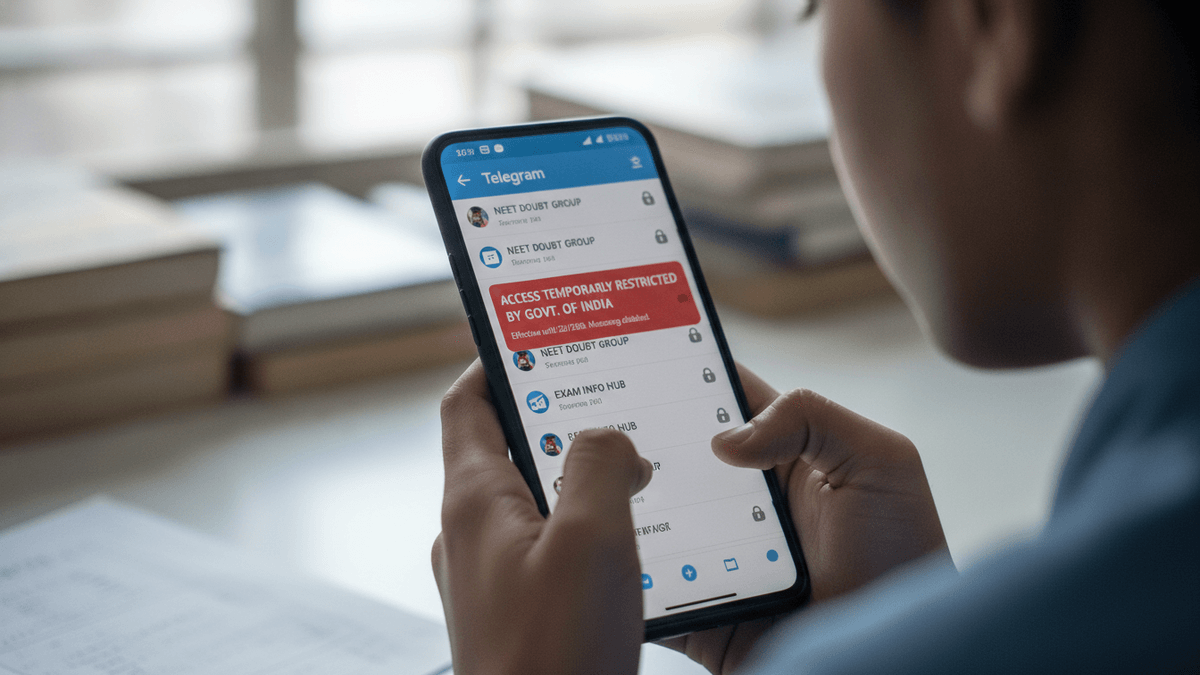
Student in India views a "restricted" message on the Telegram app during daylight hours.
The Ministry of Electronics and Information Technology (MeitY) in India has implemented a temporary restriction on access to the messaging platform Telegram, effective until June 22, 2026. Additionally, the platform’s message-editing feature has been disabled within the country until June 30, 2026. This decisive action aims to curb alleged exam-related fraud and the spread of misinformation associated with the National Eligibility cum Entrance Test (NEET) for undergraduate admissions in 2026.
The directive follows recommendations from the National Testing Agency (NTA), with operational support from the Indian Cyber Crime Coordination Centre (I4C), an entity under the Ministry of Home Affairs. The NTA cited the use of Telegram by organized cheating rackets to facilitate the sale of fake examination papers, disseminate false information, and fabricate evidence of leaks. The platform’s editing functionality allowed administrators to alter past messages, attaching actual exam papers while maintaining the original timestamp, thereby creating misleading impressions of pre-exam leaks.
The I4C has been actively coordinating efforts against fraudulent activities on Telegram targeting NEET candidates. Intelligence gathered from the NTA and state law enforcement agencies, including police forces in Bihar, Gujarat, and Rajasthan, has led to the takedown of numerous channels, groups, and bots allegedly involved in these operations. Reports indicate that channels operating under names like “PAPER LEAKED NEET” and “Re-NEET 2026” were soliciting substantial sums from candidates and their families in exchange for purported access to exam papers. The NTA has strongly reiterated that no such papers are available outside the official examination channels.
The NEET-UG 2026 examination, originally scheduled for May 3, was canceled by the NTA due to a multi-state paper leak scandal, which has prompted a widespread investigation by the Central Bureau of Investigation (CBI).
While acknowledging that the Telegram restriction might affect legitimate users, the NTA emphasized its temporary nature, assuring that messaging services will resume once access is restored. Telegram has previously faced international scrutiny for the proliferation of misinformation, scams, piracy, and extremist content on its platform, largely due to its extensive public channels and comparatively limited moderation practices.
This development occurs in India, Telegram’s largest market, which accounts for over 104 million monthly active users, representing more than a fifth of the platform’s global audience. Notably, prior to the NEET issue, Telegram was involved in a data leak incident concerning millions of Star Health’s customers in September 2024.
About the Author