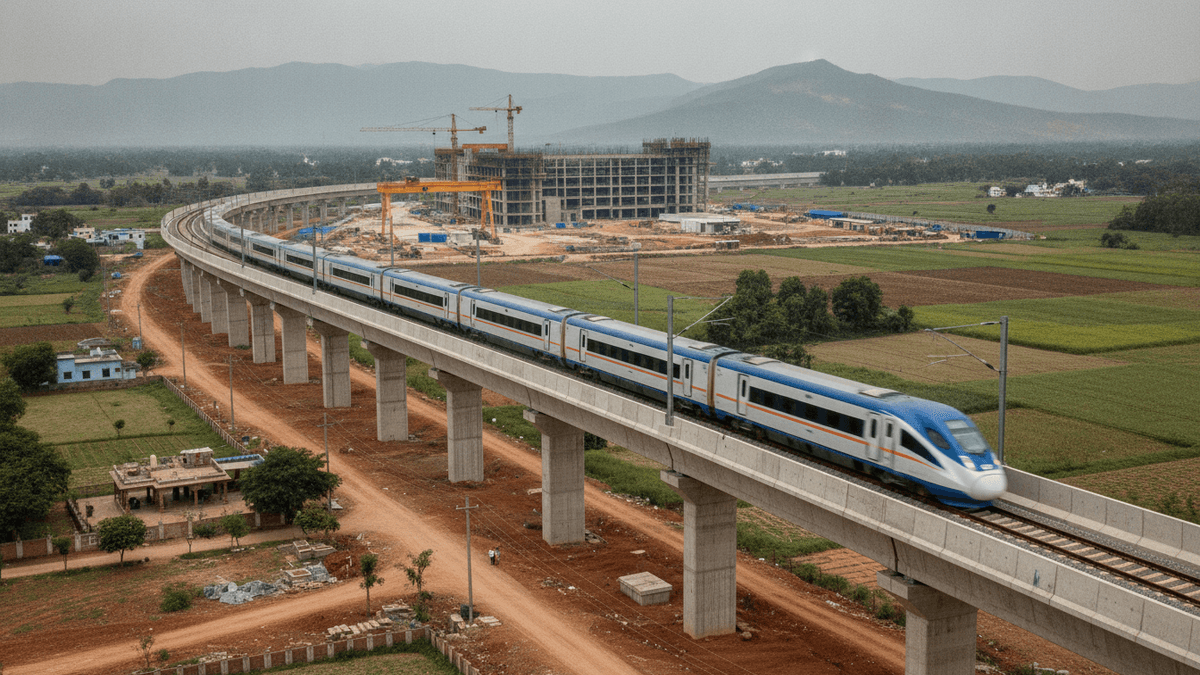
A high-speed train on an elevated track with construction in the background.
Indian Railways is set to undertake a monumental infrastructure project, envisioning a network of seven dedicated high-speed rail corridors across the country. This ambitious plan, with an estimated investment of Rs 16 lakh crore (approximately $192 billion USD), aims to significantly reduce travel times between major urban centers.
Key proposals within this initiative include the development of routes connecting Delhi to Varanasi and subsequently to Siliguri. These corridors are designed to enhance connectivity across Western, Northern, Southern, and Eastern India, potentially transforming inter-city travel and logistics.
Beyond the infrastructure development, the project also signifies a push towards indigenous technological advancement. India is actively working on developing its own bullet train technology, with trial runs anticipated by 2027. This focus on domestic capabilities is expected to foster a new segment within the capital goods sector, potentially attracting investment in manufacturing and technology development related to high-speed rail.
While the article does not detail specific private or institutional investment figures for the project, the sheer scale of the government-backed initiative implies substantial opportunities for capital goods manufacturers, construction firms, and technology providers. The Rs 16 lakh crore outlay highlights a significant government commitment to modernizing its transportation infrastructure, a move that could stimulate economic activity and create a new benchmark for high-speed rail development in the region.
About the Author