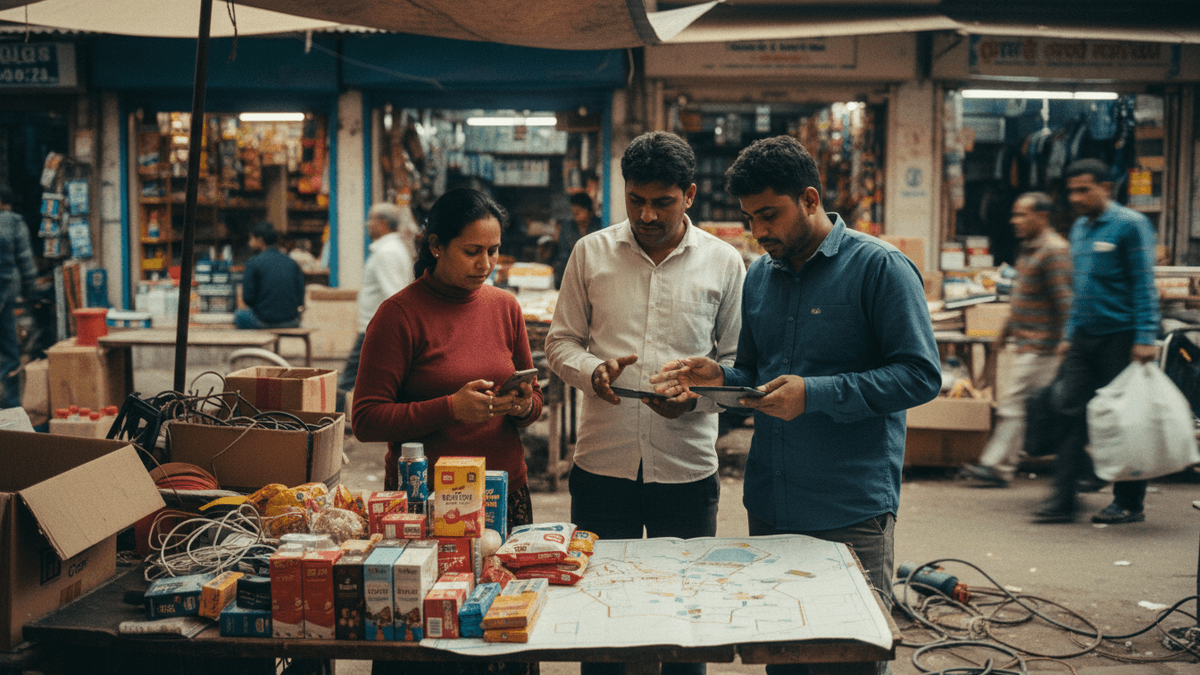
Merchants strategize at a bustling Indian market, leveraging digital tools for wider reach.
India’s burgeoning ecommerce market, valued at $165 billion, faces a growth challenge: a significant concentration of spending among a small consumer group. According to Inc42 Datalabs, merely 2% of India’s 958 million internet users, identified as ‘power shoppers,’ account for 60% of the nation’s ecommerce Gross Merchandise Value (GMV). This means that out of an estimated 350 million online shoppers over time, only 19 million are responsible for over half of all transactions on ecommerce and D2C platforms.
Power shoppers are characterized by their high purchase intent and spending capacity, often prioritizing D2C brands for convenience and personalized experiences. These digitally native consumers are comfortable with online transactions and tend to place frequent, high-value orders, disproportionately benefiting premium D2C segments. While this concentration presents a competitive landscape for brands vying for these high-frequency buyers, it also highlights a substantial opportunity to cultivate a broader consumer base into high-value customers through innovative acquisition and engagement models.
The expansion into Tier II and III markets is becoming crucial, driven by widespread UPI adoption, social media-driven brand discovery, and increasing discretionary incomes among Gen Z consumers. While omnichannel strategies may be effective in metropolitan areas, the limited organized retail infrastructure in smaller cities is expected to fuel incremental ecommerce GMV growth. This necessitates accessible pricing, distribution, and product strategies tailored for these emerging markets.
Brands are increasingly focusing on retention strategies for Gen Z consumers, who exhibit lower brand loyalty and high expectations for convenience, speed, aesthetics, and overall experience. Community building and influencer marketing are becoming key to engaging this demographic, which values premium experiences alongside competitive pricing. Indicators of strong brand health, such as repeat purchases and organic brand searches, coupled with low customer acquisition costs (CAC) and a high share of direct website purchases, are vital for sustainable growth.
Addressing challenges like a lack of meaningful differentiation beyond branding, over-reliance on paid customer acquisition, weak unit economics, and limited distribution channels is essential for D2C brands aiming to convert Gen Z consumers into repeat buyers. Furthermore, consultative selling in high-value categories and effectively addressing trust gaps in large-ticket segments can play a significant role in scaling beyond the current power shopper demographic.
About the Author