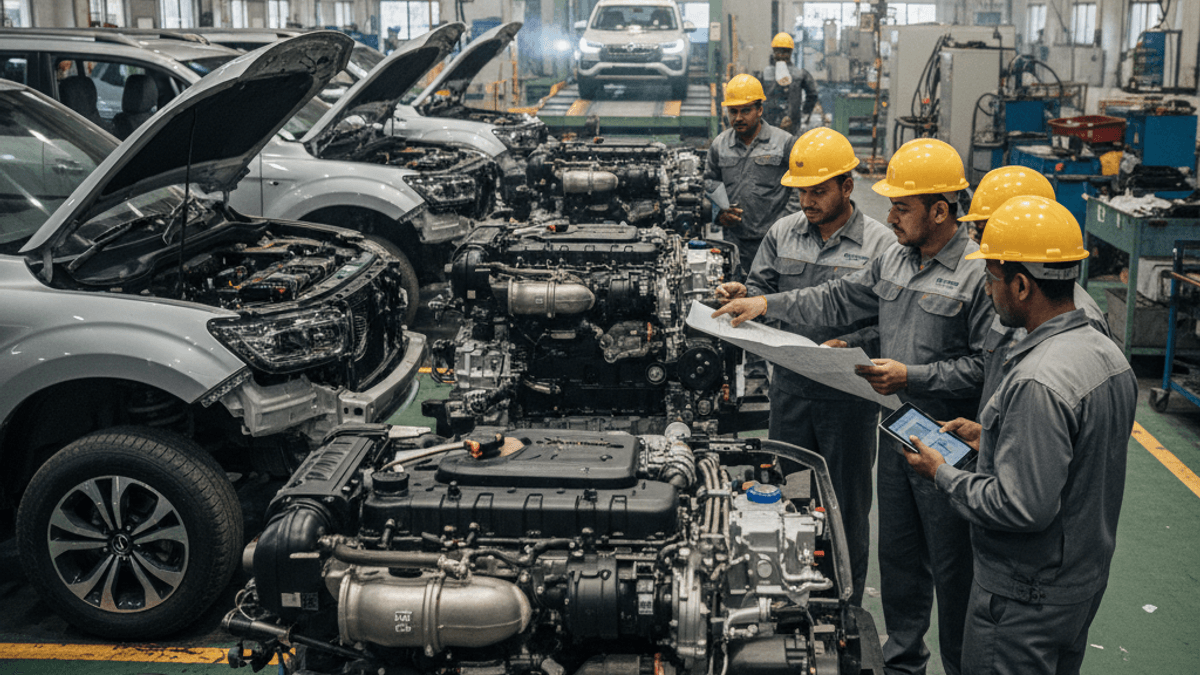
Indian engineers review plans for new engine technologies in an automotive factory.
India’s automotive sector is on the cusp of a significant transformation as the impending implementation of BS7 emission standards threatens to dismantle the long-standing dominance of diesel engines in the country’s popular sport utility vehicle (SUV) segment. This regulatory shift is expected to introduce substantial cost increases for diesel powertrains, compelling both consumers and manufacturers to explore alternative fuel technologies.
For years, diesel engines have been the preferred choice for Indian SUV buyers, largely due to their robust torque, which is ideal for hauling and long-distance driving, and their perceived fuel efficiency. However, the stringent requirements of BS7 norms will necessitate significant technological upgrades and investments from automakers, inevitably translating into higher vehicle prices.
This cost escalation is predicted to make diesel SUVs less attractive, potentially leading consumers to reconsider their options. Industry observers anticipate a notable pivot towards more environmentally friendly and potentially more cost-effective alternatives such as compressed natural gas (CNG), hybrid, and fully electric vehicles. This transition aligns with the global trend towards sustainable mobility and the increasing focus on reducing vehicular emissions.
In response to these evolving market dynamics and regulatory pressures, automotive manufacturers are reportedly diversifying their powertrain strategies. This includes investing in research and development for advanced emission control systems for existing diesel engines, as well as accelerating the introduction of CNG, hybrid, and electric models to their SUV lineups. The aim is to cater to a broader spectrum of customer preferences and to ensure compliance with future environmental regulations, thereby securing their market position in a rapidly changing automotive landscape.
About the Author