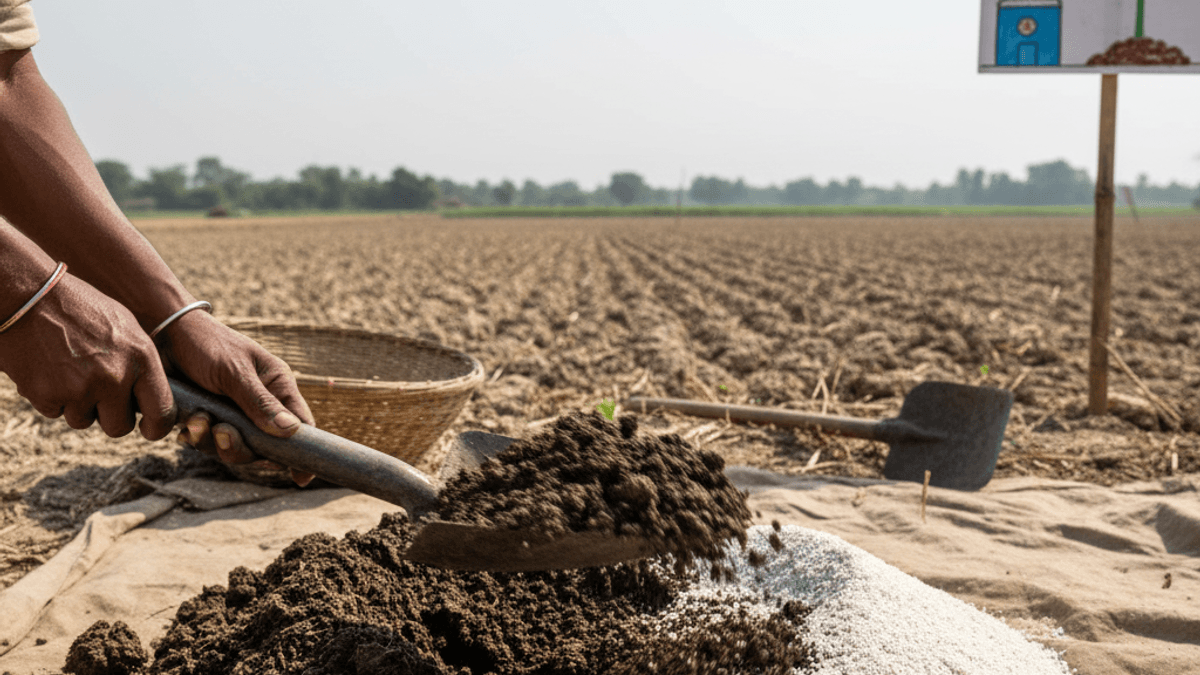
Farmer blending organic manure and chemical fertilizer in an Indian field.
The Indian Biogas Association (IBA) has put forth a significant proposal advocating for a mandatory 10% blending of fermented organic manure (FOM) with chemical fertilizers by the year 2030. This initiative, outlined in a recently published white paper, aims to address critical economic and environmental challenges facing India’s agricultural sector, primarily by reducing the nation’s reliance on imported fertilizers and improving soil vitality.
The core objective of the IBA’s proposal is to achieve substantial savings in foreign exchange, with an estimated USD 2 billion to be saved annually through reduced fertilizer imports. This aligns with broader government objectives of enhancing self-sufficiency and managing fiscal deficits. The proposed blending aims to create a more circular economy within agriculture, transforming organic waste into a valuable soil amendment.
Beyond the economic benefits, the IBA emphasizes the critical role of FOM in restoring and maintaining soil health. Chemical fertilizers, while essential for crop yields, can degrade soil structure and reduce microbial activity over time. Introducing a significant proportion of organic manure is expected to improve soil fertility, water retention, and overall ecosystem health, contributing to more sustainable agricultural practices.
The association proposes a phased implementation strategy, suggesting that the 10% blending target can be achieved gradually. Furthermore, the IBA recommends integrating this initiative into existing government schemes and policies related to agriculture and waste management. This approach would leverage established frameworks for distribution and adoption, potentially accelerating the transition towards a blended fertilizer system.
While the proposal focuses on a specific blending ratio and timeline, its success will likely depend on several factors, including farmer adoption, the availability and quality control of FOM, and potential adjustments to fertilizer pricing mechanisms. The IBA’s white paper serves as a call to action for policymakers and stakeholders to consider this sustainable pathway for India’s agricultural future.
About the Author