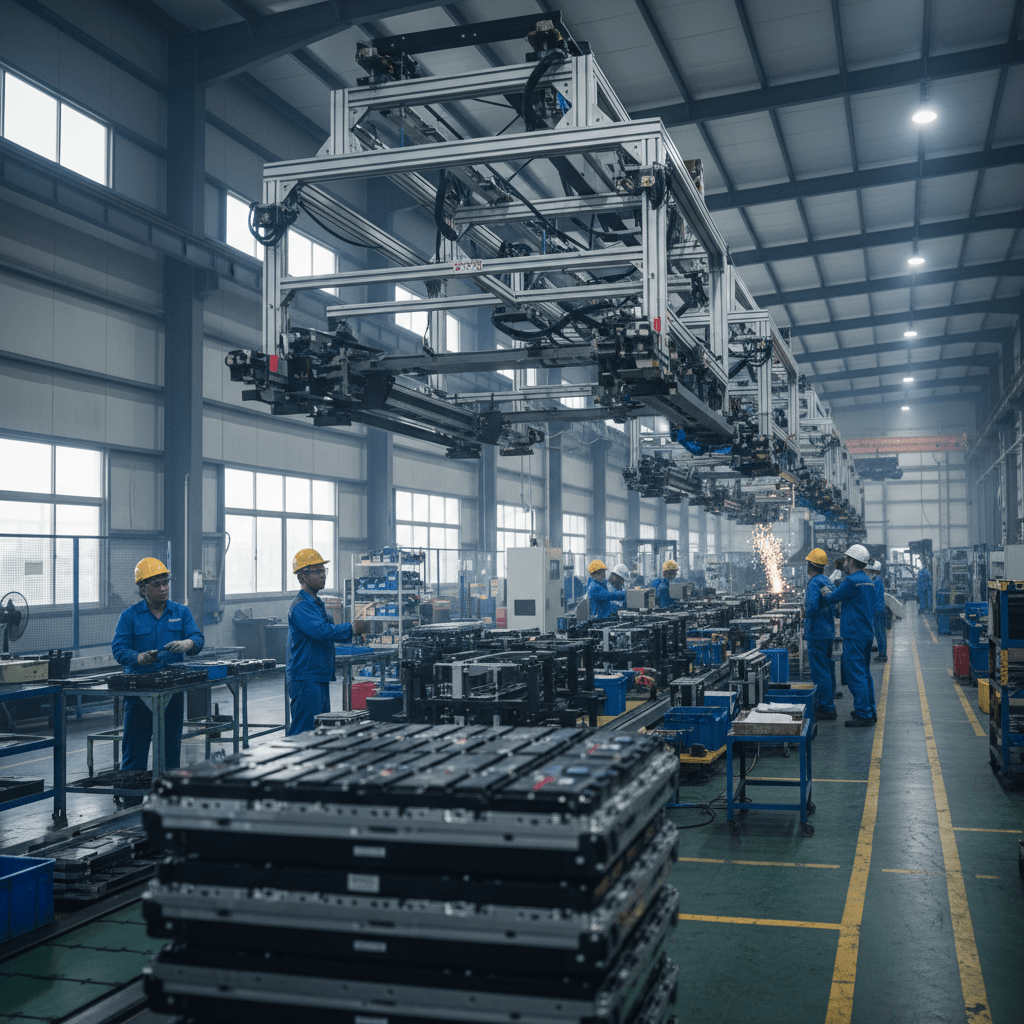
Multi-axis truss robots in an Asia-Pacific automotive factory, optimizing EV battery and chassis assembly.
The global market for multi-axis truss robots is projected to experience a significant expansion, with an anticipated compound annual growth rate (CAGR) of 8.2% between 2026 and 2035. This growth trajectory is primarily fueled by the escalating demand for factory automation, particularly within the e-commerce logistics sector, and the increasing need for precision in electric vehicle (EV) production.
IndexBox reports indicate that the market’s expansion is driven by the imperative for enhanced throughput, precision, flexibility, and cost mitigation in manufacturing and logistics operations. Key factors supporting this growth include the ongoing automation of e-commerce fulfillment centers, rising labor costs, and the stringent high-precision requirements inherent in EV manufacturing processes, such as battery pack and chassis assembly.
The report segments the market by industry, with Automotive & Electric Vehicle Manufacturing expected to represent the largest share at 28%, followed by Logistics, Warehousing & E-commerce Fulfillment at 22%. The latter segment is identified as the fastest-growing, directly correlating with the rapid expansion of online retail.
Geographically, the Asia-Pacific region is anticipated to lead market growth, accounting for approximately 45% of the global share, largely due to its extensive manufacturing base and substantial investments in EV and battery production. North America is projected to hold a 25% share, while Europe is expected to maintain a steady 22% share in a more mature market.
While the market benefits from advancements in robot control and vision systems, it faces certain constraints, including substantial initial capital investment and lengthy sales and integration cycles. Despite these challenges, the overall outlook for the multi-axis truss robot market remains robust, driven by the fundamental shift towards greater automation across key industrial sectors.
About the Author