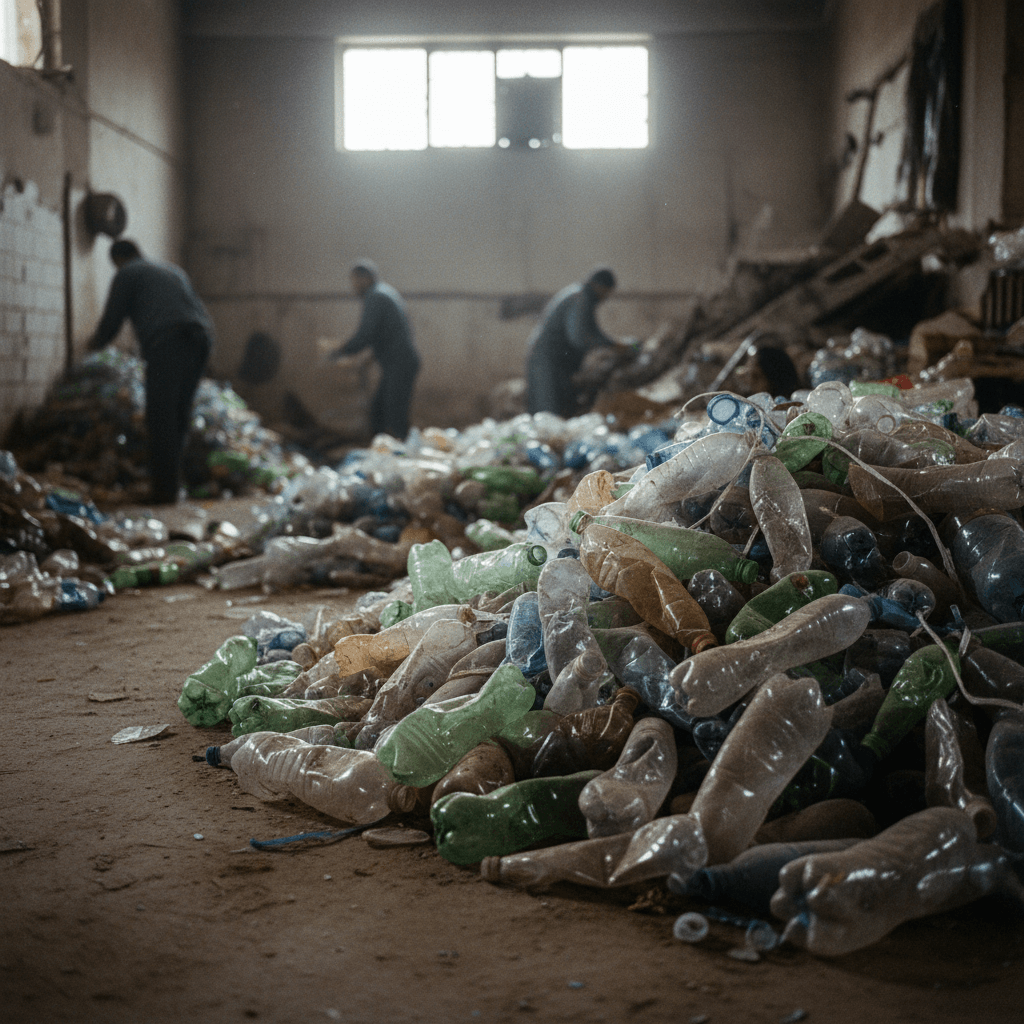
Workers sort through a massive pile of PET plastic bottles in a dimly lit industrial facility.
The ongoing conflict in West Asia is creating significant challenges for packaged goods companies, with disruptions to the supply of essential packaging materials such as glass, PET, and plastics. This is leading to shortages and rising costs across various sectors, from cosmetics to food.
Companies are responding by reducing stock levels and, in some cases, shrinking product sizes to mitigate the impact of the supply crunch. The disruptions are expected to continue for several months, affecting production and potentially leading to reduced availability for consumers.
The conflict’s impact on key supply chains highlights the vulnerability of global trade to geopolitical events. As companies navigate these challenges, strategic adjustments to sourcing and production may be necessary to ensure continuity of supply and manage rising costs.
The situation underscores the importance of diversified supply chains and risk management strategies for companies operating in a volatile global environment. The long-term effects on pricing and consumer behavior remain to be seen as the conflict continues to unfold.
About the Author