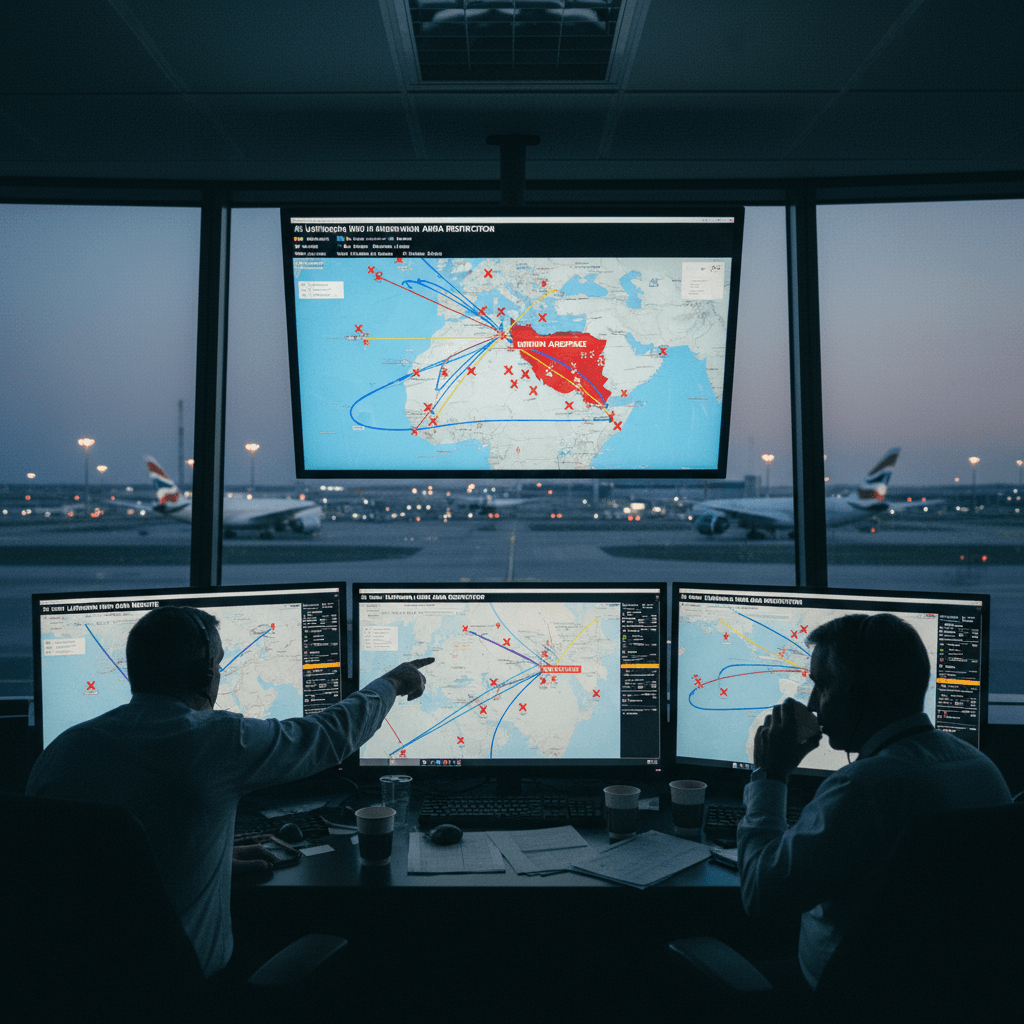
Air traffic controllers rerouting flights due to geopolitical tensions, showing affected regions and new paths.
Geopolitical tensions stemming from the war in Iran are significantly disrupting global air travel, creating both challenges and opportunities for investors in the aviation sector. The ripple effects are particularly felt by Middle Eastern airlines, while Western carriers strategically reposition themselves to capitalize on the altered landscape.
European airlines, such as Lufthansa and British Airways, are actively seizing the opportunity to introduce new routes, aiming to capture passengers affected by the disruptions. Simultaneously, US airlines are expanding their long-haul flight offerings, signaling a broader strategic shift in response to the changing dynamics.
This situation presents a potentially lucrative, albeit temporary, window for European airlines to gain market share. However, the long-term implications remain uncertain, with rising fuel prices adding a layer of complexity to the investment outlook. Investors are closely monitoring how these developments will influence airline profitability and market positioning.
The aviation sector’s response to the Iran war underscores the sensitivity of the industry to geopolitical events and the importance of adaptability in investment strategies. As airlines adjust their routes and services, private equity and venture capital firms are evaluating potential opportunities in route optimization technologies, alternative fuel solutions, and enhanced security measures.
The evolving situation necessitates a nuanced understanding of the interplay between geopolitical risks and investment returns in the aviation sector, emphasizing the need for thorough due diligence and risk assessment in investment decisions.
About the Author