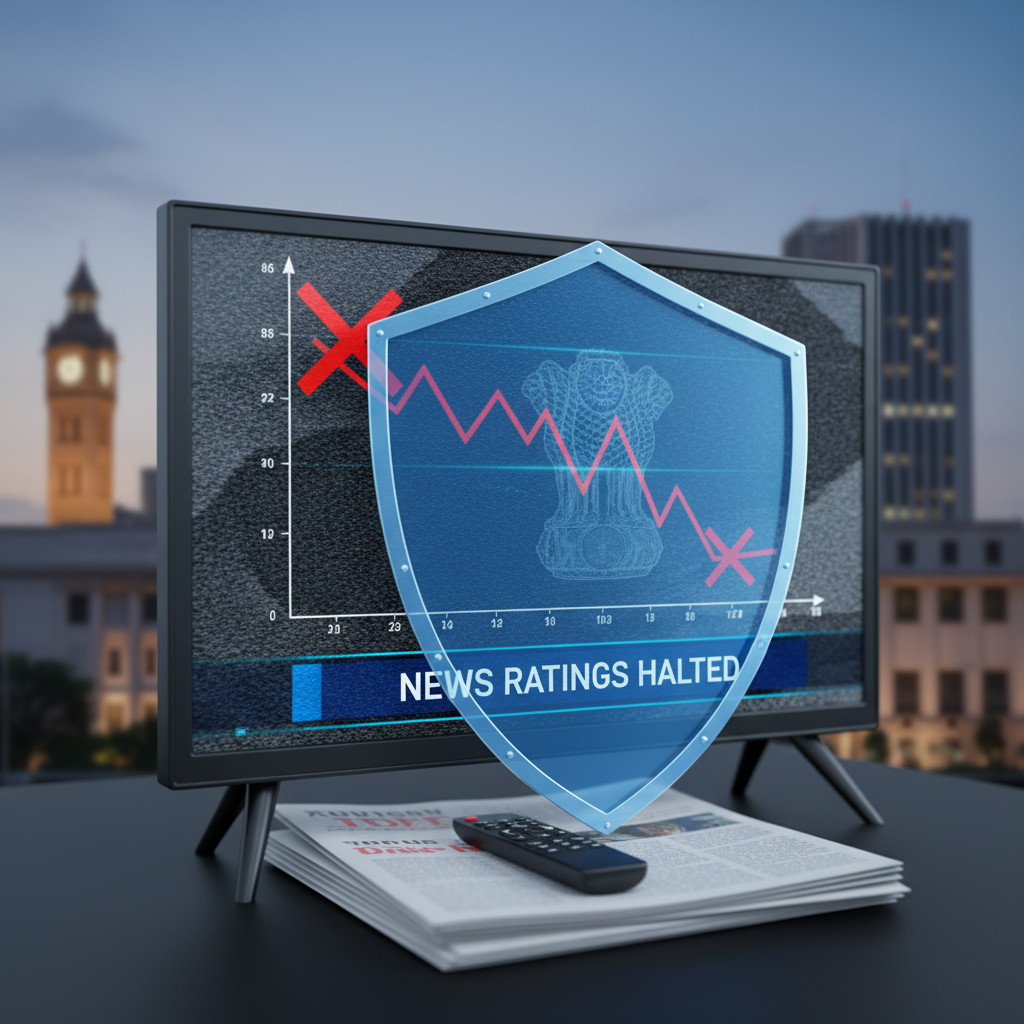
Government Halts News TV Ratings Amid Concerns of Sensationalism
In a move that underscores the government’s commitment to public safety and responsible media practices, the Ministry has directed the Broadcast Audience Research Council (BARC) to withhold news TV ratings for a period of four weeks. This decision, conveyed in an order dated March 6, stems from observations regarding the content aired by certain news channels, particularly amid the ongoing Israel-Iran conflict.
The Rationale Behind the Suspension
The primary reason for this action, as stated in the official order, is the government’s concern over the display of “unwarranted sensationalism and speculative content.” The Ministry believes that such content could potentially incite panic among the public, especially those with family or friends in the affected areas. The decision highlights the delicate balance between freedom of the press and the responsibility to disseminate accurate and unbiased information, particularly during times of international tension. The government’s action reflects a broader concern about the impact of media coverage on public sentiment and security.
Details of the Order and Its Implications
The order, which directly impacts the measurement and assessment of viewership for news channels, is a significant intervention in the media sector. By instructing BARC to suspend its ratings, the government aims to curb the potential for sensationalized reporting. This temporary measure is intended to encourage news channels to adopt more responsible reporting practices and to avoid content that could exacerbate public anxiety. The duration of the suspension, set for four weeks, suggests a measured approach, allowing for a review of editorial practices and a recalibration of content strategies.
Key Entities Involved
- Govt: The primary decision-maker, issuing the order to address concerns over media content.
- BARC: The organization responsible for audience measurement, tasked with implementing the government’s directive and withholding news TV ratings.
Concerns Over Sensationalism and Speculation
The government’s decision is a direct response to the perceived rise in sensationalism and speculative content by certain news channels. The order specifically targets content that could potentially create panic among the public. This includes the broadcasting of “unwarranted” information and the promotion of speculation, which can be particularly damaging during times of crisis. The Israel-Iran conflict serves as a backdrop, emphasizing the potential for news coverage to influence public perception and behavior. The government’s intervention underscores the importance of responsible journalism, especially when covering sensitive international events.
The Broader Policy Implications
This action has significant implications for media policy and regulation. It signals the government’s willingness to intervene in the media landscape to ensure responsible reporting. It also raises questions about the definition of sensationalism and the criteria used to evaluate media content. The suspension of ratings may prompt discussions on the role of regulatory bodies like BARC and the need for clearer guidelines on content standards. It also reflects a wider debate on media ethics, the impact of news coverage on public sentiment, and the balance between freedom of expression and public safety.
Conclusion
The government’s decision to halt news TV ratings for four weeks is a decisive step aimed at curbing sensationalism and speculative content, particularly in the context of the Israel-Iran conflict. By instructing BARC to suspend its ratings, the government underscores its commitment to public safety and responsible media practices. This move is likely to spark further discussions on media regulation, content standards, and the role of the media in shaping public perception during times of international tension. It is a reminder of the critical importance of accurate, unbiased reporting and the potential consequences of sensationalism and speculation.
About the Author