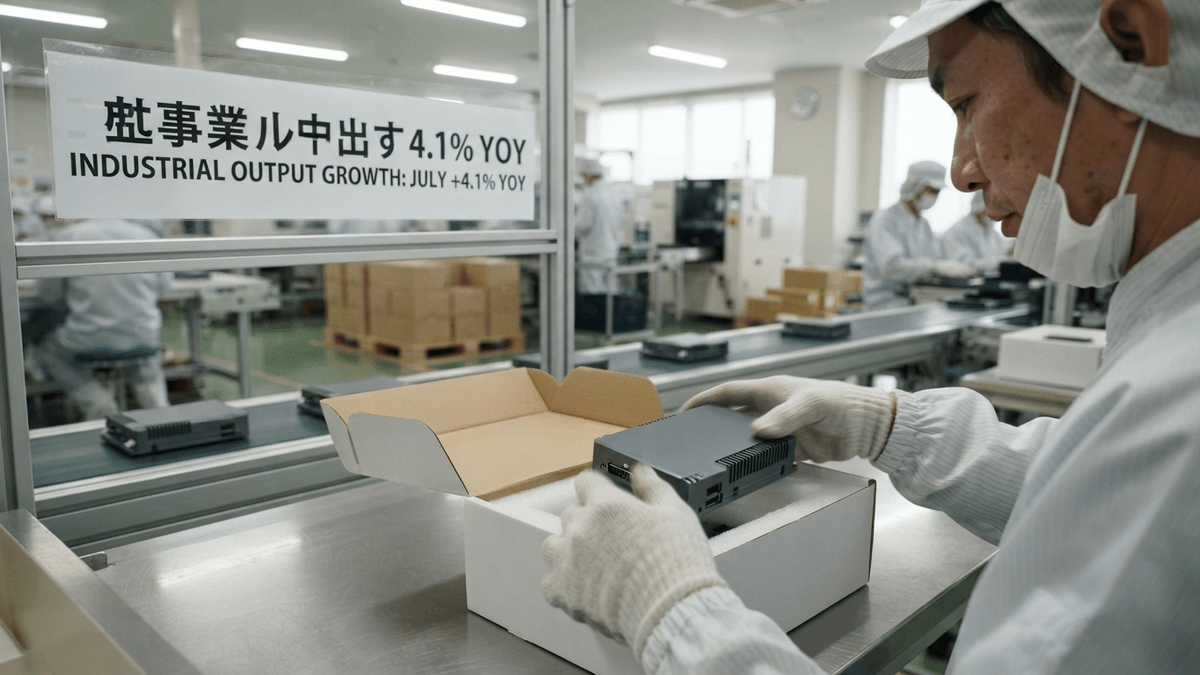
Worker packages an electronic device in a Japanese factory, reflecting industrial output growth.
Japan’s industrial output has experienced a positive trajectory, marking the fourth consecutive month of growth in July. The Ministry of Economy, Trade and Industry (METI) reported a 0.1% increase month-on-month and a substantial 4.1% rise year-on-year. This expansion was primarily fueled by robust demand in key sectors, including semiconductor-related industries, production machinery, inorganic and organic chemicals, and electronic parts and devices. The seasonally adjusted production index reached 104.7, using 2020 as the base year (2020=100).
Complementing the industrial sector’s performance, retail sales saw a significant rebound. In July, retail sales climbed by 4.0% year-on-year, with automobile sales being a notable contributor to this surge. This positive consumer spending data comes as a welcome development, particularly following a period of declining household spending attributed to rising prices.
These encouraging economic indicators strengthen the case for the Bank of Japan to consider a potential interest rate hike. However, the economic outlook is not without its challenges. The depreciation of the yen and the upward trend in oil prices pose risks, potentially impacting corporate costs and consumer purchasing power.
Looking ahead, METI projects a further increase in industrial output for August, followed by an anticipated contraction in September. The inventory ratio also showed a positive sign, decreasing by 2.0% year-on-year, indicating efficient supply chain management and demand fulfillment.
About the Author