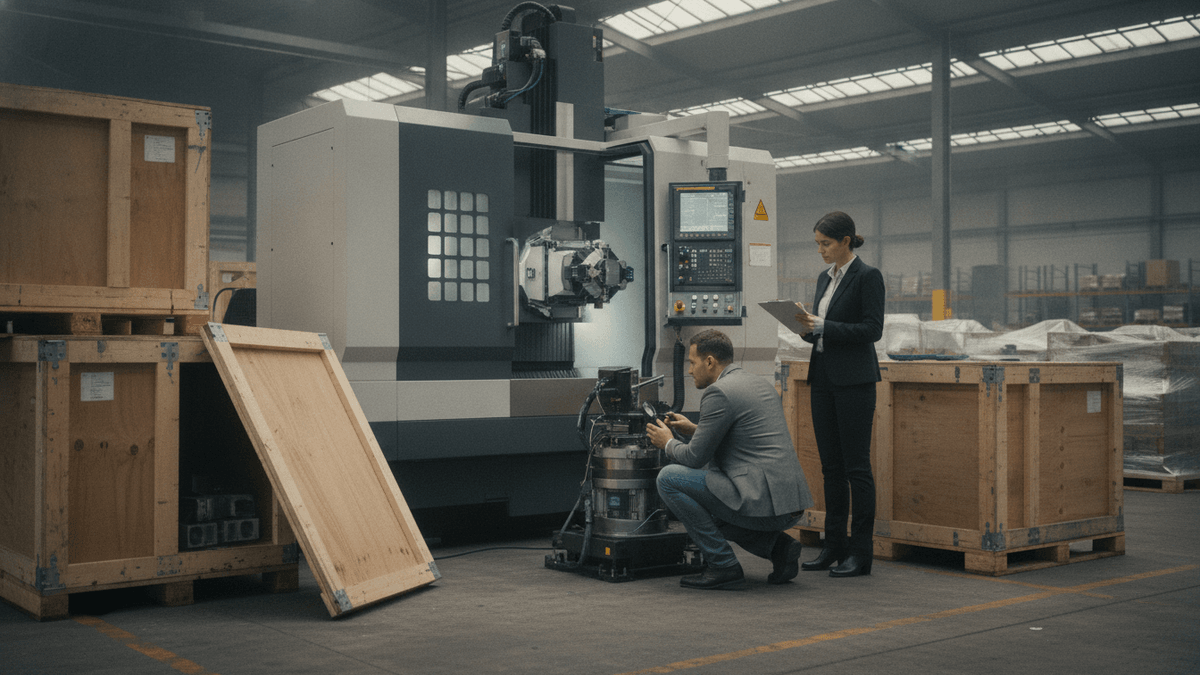
Investigators inspect European industrial machinery in a warehouse.
Austrian investigators have identified an international procurement network that is alleged to have diverted over €3.3 million worth of European industrial machinery to Russian defense companies since the full-scale invasion of Ukraine in 2022. The operation, managed through a Vienna-based company, employed false end-user certificates and a web of intermediaries across Europe, Asia, and the Middle East to disguise the ultimate destination of the equipment.
A manager from the Vienna-based firm was apprehended in December 2024, following an investigation launched in May 2024 by Austria’s Directorate of State Security and Intelligence. The machinery in question was reportedly utilized in the production of engines for cruise missiles and fighter aircraft destined for Rostec, Russia’s state-owned defense conglomerate.
This case underscores the significant hurdles in enforcing the European Union’s sanctions regime, largely due to intricate supply chains where goods transit through multiple jurisdictions before their true destination is revealed. The method exploits weaknesses in export control enforcement, as individual participants in the supply chain may lack visibility into the complete transaction flow.
The investigation involved extensive searches, seizures, and collaboration with international authorities, examining potential breaches of Austria’s Foreign Trade Act and involvement in organized crime. The article highlights that industrial machinery, while less conspicuous than direct military components, represents a strategic vulnerability for defense economies. Its diversion points to a critical need for enhanced scrutiny of export chains, including due diligence on ownership, payment mechanisms, and the veracity of declared end-users.
The EU is actively developing measures to target third-country entities and Russian intermediaries involved in sanction circumvention, alongside restrictions on exports to jurisdictions exhibiting suspicious trade increases. However, the effectiveness of these measures relies heavily on national investigations, timely customs data, and information sharing with manufacturers. The Austrian disclosure provides a concrete example of how controlled machinery can still reach Russian arms production, underscoring the persistent challenges in enforcement.
About the Author