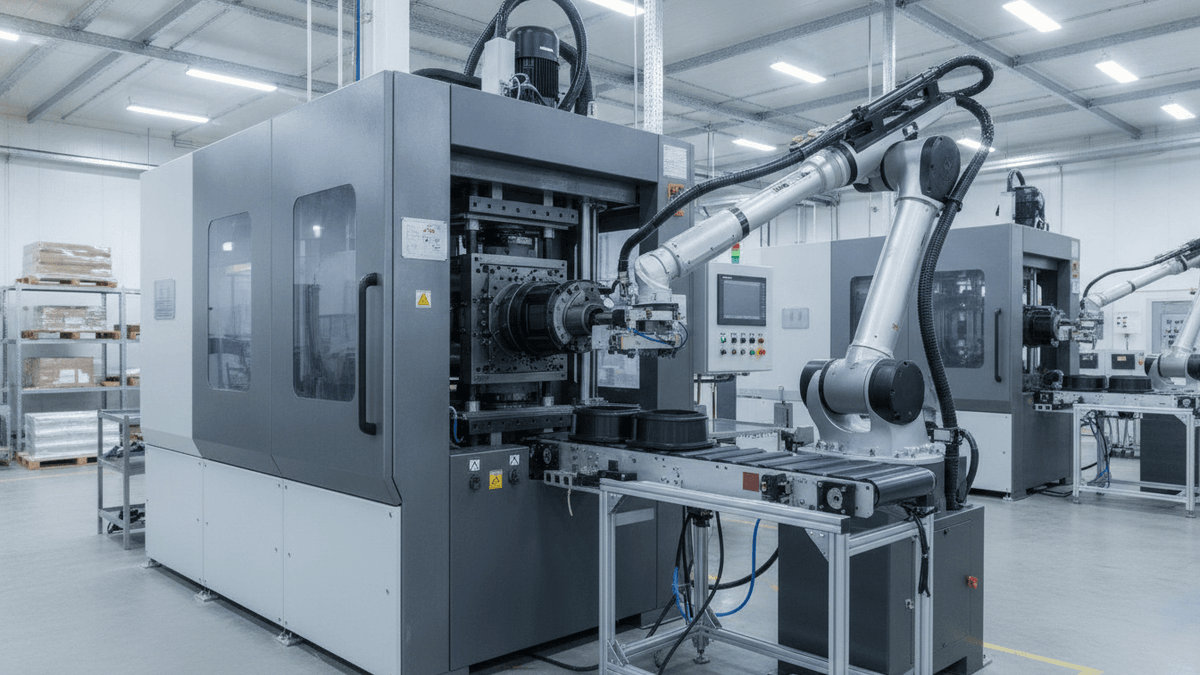
Modern rubber processing machine with integrated robotic arm in a manufacturing facility
The global industrial machinery and equipment market is set for sustained expansion through 2035, with significant growth anticipated in specialized segments like rubber processing machines and enclosures. This positive trajectory is underpinned by widespread automation, the imperative to replace aging infrastructure, and robust demand from dynamic sectors including automotive, particularly electric vehicles, and the rapidly evolving electronics industry.
Within the rubber processing machine segment, a compound annual growth rate (CAGR) of 4.8% is projected from 2026 to 2035. This expansion is largely attributed to the increasing integration of automated systems in the production of rubber goods for the automotive, electronics, and general industrial markets. Mature economies in Europe and North America are driving a substantial replacement cycle for older machinery, seeking greater precision, energy efficiency, and compliance with stringent quality standards. Concurrently, capacity expansions in Asia-Pacific, notably in China, India, and Southeast Asian nations, are fueling demand for new rubber processing lines, encompassing internal mixers, extruders, and injection molding machines.
The automotive sector, a primary consumer of rubber products, is adapting to the rise of electric vehicles, necessitating advanced processing capabilities for new sealing, vibration damping, and thermal management components. The electronics and semiconductor manufacturing segment is emerging as a high-growth area, projected to expand at a CAGR of 6.2% through 2035, driven by the need for precision rubber components in sophisticated equipment. While tire manufacturing remains the largest end-use segment, accounting for 38% of global demand, other areas like industrial rubber goods and medical/healthcare components are also contributing to market growth.
Challenges persist, including the volatility of raw material prices, extended lead times for custom-engineered machinery, and the complexities of multi-region certification for exporters. However, the overall outlook for the industrial machinery sector remains robust, with Asia-Pacific leading the market share, followed by North America and Europe. Key multinational corporations are expected to continue shaping market dynamics through strategic pricing, capacity planning, and product innovation.
About the Author