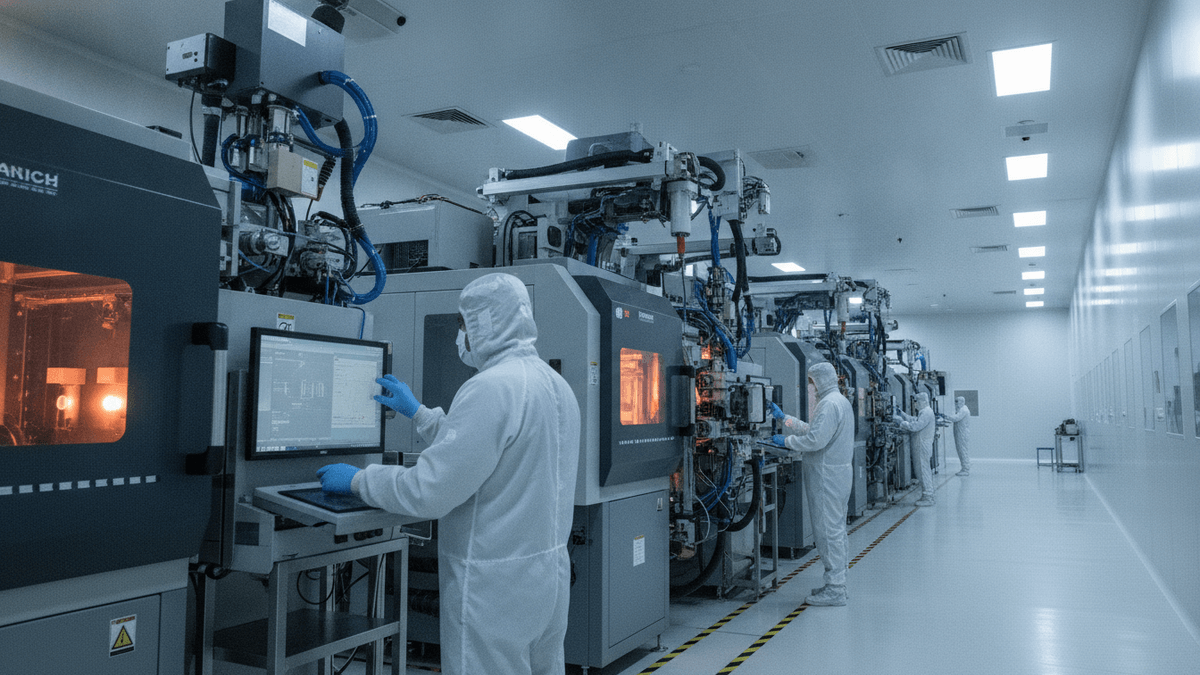
Technicians calibrating machinery at a semiconductor fabrication plant in India.
Tata Electronics has revised its strategy for India’s inaugural semiconductor wafer facility, pushing the launch of its Dholera chip plant to mid-2028. The company will commence production using older 90nm and 55nm silicon wafer chips, a shift from the initially planned 28nm technology. This recalibration, attributed to the inherent technical complexities of establishing a new semiconductor ecosystem, indicates a two-year delay from the original schedule.
The decision to focus on mature nodes is a strategic move common within the semiconductor industry. These legacy chips offer lower manufacturing complexity and cater to a wide array of essential applications, including automotive components, power management systems, industrial equipment, and environmental sensors. This approach aligns with industry standards for calibrating new machinery and establishing foundational production capabilities.
Constructing a semiconductor fabrication plant presents significant challenges, requiring specialized infrastructure such as ultra-cleanrooms, substantial pure water supplies, continuous and stable power, and a highly skilled workforce – elements that India is still developing in terms of hands-on chip manufacturing expertise.
The Indian government, recognizing the strategic importance of domestic semiconductor production for national security and independence, is providing substantial backing. On July 16, 2026, the government approved an additional 1.28 trillion rupees (approximately $13.3 billion) in incentives, augmenting an existing $10 billion package aimed at fostering high-end chip design, factory equipment, and supply chain infrastructure.
For investors, this delay signifies that India’s domestic chip production will not immediately disrupt the global market. Consequently, local manufacturers will likely continue their reliance on established international hubs for semiconductor supply. Global equipment suppliers are positioned to be primary beneficiaries of India’s significant capital investment in building this foundational industry. Those anticipating India’s rapid ascent as a semiconductor superpower are advised to prepare for a long-term strategic commitment.
About the Author