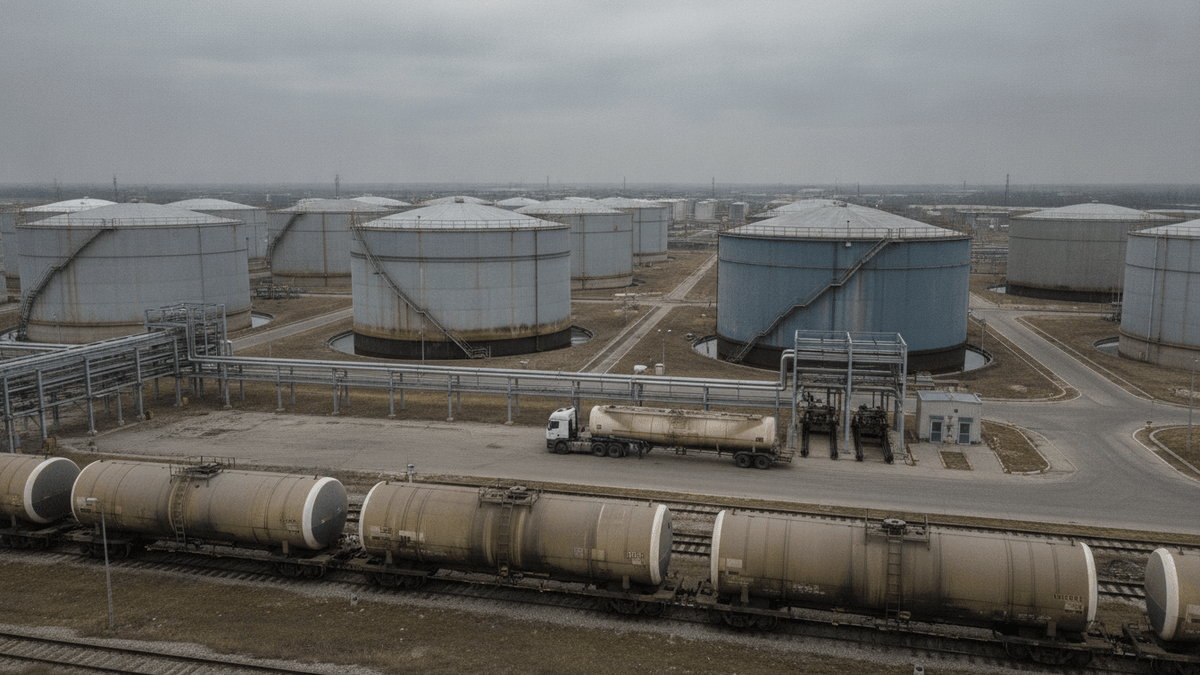
Industrial diesel storage tanks at a fuel depot under overcast skies.
Russia’s recent prohibition on diesel exports has sent ripples through global energy markets, exacerbating existing supply shortages and triggering a worldwide price surge. This disruption is particularly significant as diesel serves as a crucial fuel for a wide array of sectors, including manufacturing, agriculture, heavy transport, and electricity generation. Consequently, fluctuations in diesel prices have a considerable impact on the global economy.
The global diesel market has been under pressure for several years, characterized by robust post-pandemic demand, a reduction in refinery operations in Western countries, and ongoing geopolitical tensions. Russia, a major diesel exporter, had already experienced a decrease in its export volumes prior to the ban, partly due to domestic shortages that were worsened by Ukrainian drone attacks. Early July 2026 data indicated a notable decline in Russian diesel and gasoil loadings.
The supply crisis was further compounded by new US attacks on Iran, raising concerns about the security of shipping through the Strait of Hormuz and its potential impact on Middle Eastern exports. Simultaneously, US government data revealed a significant draw in diesel inventories, leaving them 6% below the five-year average.
In response to these supply constraints, diesel prices have escalated sharply. US ultra-low sulfur diesel futures saw an 11% increase, while European low-sulfur gasoil futures reached a record premium over Brent crude. This ban is forcing traditional Russian diesel customers, such as Brazil and Turkey, to compete with European nations for US diesel supplies. This shift could lead to increased costs for power generation in the Mediterranean and higher expenses for farmers during critical planting and harvest periods.
Adding to the market’s uncertainty, China’s fuel export policies for August remain unclear, following a relaxation in July. This ambiguity limits the potential for relief from Asian markets, further tightening global diesel supplies.
About the Author