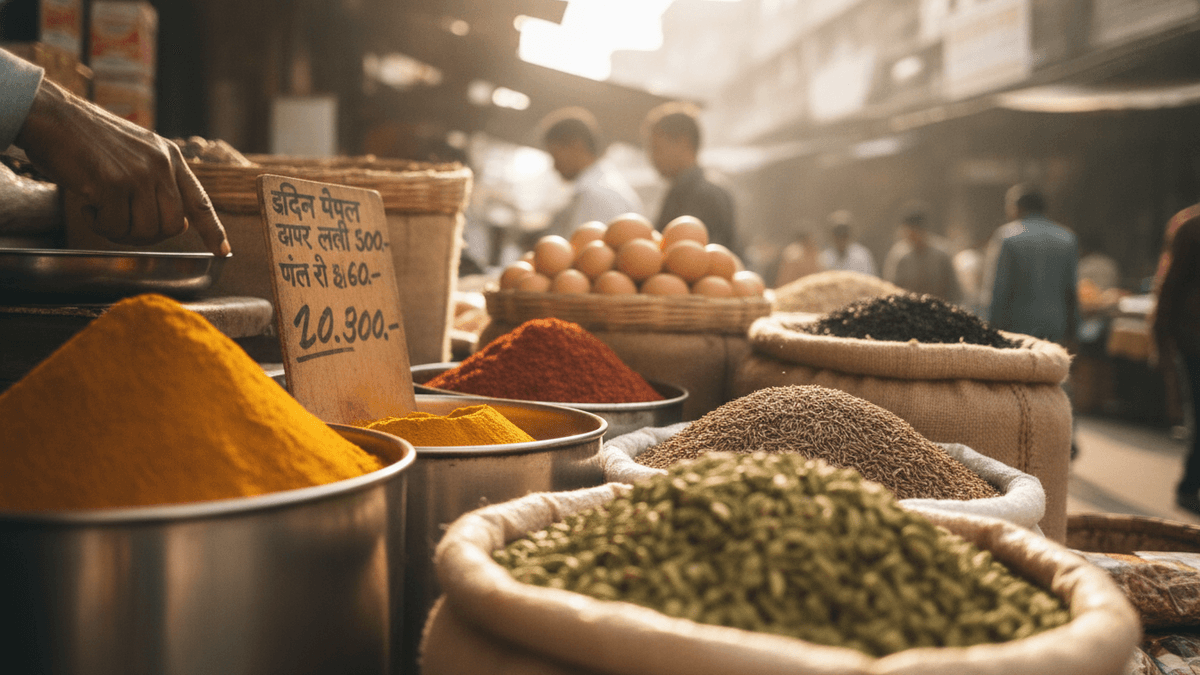
Indian spice and produce market stall with spices, eggs, and tea leaves.
India’s households may soon face higher grocery bills as economists warn of escalating price pressures on essential kitchen staples. The looming threat of El Nino, coupled with the potential for a monsoon deficit and intensifying heatwaves, is expected to significantly impact agricultural output, leading to increased food inflation in the coming months.
Key commodities such as spices, eggs, dairy products, tea, and coffee are particularly vulnerable. These items form the backbone of daily Indian cuisine, and any disruption in their supply chain or reduction in crop yields can have a direct and immediate effect on household budgets. The anticipated decrease in crop yields, driven by adverse weather conditions, is a primary concern for market analysts and consumers alike.
Economists are closely monitoring the situation, predicting that the confluence of these factors will exert considerable upward pressure on food prices. This anticipated inflation surge poses a challenge for consumers, particularly those in lower-income brackets, who rely heavily on these staples. The situation underscores the sensitivity of India’s food supply to climatic variations and the broader economic implications of climate change.
About the Author