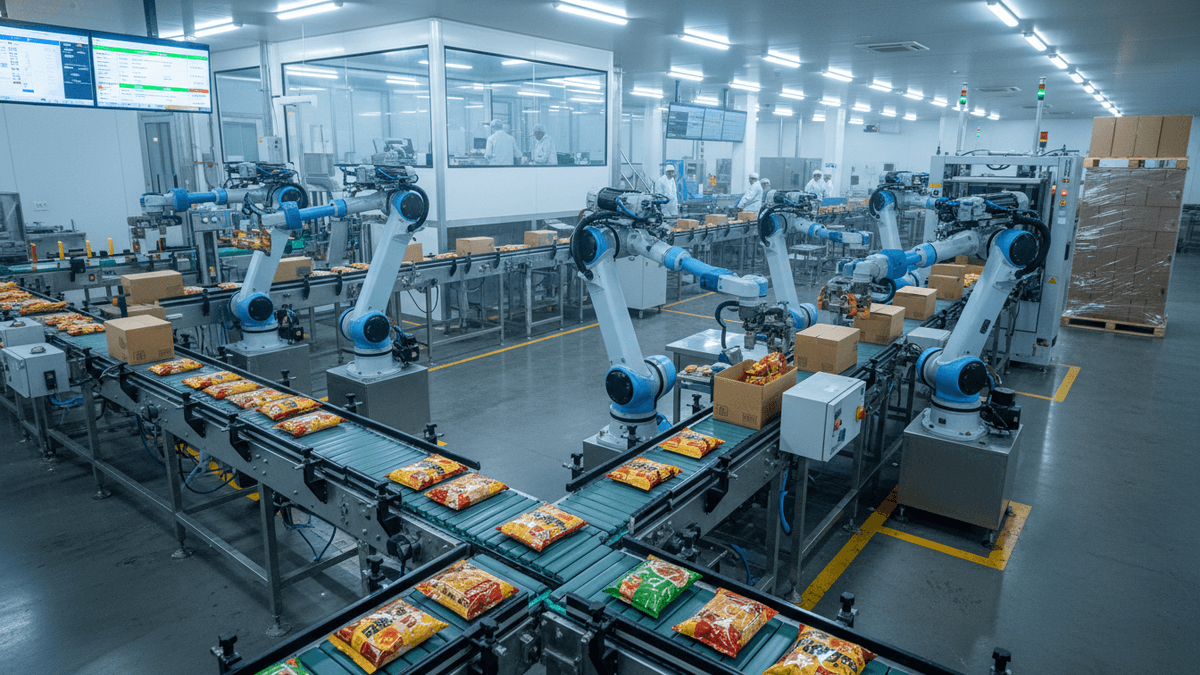
Automated frozen food packaging line in India.
India’s frozen food manufacturing landscape is undergoing a significant transformation, moving from traditional manual processes to sophisticated automated operations. This shift is primarily driven by the imperative to achieve consistent product quality and enhance operational efficiency across the board.
Investments in automation and advanced process engineering are at the forefront of this evolution, particularly impacting large-scale production facilities. Early indicators suggest that these technological integrations are yielding substantial improvements, with reported efficiency gains ranging from 20% to 30%. Furthermore, these advancements are contributing to a notable reduction in manufacturing waste, aligning with global sustainability trends and optimizing resource utilization.
The adoption of automation is crucial for the frozen food sector as it helps maintain stringent hygiene standards, ensures precise temperature control throughout the production chain, and increases throughput. Process engineering, in parallel, refines workflows, minimizes bottlenecks, and standardizes output, thereby bolstering the sector’s competitiveness in both domestic and international markets.
This modernization trend in India’s frozen food industry is a testament to the growing adoption of Industry 4.0 principles, signaling a move towards more resilient, efficient, and quality-focused manufacturing practices.
About the Author