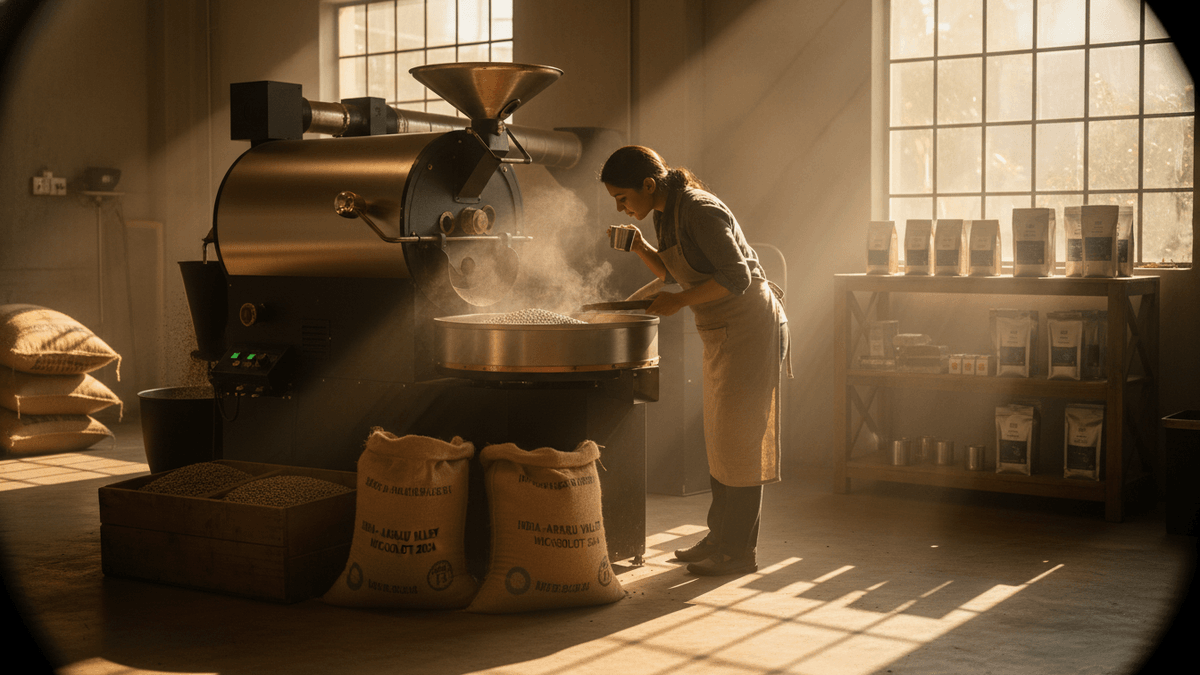
Roaster monitors coffee beans during a sample roast at a facility in India.
India’s coffee landscape is undergoing a significant transformation, moving beyond its traditional reliance on instant coffee towards a burgeoning appreciation for specialty beans. This shift is creating a substantial market opportunity, with projections indicating the specialty coffee sector in India will more than double from $3.01 billion in 2025 to $6.52 billion by 2031.
This evolution is driven by a discerning Indian consumer base that now seeks to understand coffee’s origin, explore diverse flavor profiles, and engage in home brewing and roasting. Local roasters, improved access to high-quality beans, and new retail channels are facilitating this awakening.
The ‘third wave’ of coffee, characterized by treating coffee as an artisanal craft rather than a mere commodity, is gaining traction. Brands like Blue Tokai Roasters, Third Wave Coffee, and Araku are at the forefront, often managing end-to-end operations from farm to cup. These companies are experimenting with various processing techniques and roast levels, catering to a demand for lighter roasts, black coffee, and innovative brewing methods.
Emerging trends include the popularity of cold brews, flavored cold coffees, and microlots—small batches of coffee that highlight unique characteristics. Cross-category innovation is also evident, with brands incorporating ingredients like matcha and alternative milks, signaling a dynamic and evolving market.
However, the specialty coffee sector faces challenges. The supply chain for fresh, high-quality coffee is complex, requiring careful handling and timely distribution to maintain optimal flavor, which typically peaks between 15 and 30 days for whole beans. While quick commerce offers potential, specialty brands are wary of the lack of product control in dark store models. Furthermore, inventory planning for limited-edition microlots and seasonal coffees presents logistical hurdles.
Despite these challenges, the growth of specialty coffee in India reflects a deeper shift in consumer behavior, prioritizing sourcing, freshness, flavor, and craftsmanship. The sector’s continued expansion hinges on building a lasting coffee culture, particularly beyond major metropolitan areas, and overcoming the inherent premium pricing and supply chain fragilities.
About the Author