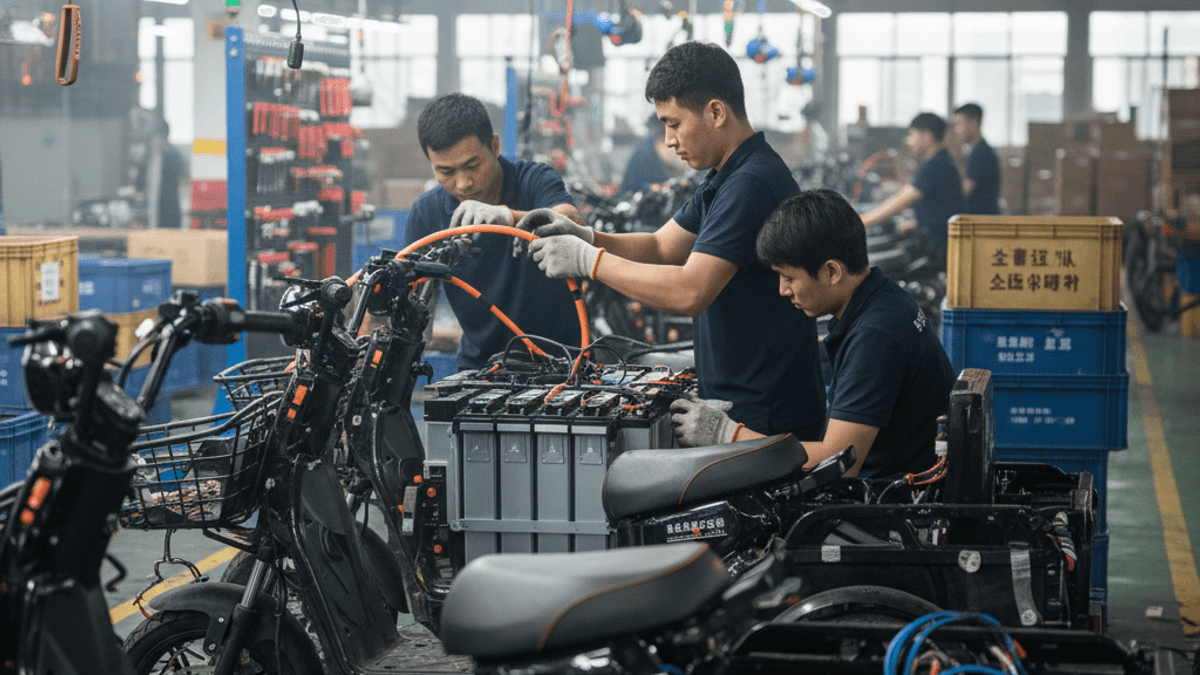
Asian factory workers assemble EV batteries into two- and three-wheelers.
The escalating conflict involving Iran and the U.S. is acting as a significant catalyst for Asia’s transition away from fossil fuels and towards electrification, with a particular focus on electric vehicles (EVs) and battery storage solutions. This strategic shift is primarily motivated by the potential disruption to oil and liquefied natural gas (LNG) supplies, prompting investors and manufacturers in the region to accelerate their commitments to clean energy technologies.
Southeast and South Asia are expected to witness substantial growth in the EV market, especially in the two- and three-wheeler segments, which are crucial for personal mobility and last-mile delivery services. The development and deployment of advanced battery systems are integral to this expansion, aiming to provide reliable and cost-effective alternatives to traditional internal combustion engine vehicles.
This pivot underscores a broader trend of energy security influencing investment decisions across Asia. As nations seek to insulate their economies from volatile global energy markets, the demand for domestically produced or more stable energy sources, like electricity generated from renewables and stored in batteries, is on the rise. This geopolitical development is likely to further energize venture capital and private equity interest in Asian EV manufacturers, battery technology firms, and related infrastructure projects.
About the Author