India Bolsters LPG Supply: Government Activates ESMA Powers
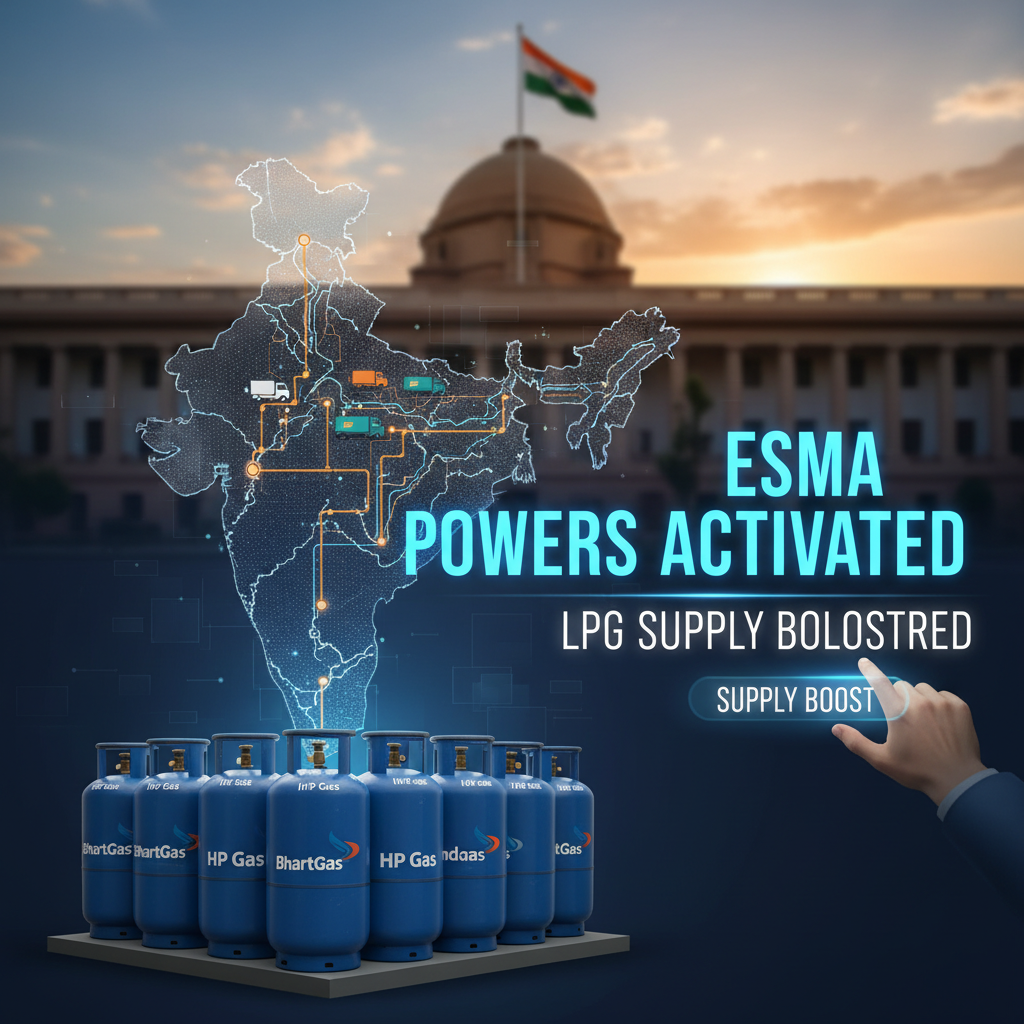
In a move to fortify its energy security, the Government of India has invoked the Essential Services Maintenance Act (ESMA) to compel domestic refiners to ramp up Liquefied Petroleum Gas (LPG) production. This decision comes as India navigates a complex landscape of increasing LPG consumption and import dependencies, particularly from regions susceptible to geopolitical instability.
The LPG Landscape in India
India’s demand for LPG is substantial and ever-growing. During the fiscal year 2024-25, the nation consumed a considerable 31.3 million tonnes of LPG. However, domestic production is insufficient to meet this demand. Only 12.8 million tonnes were produced within India, necessitating significant imports to bridge the gap. This reliance on imports introduces vulnerabilities, particularly concerning the supply chain’s stability and resilience.
Vulnerabilities in the Import Supply Chain
The reliance on imports exposes India to potential disruptions. A significant 85-90% of LPG imports originate from countries like Saudi Arabia. The transport of these imports is heavily reliant on the Strait of Hormuz, a critical maritime chokepoint. Any instability or disruption in this strategically vital waterway could severely impact India’s LPG supply, leading to potential shortages and price volatility. This underscores the necessity for the Government to take proactive measures to mitigate these risks.
ESMA: A Tool for Ensuring Supply
To address these concerns and ensure a consistent supply of LPG, the Government has invoked ESMA. This act empowers the Government to maintain essential services, including energy supplies, by preventing strikes and ensuring uninterrupted production. By invoking ESMA, the Government signals its commitment to national energy security and its determination to avert potential supply disruptions. This move is a clear indication of the Government’s proactive stance in safeguarding the nation’s energy needs.
Strategic Implications and Future Outlook
The Government’s decision to invoke ESMA and mandate increased LPG production is a strategic move with several implications. Firstly, it aims to reduce the country’s dependence on imports and enhance self-sufficiency in the energy sector. Secondly, it is designed to mitigate the risks associated with volatile global markets and potential supply chain disruptions. Furthermore, it underlines the importance of a robust domestic production capacity to meet the growing demand for LPG in India.
As India continues to grow and develop, the demand for LPG is expected to rise. The Government’s proactive measures, including the invocation of ESMA, are crucial in ensuring that the nation’s energy needs are met effectively. By prioritizing domestic production and diversifying its import sources, India can strengthen its energy security and ensure a stable supply of LPG for its citizens. This approach reflects a commitment to a resilient energy strategy that can withstand the challenges of a dynamic global environment.
Source: Industry-Economic Times
About the Author