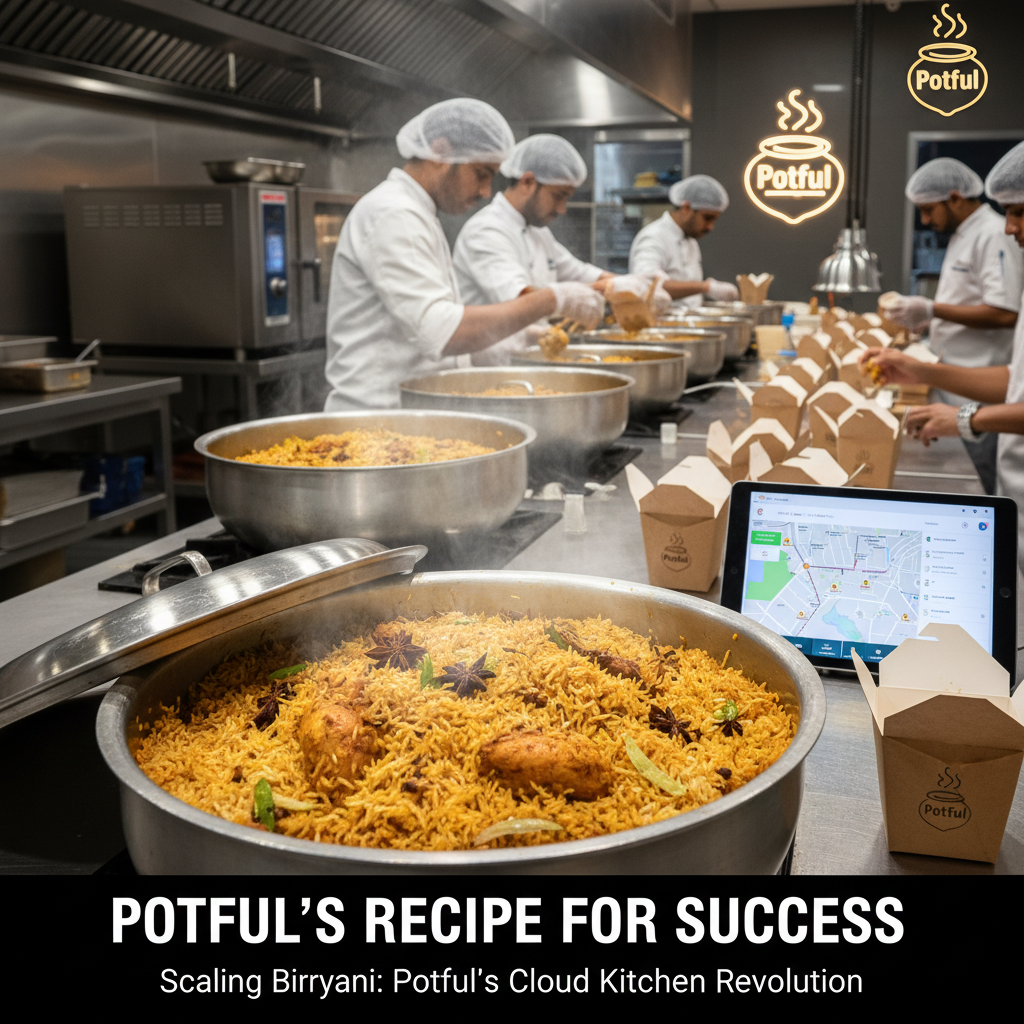
Potful’s Recipe for Success: Scaling Biryani Through Cloud Kitchens
Biryani, a dish steeped in tradition and fiercely debated across India, isn’t just food; it’s an experience, a comfort, and a cultural touchstone. In a market where culinary preferences are as diverse as the nation itself, Potful has carved a significant niche for itself, achieving an impressive ₹58.72 Cr in growth. Their success story is not just about serving delicious Biryani; it’s a masterclass in scaling operations through a strategic approach to cloud kitchens and meticulous Standard Operating Procedures (SOPs).
The Cloud Kitchen Advantage
The rise of cloud kitchens has revolutionized the food delivery landscape. By eliminating the need for dine-in spaces, these kitchens can focus solely on preparing food for online orders. This model allows for greater efficiency, reduced overhead costs, and the ability to operate in multiple locations without significant capital expenditure. For Potful, this was a game-changer. By strategically placing cloud kitchens across various locations in India, they could expand their reach and cater to a wider customer base, all while maintaining consistent quality.
Scaling SOPs: The Secret Ingredient
While the cloud kitchen model offers significant advantages, success hinges on the ability to replicate quality consistently. This is where SOPs come into play. SOPs, or Standard Operating Procedures, are detailed, step-by-step instructions that ensure every dish is prepared in the same way, regardless of the kitchen or the chef. Potful invested heavily in developing and implementing robust SOPs for every aspect of their Biryani-making process, from ingredient sourcing and preparation to cooking techniques and packaging. This commitment to standardization was crucial for scaling their operations and maintaining the integrity of their brand.
Key Elements of Potful’s SOPs:
- Ingredient Sourcing: Establishing relationships with reliable suppliers to ensure consistent quality and availability of ingredients.
- Recipe Standardization: Precise measurements and cooking times for each Biryani variant.
- Preparation Protocols: Detailed instructions for marinating, layering, and cooking the Biryani.
- Quality Control: Regular checks to ensure consistency in taste, texture, and presentation.
- Packaging and Delivery: Guidelines for packaging to maintain food quality during delivery.
By focusing on these key elements, Potful ensured that every customer received the same high-quality Biryani, no matter where they were ordering from.
The Growth Trajectory
Potful’s journey to ₹58.72 Cr is a testament to the power of a well-executed strategy. By combining the agility of cloud kitchens with the precision of SOPs, they created a scalable business model that could adapt to the rapidly evolving food delivery market. This allowed them to capture market share, build brand loyalty, and establish themselves as a leading player in the competitive Biryani segment. Their success story serves as an inspiration for other food startups looking to scale their operations in India.
Conclusion
Potful’s success story is a compelling example of how a focus on operational excellence and strategic partnerships can drive remarkable growth. By mastering the art of scaling SOPs through cloud kitchens, they not only delivered delicious Biryani but also built a sustainable and profitable business. Their journey offers valuable lessons for aspiring entrepreneurs in the food industry, highlighting the importance of standardization, quality control, and a customer-centric approach. As the demand for convenient and delicious food continues to rise in India, Potful is well-positioned to continue its impressive growth trajectory.
About the Author