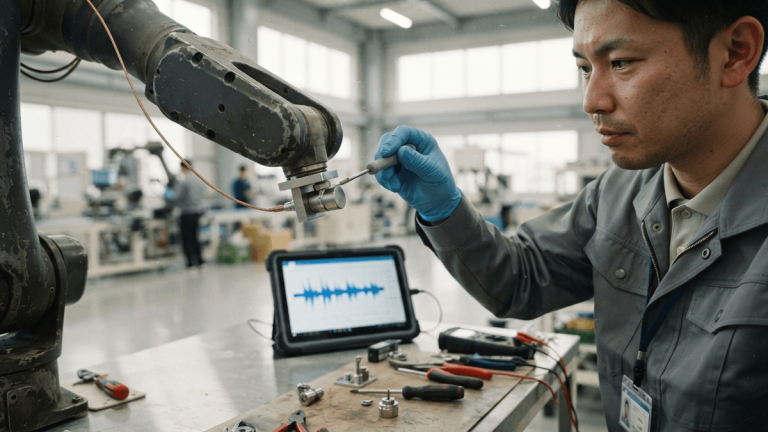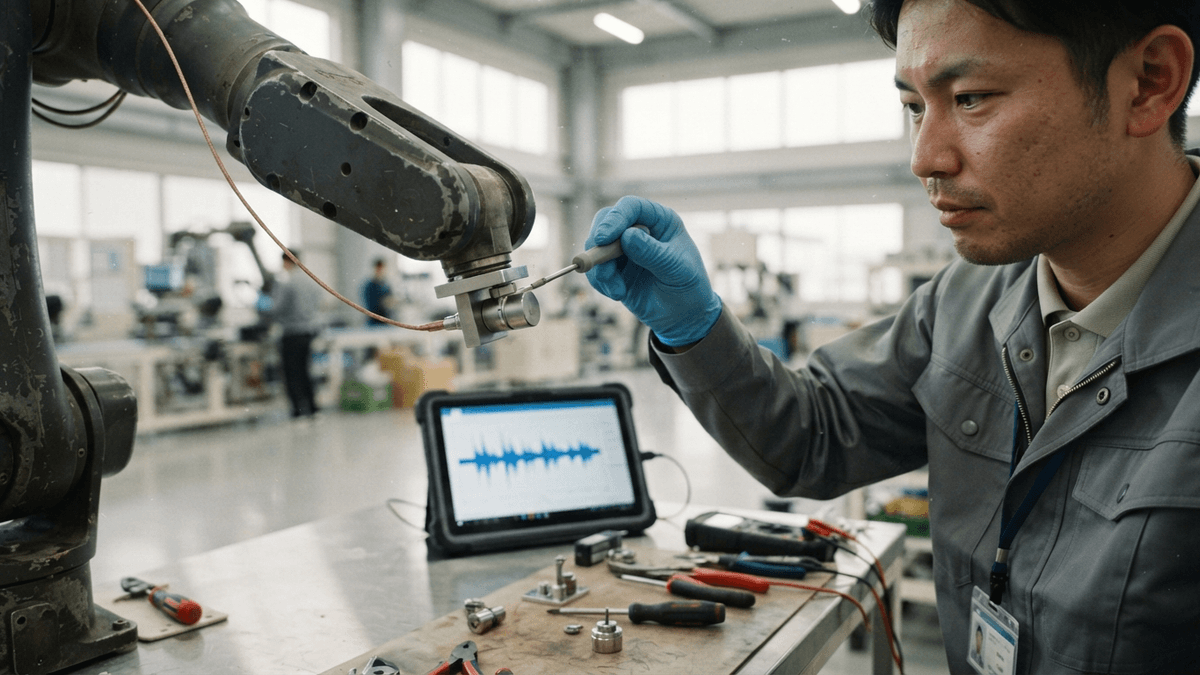
A technician installs a vibration sensor on a robotic arm at a Japanese manufacturing facility.
The Japanese government has announced a strategic initiative aimed at capturing large-scale ‘physical’ data from industrial machinery and factory environments. By integrating advanced sensor networks into existing manufacturing infrastructure, the project seeks to generate high-fidelity datasets essential for training artificial intelligence models capable of performing complex mechanical tasks, including autonomous assembly and sophisticated predictive maintenance.
This policy shift addresses a critical bottleneck in current AI development: the reliance on digital-only datasets. By pivoting toward ’embodied AI’—systems that interact directly with the physical environment—Japan intends to solidify its competitive advantage in robotics and industrial automation. The initiative is designed to standardize data collection protocols across the manufacturing sector, fostering a unified ecosystem that can scale across diverse production lines.
For institutional investors and private equity firms focused on the industrial technology sector, this development signals a significant shift in capital allocation toward hardware-software integration. As Japan seeks to mitigate chronic labor shortages through automation, the standardization of this data could catalyze a new wave of venture capital investment in robotics startups and AI-driven manufacturing solutions. The success of this public-private collaboration will likely determine the pace at which Japanese manufacturers can transition to fully autonomous, data-driven factory operations.
About the Author