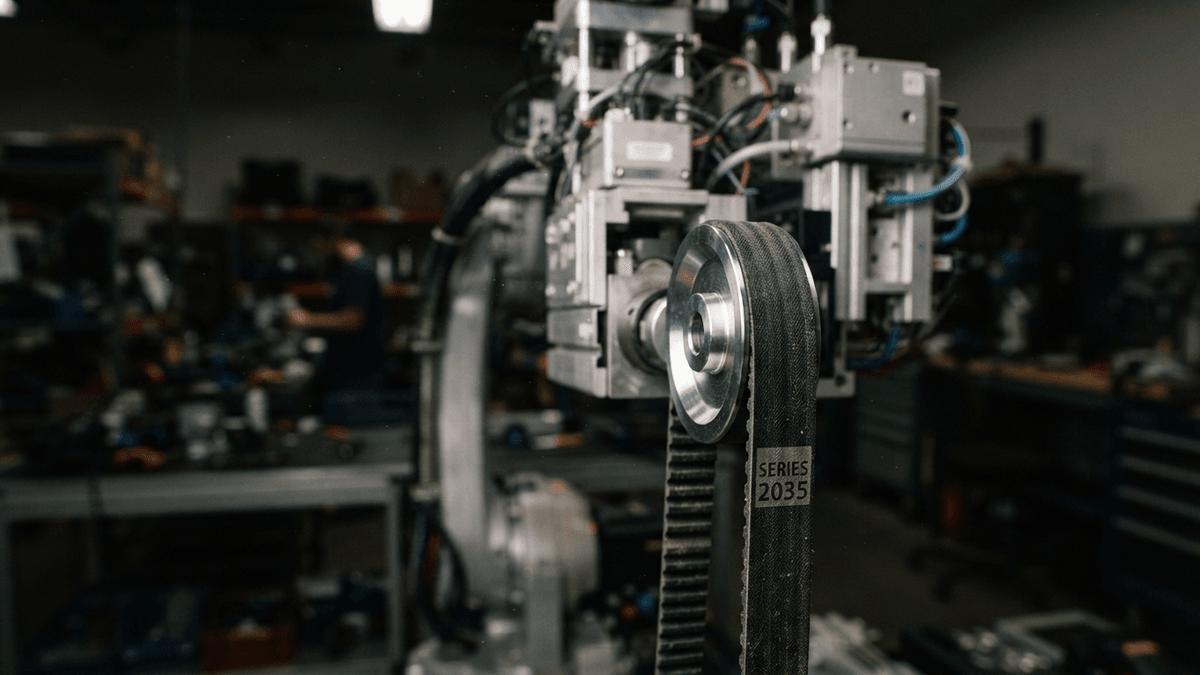
A drive belt used in industrial robotics, projected to see market growth through 2035.
The global drive belt components market is forecasted to maintain a steady growth trajectory through 2035, according to a recent report by IndexBox. For institutional investors and private equity firms focused on the industrial manufacturing supply chain, the data underscores a resilient aftermarket segment supported by the ongoing maintenance requirements of heavy machinery.
While the broader automotive industry is undergoing a structural transition toward electric vehicle (EV) platforms—which require fewer traditional belt-driven components—the industrial sector is providing a significant counterbalance. The rapid adoption of automation and robotics in global manufacturing facilities is driving demand for high-precision, durable drive belt components essential for maintaining operational efficiency and uptime.
Strategic focus among manufacturers is shifting toward material science innovation, aiming to extend component lifespans under increasingly rigorous industrial conditions. For investors, this trend highlights a potential consolidation and innovation play within the component sub-sector, as firms that successfully integrate advanced materials are better positioned to capture market share in emerging economies. Infrastructure development and industrialization in these regions remain critical tailwinds for the sector, offsetting potential volume declines in traditional internal combustion engine automotive applications.
About the Author