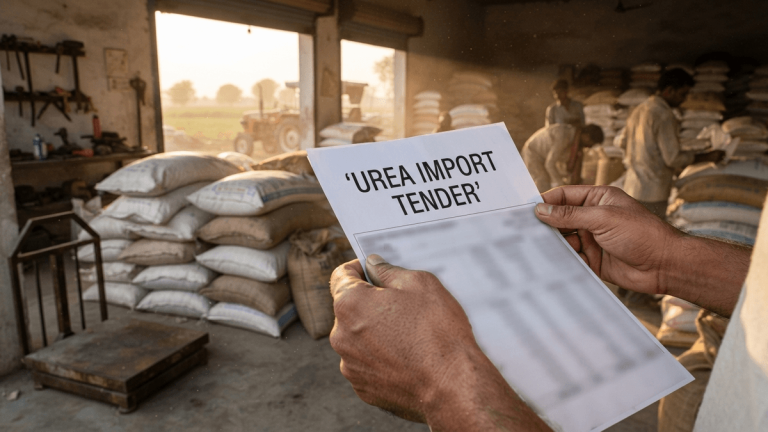
A government tender document for 1.7 million tonnes of urea.
The Indian government has initiated a fresh tender to procure 1.7 million tonnes of urea, a strategic move designed to ensure adequate fertilizer availability ahead of the critical rabi winter crop season. The tender reflects the country’s ongoing reliance on international markets to bridge the gap between domestic output and agricultural demand.
Data from the Fertiliser Association of India (FAI) highlights a significant acceleration in import activity. Urea imports surged to 4.75 million tonnes between April and August 2025, more than doubling the 2.04 million tonnes recorded during the same period in the previous year. This influx of foreign supply persists despite a 4.4% year-on-year increase in domestic production, which reached 12.54 million tonnes during the five-month window.
For institutional investors and analysts tracking the agricultural commodities sector, the import data underscores the structural supply-demand mismatch within India’s fertilizer market. While the government continues to incentivize domestic manufacturing capacity through policy support and subsidies, the volatility of global energy prices and input costs remains a key factor in capital allocation decisions for the sector.
The move to secure large-scale imports signals a proactive approach to managing food security risks. As India remains the world’s largest importer of urea, the timing and pricing of these tenders serve as a primary benchmark for regional supply chain health. Market participants will be closely monitoring the tender’s outcome, as it provides insight into global pricing trends and the fiscal burden of the government’s fertilizer subsidy program.
About the Author