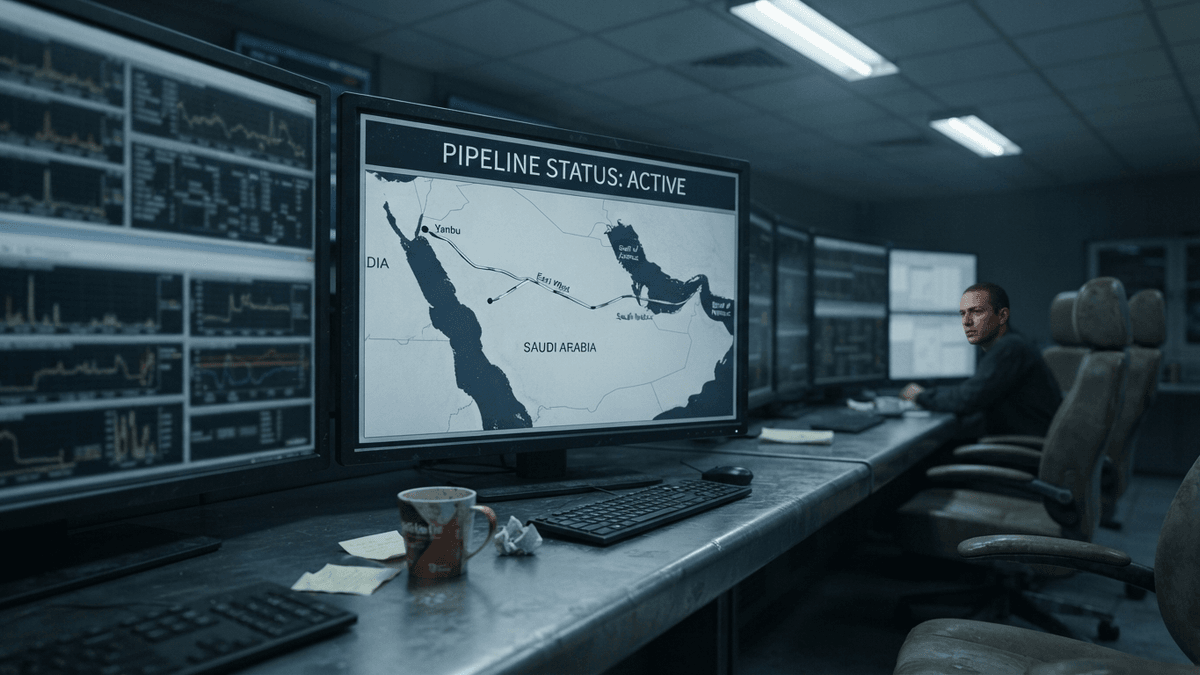
A control room monitor displays the operational status of the East-West pipeline.
Global oil markets continue to experience heightened volatility, with Brent crude fluctuating around the $100 per barrel mark as investors assess the stability of critical energy infrastructure in the Middle East. Recent price movements reflect a complex interplay between supply-side recovery efforts and shifting diplomatic signals.
Market optimism initially grew following reports that Saudi Arabia was moving to restore operations at the Yanbu facility and restart its vital East-West pipeline. These assets are critical to maintaining consistent export capacity, and their return to full operation is viewed as a necessary step to stabilize global supply chains. The potential easing of tensions regarding the Strait of Hormuz has further contributed to cautious market sentiment.
However, price recovery followed remarks from US President Donald Trump during his United Nations address, which introduced new uncertainty into the diplomatic outlook. The rhetoric has dampened earlier market enthusiasm, suggesting that the path to regional stability remains fragile.
For institutional investors and energy-focused private equity firms, the current environment underscores the persistent risk premium embedded in energy assets. While infrastructure repairs provide a technical floor for supply, the susceptibility of these markets to geopolitical shifts necessitates a disciplined approach to risk management. As traders continue to monitor developments in the Middle East, the volatility is expected to persist, keeping energy-linked capital allocation strategies in a state of high alert.
About the Author