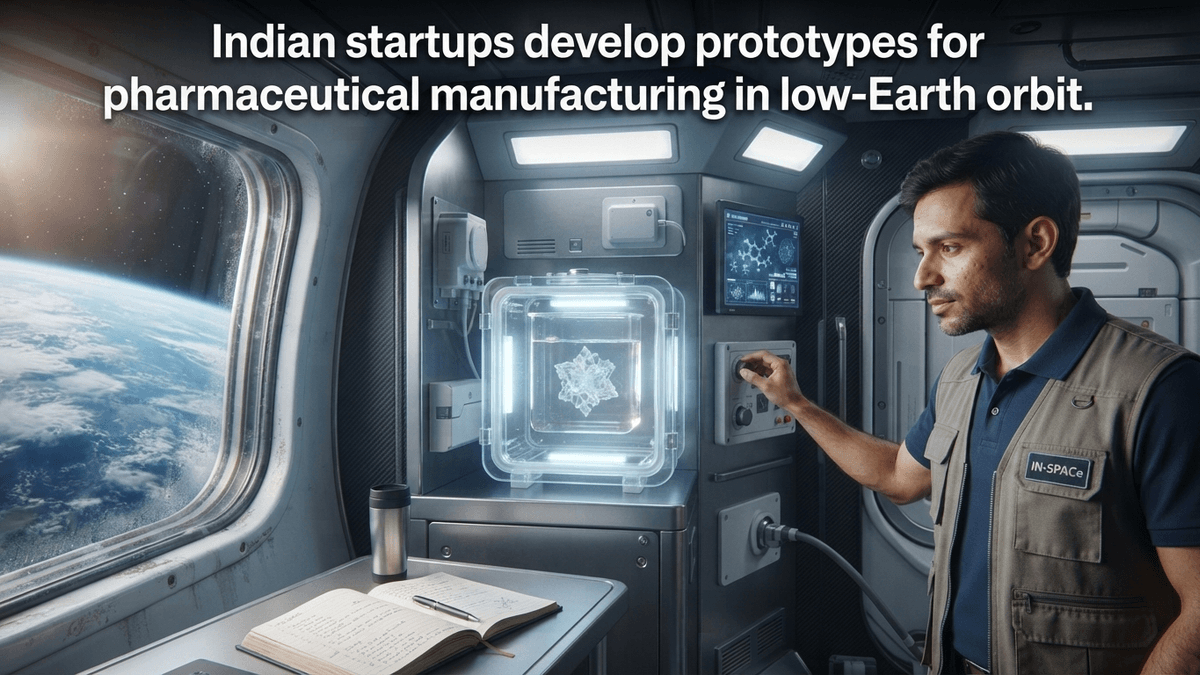
Indian startups develop prototypes for pharmaceutical manufacturing in low-Earth orbit.
A new frontier in pharmaceutical manufacturing is emerging as several Indian startups are actively pursuing the potential of space-based production. These ventures aim to leverage microgravity in low-Earth orbit to develop advanced materials and drugs, a field previously dominated by observation-based research.
Companies such as Serendipity, Ethereal, AnduraX, and Akashalabdhi are developing prototypes for autonomous pharma factories, reusable spaceplanes, and modular habitats to facilitate these orbital endeavors. The immediate commercial focus is expected to be on drug crystallization and protein folding, areas where microgravity offers distinct advantages over terrestrial conditions.
While global players like Merck and Redwire are already exploring this model, India is stepping up its efforts. Initiatives from IN-SPACe, the Technology Adoption Fund, and ISRO’s proposed Bharatiya Antariksh Station are poised to support the transition of experiments from laboratory settings to repeatable space missions.
Despite the growing momentum, the sector faces significant hurdles, including high launch costs, limited access to orbital platforms, and complex regulatory approval processes. However, as low Earth orbit increasingly becomes a viable manufacturing zone, these Indian startups are positioning themselves to capitalize on the unique opportunities presented by microgravity for next-generation medicine production.
In parallel, the financial landscape for Indian startups continues to be dynamic. Zerodha reported modest profit growth for FY26, while AI agent platform Runable successfully raised $21 million in Series A funding. Pernia’s Pop-Up Shop has set its IPO price band, and Honasa Consumer has called off an acquisition. Consumer electronics firm boAt also reported increased profits for FY26, indicating a diverse range of investment and development activity across various sectors.
About the Author