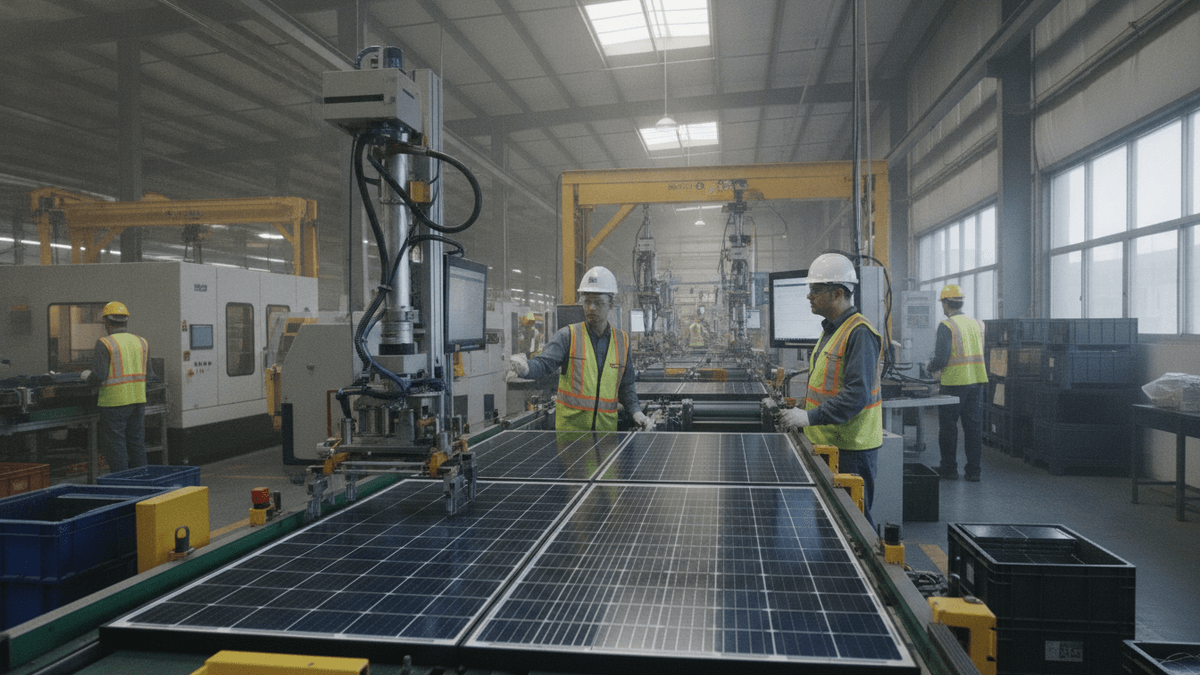
Solar panel production line with workers in a manufacturing facility.
The imposition of U.S. tariffs and minimum import prices on solar equipment is significantly reshaping the domestic solar manufacturing landscape, presenting new dynamics for key industry players. This policy shift is driving a push for onshore investment and the development of more robust domestic supply chains.
Among the companies poised to benefit is TOYO, a vertically integrated manufacturer actively expanding its U.S. footprint to leverage incentives for domestic sourcing. Despite its small-cap status, which carries inherent risks, TOYO’s strategic moves align with the government’s objectives for increased domestic production.
T1 Energy, which specializes in solar modules and energy solutions, is also well-positioned. The company benefits from an established domestic supply chain and is increasing its U.S. cell manufacturing capacity. However, T1 Energy faces challenges related to execution and financing as it scales its operations.
Array Technologies, a leading provider of solar tracking systems, is anticipated to see continued growth, particularly in the utility-scale solar sector. While the company has experienced some revenue fluctuations, strong market forecasts and its established position in the supply chain support its outlook amidst the evolving policy environment.
These policy changes are fostering a new era for investment in U.S. solar manufacturing, signaling a potential shift away from reliance on imported components and towards a more localized and resilient energy infrastructure.
About the Author