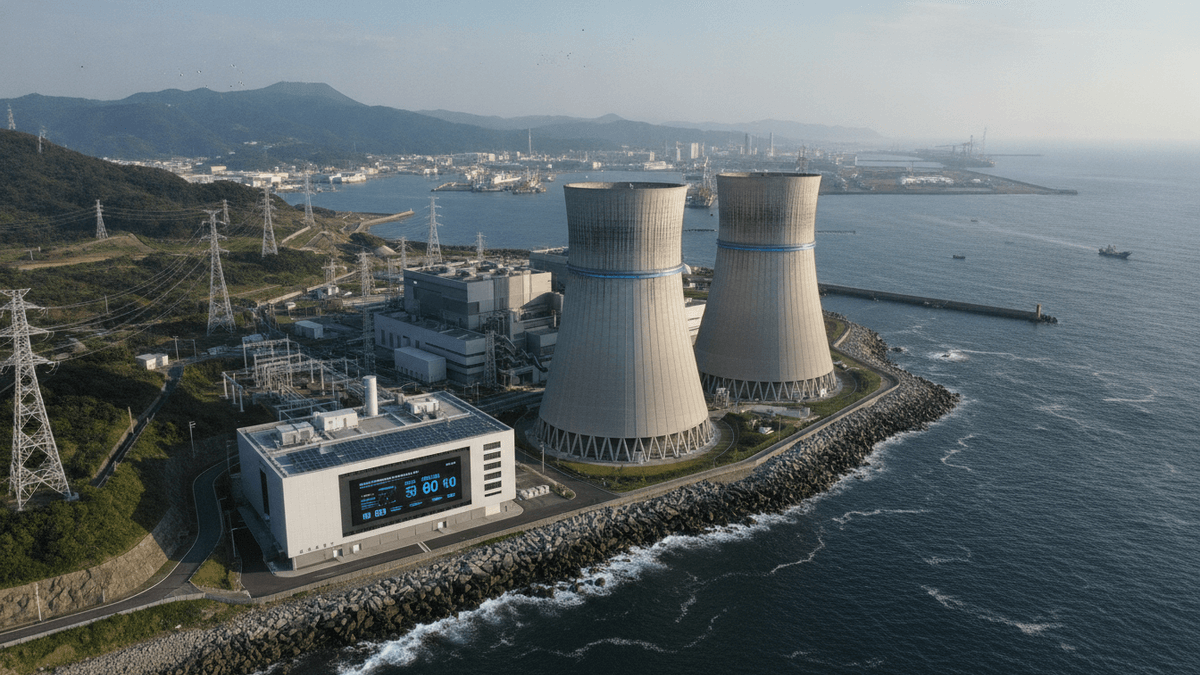
High-tech nuclear power generation facility operating in an industrial Japanese coastal landscape.
Amidst renewed concerns over inflation fueled by rising oil prices and increasing bond yields, nuclear energy is re-emerging as a critical low-carbon power source for investors seeking alternatives to volatile fossil fuel markets. Three prominent Japanese companies—Hitachi, ITOCHU, and Mitsubishi Heavy Industries—are being examined for their potential to capitalize on this trend, particularly in conjunction with the burgeoning demand for AI infrastructure.
Hitachi (TSE:6501), a diversified industrial and technology conglomerate, is strategically integrating artificial intelligence with its physical asset solutions through its Lumada platform. Collaborations with major technology firms like Google Cloud, Intel, OpenAI, and Anthropic underscore Hitachi’s commitment to leveraging AI. The company offers solutions in digital services, nuclear power, and power grid systems, positioning itself to benefit from the demand for reliable, low-carbon energy and advanced digital infrastructure. However, investors note Hitachi’s relatively high price-to-earnings ratio and its reliance on external borrowing as potential risks.
ITOCHU (TSE:8001), a leading Japanese trading and investment company, presents a diversified portfolio that includes exposure to battery materials and waste-to-energy projects, aligning with sustainability themes. Its business model combines traditional trading operations with forward-looking investments in green energy solutions. The company’s broad reach offers investors a unique way to tap into various sectors, though it faces risks associated with significant debt levels and sensitivity to commodity prices and broader macroeconomic shifts.
Mitsubishi Heavy Industries (TSE:7011), a cornerstone of Japan’s industrial sector, is actively involved in developing heavy machinery and systems for energy, infrastructure, logistics, and defense. The company holds a substantial order backlog in clean energy and infrastructure projects. Strategic partnerships, including one with Nvidia to develop cooling systems for AI data centers and another with Entergy for carbon capture technology, highlight its forward-looking approach. Challenges for Mitsubishi Heavy Industries include its high P/E valuation, considerable external debt, and exposure to currency fluctuations and the cyclical nature of defense contracts.
These three companies represent distinct investment avenues into Japan’s evolving energy and technology landscape. Their involvement in nuclear energy, coupled with strategic moves into AI infrastructure, positions them as key players in the global transition towards more sustainable and technologically advanced power solutions.
About the Author