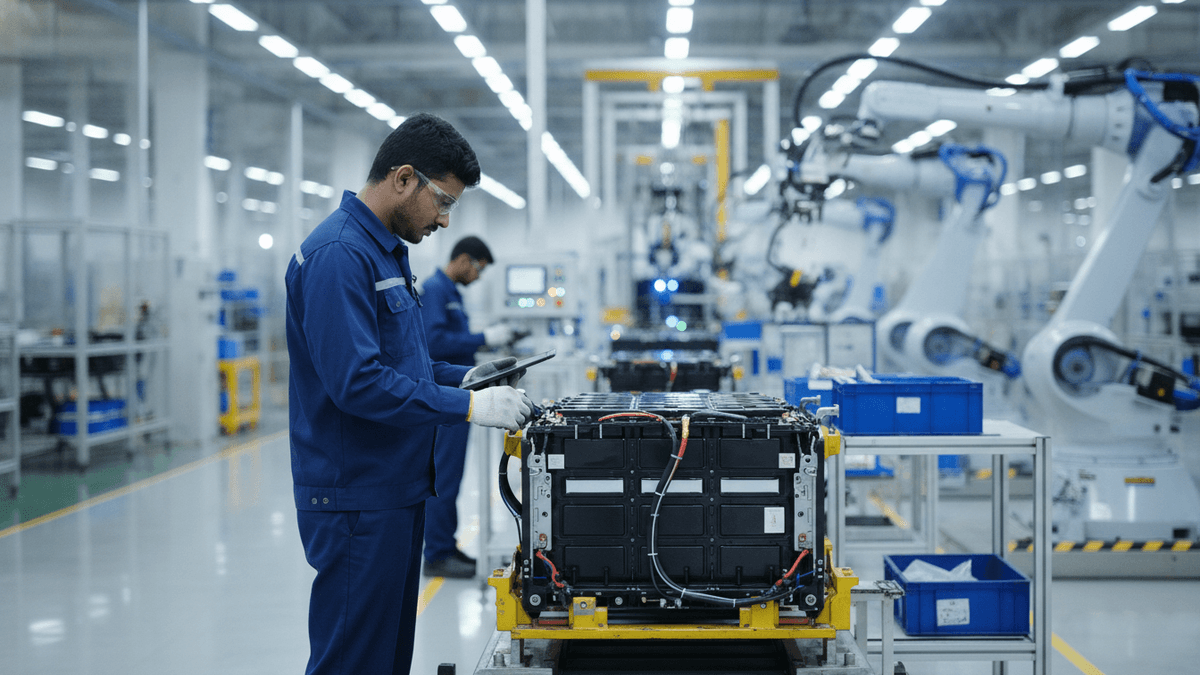
Technician inspects an electric vehicle battery pack on an assembly line
India is on track to achieve 90-100% localization of electric vehicle (EV) components by 2030, according to a recent report by the Institute for Energy Economics and Financial Analysis (IEEFA) and JMK Research & Analytics. This significant advancement is underpinned by substantial manufacturing announcements, with approximately 60% originating from companies approved under the Production-Linked Incentive (PLI) Scheme for Automobile and Auto Components.
The report addresses potential challenges, including those related to chip and rare earth material sourcing, but emphasizes the strong momentum in domestic manufacturing. The PLI scheme has been instrumental in attracting investment and encouraging local production, signaling a strategic push by the Indian government to build a robust EV supply chain.
This drive towards deep localization is crucial for India’s ambitions in the EV sector, aiming to reduce import dependence, foster innovation, and create a competitive manufacturing ecosystem. The success of the PLI scheme in channeling private sector investment into EV component manufacturing suggests a positive outlook for achieving these ambitious targets.
About the Author