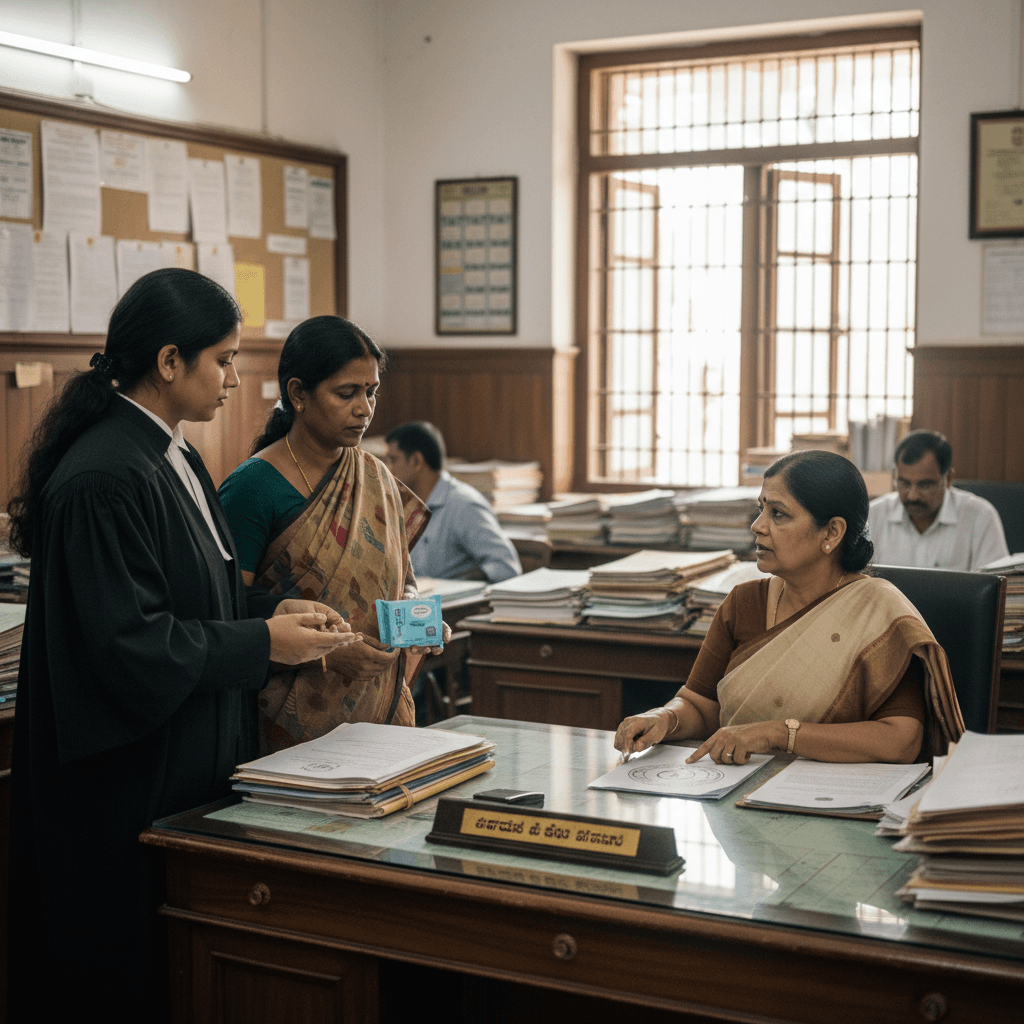
Advocate and woman discussing menstrual hygiene products in a Karnataka government office.
The Karnataka High Court has directed the state government to rigorously enforce its menstrual leave policy, categorizing it as a fundamental right rather than a discretionary benefit. The ruling emphasizes the necessity of acknowledging biological differences between men and women, advocating for a compassionate approach to ensure equality, health, and dignity in the workplace.
Justice M Nagaprasanna, presiding over the bench, stressed that menstruation is a natural part of women’s reproductive health and should be accommodated through policy. The court’s directive mandates the state government to implement existing policies effectively, including issuing guidelines and administrative instructions for consistent application across both organized and unorganized sectors, pending formal legislation.
The court’s decision came during the hearing of a petition filed by Chandravva Hanamant Gokavi, a hotel worker from Belgavi, seeking enforcement of notifications providing for one day of paid menstrual leave per month. Advocate Deeksha N Amruthesh, representing the petitioner, pointed out the physically demanding work conditions and inadequate hygiene standards faced by women in various employment settings.
Additional Advocate General Prathima Honnapura, representing the Karnataka Government, confirmed the policy’s alignment with constitutional provisions. The court also noted the pending Karnataka Menstrual Leave and Hygiene Bill, 2025, which proposes monthly paid menstrual leave and attendance relaxation for female students. This bill is currently under consideration by the Assembly.
The High Court’s directive underscores a move towards integrating health-related policies into labor laws, potentially influencing similar policies and practices in other states and sectors. The emphasis on menstrual leave as a right could lead to increased investment in workplace health and hygiene, fostering a more inclusive and equitable environment for women in the workforce.
About the Author