Middle East Conflict Reshapes Aviation & Oil Markets: Lufthansa, India Respond
The intricate web of global markets is currently experiencing significant shifts, largely driven by the ongoing conflict involving Iran. This situation is not merely a regional concern; its effects are rippling outwards, impacting vital sectors such as aviation and the oil market. Two key players, Lufthansa and India, are actively navigating these turbulent waters, each responding to the challenges and opportunities presented by the evolving geopolitical landscape.
Aviation Navigates Turbulence: Lufthansa’s Strategic Expansion
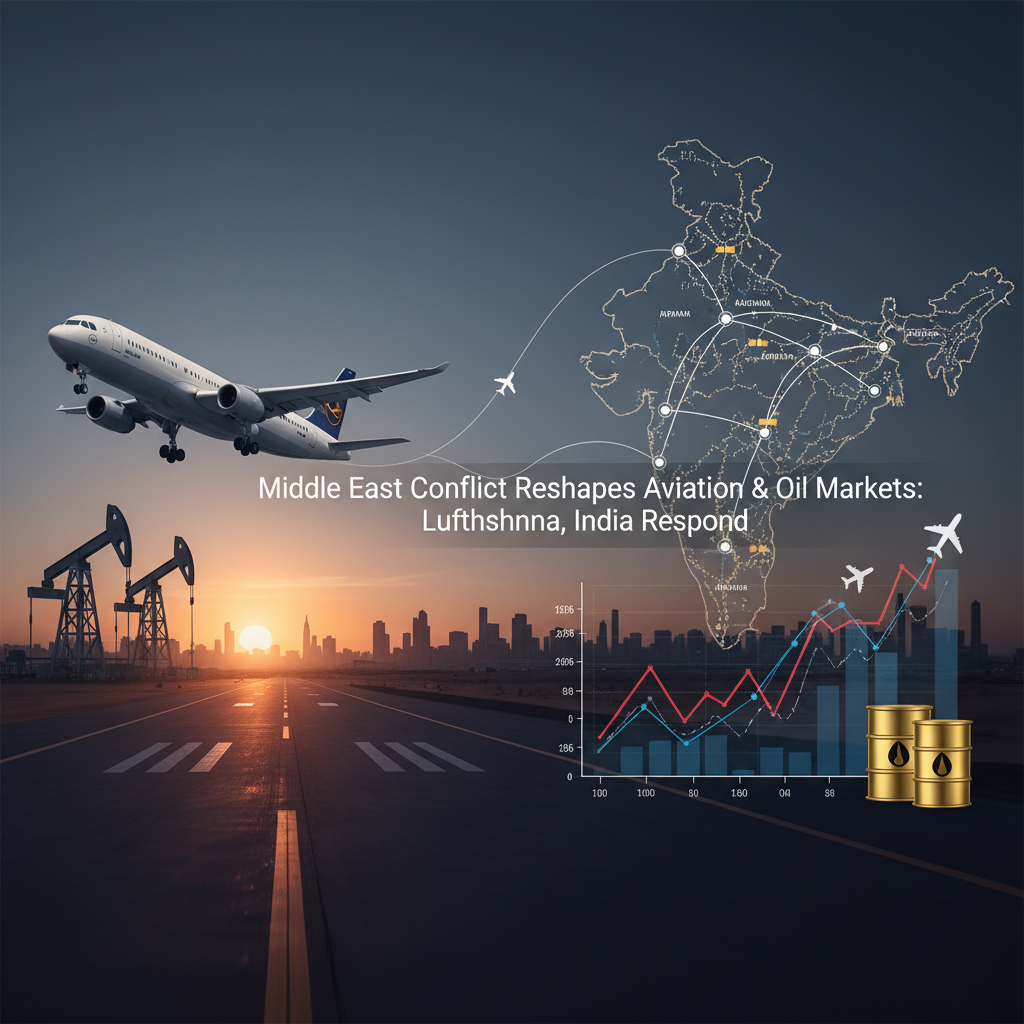
The aviation sector is immediately feeling the impact of the conflict. Disruptions in the Gulf aviation hubs, a critical crossroads for international flights, have led to widespread airspace closures and flight rerouting. This situation has created a cascade of operational challenges for airlines, forcing them to adapt swiftly. Lufthansa, recognizing the shifting dynamics, is planning to add more long-haul flights. The airline’s strategic move is a direct response to the disruptions, aiming to capitalize on the redirection of passenger demand towards European routes. This expansion is a calculated move, demonstrating the airline’s agility and its commitment to maintaining service amidst geopolitical uncertainty.
India Fortifies Oil Reserves Amidst Global Supply Fluctuations
Simultaneously, the oil market is facing its own set of pressures. As a major consumer of crude oil, India is proactively managing its energy security. Indian authorities have asserted that the country maintains ample reserves of crude oil and fuel, a crucial step in projecting confidence in the face of global supply fluctuations. This declaration is more than just a statement; it reflects a strategic approach to safeguarding the nation’s energy needs. India is actively exploring alternative supply channels and has been securing unsanctioned Russian crude, demonstrating its commitment to diversifying its sources and mitigating risk. Furthermore, the country is enhancing its liquefied natural gas acquisitions, further strengthening its energy portfolio.
Securing Energy Independence: A Multi-Pronged Approach
Indian authorities‘ response showcases a multi-pronged approach to navigating the complexities of the global oil market. The strategy includes:
- Strategic Reserves: Maintaining substantial reserves to cushion against price shocks and supply disruptions.
- Diversification of Supply: Actively seeking alternative sources of crude oil to reduce dependence on any single region.
- Geopolitical Navigation: Engaging with various suppliers, including those facing international sanctions, to ensure access to essential resources.
- Investment in LNG: Boosting liquefied natural gas acquisitions to diversify the energy mix.
These measures collectively underscore India‘s commitment to energy security and its preparedness to withstand the volatility stemming from the Middle East conflict.
The Broader Implications for Global Markets
The interplay between the aviation and oil markets highlights the interconnectedness of global economies. The Middle East conflict serves as a stark reminder of how geopolitical events can quickly disrupt established norms and create new challenges. The proactive responses from Lufthansa and India provide valuable insights into how businesses and nations can adapt and thrive in an environment of uncertainty. Their strategies, while distinct, share a common thread: a commitment to resilience, adaptability, and strategic foresight. The ongoing situation requires constant monitoring and adjustment, as the situation evolves.
In conclusion, the situation underscores the need for constant vigilance and adaptability in the face of geopolitical and economic instability. The actions of Lufthansa and India offer a glimpse into the strategies that will be crucial for navigating the evolving landscape of global markets.
Source: Industry-Economic Times
About the Author