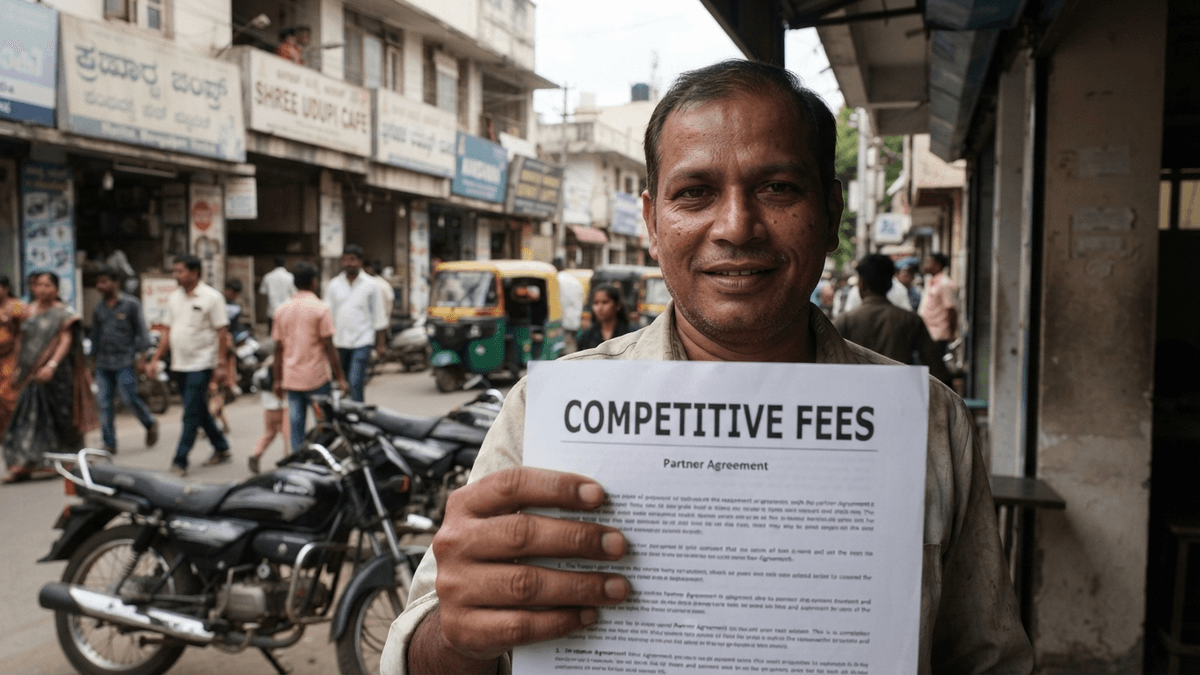
Flipkart launches food delivery service, challenging Zomato and Swiggy in Bengaluru.
Flipkart is preparing to launch its own food delivery service later this month, aiming to disrupt the established duopoly of Zomato and Swiggy. The e-commerce giant plans to debut the service in Bengaluru, with subsequent expansion to other cities anticipated within the year. This move leverages Flipkart’s substantial user base, estimated at 500 million registered users and 40 million SuperCoins users, to potentially cross-sell food delivery services.
The company intends to utilize its existing infrastructure, including its logistics arm Ekart and the ONDC network for restaurant onboarding, to minimize initial operational costs. A key aspect of Flipkart’s strategy appears to be its focus on merchant economics, with reports suggesting lower platform fees (12%-13%) compared to competitors’ approximately 30%. This approach directly addresses a significant grievance within the restaurant industry regarding commission rates.
Flipkart’s entry into the food delivery market follows previous attempts by other major players like Amazon Food, Ola, and Tata Neu, which have not fundamentally altered consumer behavior in the capital-intensive sector. The success of Flipkart’s venture will likely depend on its ability to combine lower commissions, efficient logistics, and strategic restaurant partnerships to attract both consumers and vendors.
In parallel, the Indian startup ecosystem saw a rebound in funding last week, with startups collectively raising $233.2 million across 19 deals. Navi and BookMyShow were notable recipients, securing $100 million and $40 million respectively. Fintech emerged as the most funded sector, attracting $112.5 million. Early-stage funding also showed an uptick, with nine seed and pre-Series A startups raising approximately $9.3 million.
Semiconductor startup Raana Semiconductors is reportedly in talks to raise around $10.4 million in its Series A round to scale its crystal-growth equipment. Meanwhile, the stock performance of new-age tech companies showed a generally positive trend, with 34 out of 61 tracked stocks ending the week in positive territory.
On the regulatory front, the CBI has filed an FIR against the founders of BluSmart, Anmol Singh Jaggi and Puneet Singh Jaggi, and their associated companies, Gensol Engineering and Gensol EV Lease, over alleged diversion of loans from IREDA. Separately, the Indian Space Research Organisation (ISRO) is considering exiting manufacturing of routine launch vehicles and satellites, aiming to transfer such operations to private companies and Public Sector Undertakings (PSUs) while focusing on R&D and advanced technologies.
About the Author