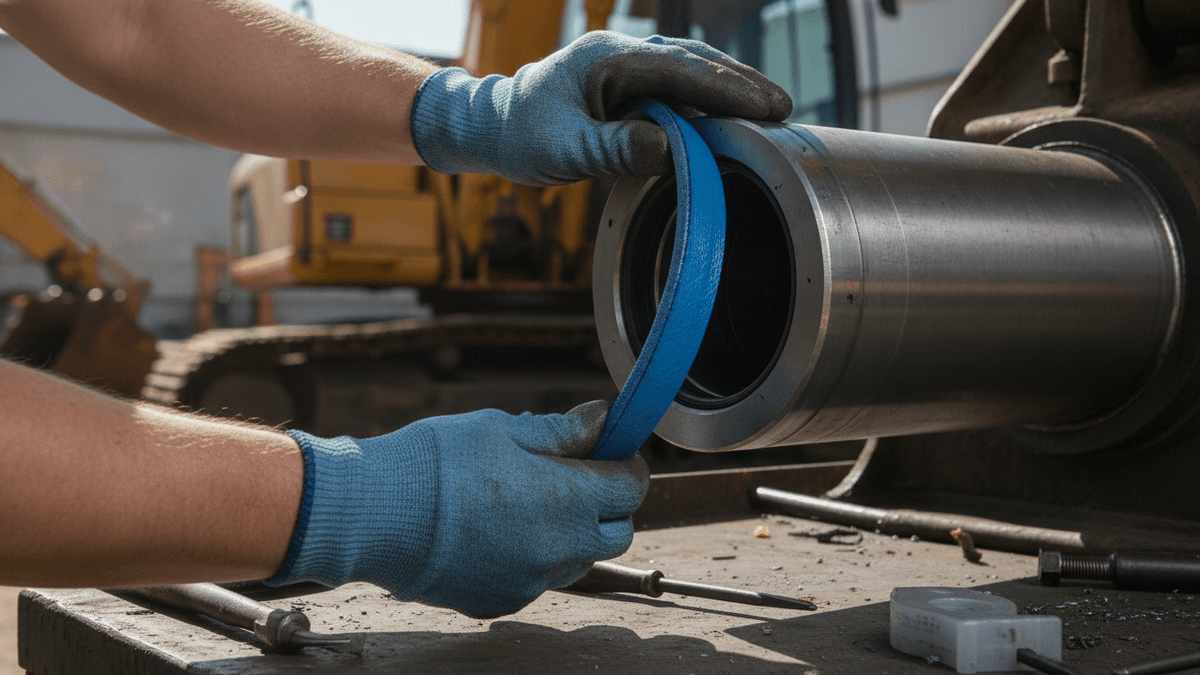
Technician installs a polyurethane hydraulic seal in heavy equipment.
The global Hydraulic Motor Seal Kit market is projected to experience sustained expansion through 2035, with its market index anticipated to reach 155 (2025=100). This growth is primarily driven by the extensive installed base of hydraulic motors across key industries such as construction, mining, agriculture, and industrial machinery. A substantial portion, estimated at 60–70% of the total unit volume in 2026, is expected to stem from aftermarket replacement demand, highlighting the critical role of preventive maintenance and the natural wear and tear of sealing components.
The market features a varied pricing landscape, with average kit prices ranging from USD 20–80 for standard gear-motor seal kits to USD 100–250 for premium elastomer and metal-composite kits designed for high-pressure piston motors. The supply chain is notably concentrated, with fewer than fifteen specialized seal manufacturers, primarily located in Germany, the United States, Japan, and China, dominating global production. Consequently, many regional markets rely on imports for 40–60% of their seal kit supply.
Key market trends include a discernible shift towards more durable, high-temperature-resistant seal materials like polyurethane and PTFE blends, as equipment operators seek to extend maintenance intervals and lower overall ownership costs. Premium-material kits are steadily capturing a larger market share, increasing by approximately 2–3 percentage points annually, supported by increasingly stringent environmental and workplace-safety regulations. Furthermore, OEM-led channel consolidation is impacting distribution, with major hydraulic component manufacturers increasingly integrating branded seal kits into their comprehensive maintenance programs.
The market’s growth trajectory is further bolstered by rising equipment utilization rates, leading to more frequent maintenance cycles, rapid mechanization in emerging economies, and the continuous introduction of more sophisticated motor designs. Regulatory mandates aimed at reducing fluid leakage and enhancing energy efficiency are also accelerating the adoption of advanced seal materials.
Demand is distributed across several major end-use sectors: Construction and Mining Equipment accounts for 30%, Industrial Machinery and Automation for 25%, Agricultural Machinery for 20%, Automotive and Off-Highway Vehicles for 15%, and Marine and Offshore for 10%. Prominent market players include Parker Hannifin Corporation, SKF Group, Freudenberg Sealing Technologies, Trelleborg Sealing Solutions, and Hallite Seals International. Geographically, Asia-Pacific is expected to be the largest market, holding an estimated 40% share, followed by North America (25%) and Europe (20%). Latin America and the Middle East & Africa represent smaller but growing markets, driven by infrastructure development and resource extraction, despite challenges such as price sensitivity and the prevalence of counterfeit products.
About the Author